

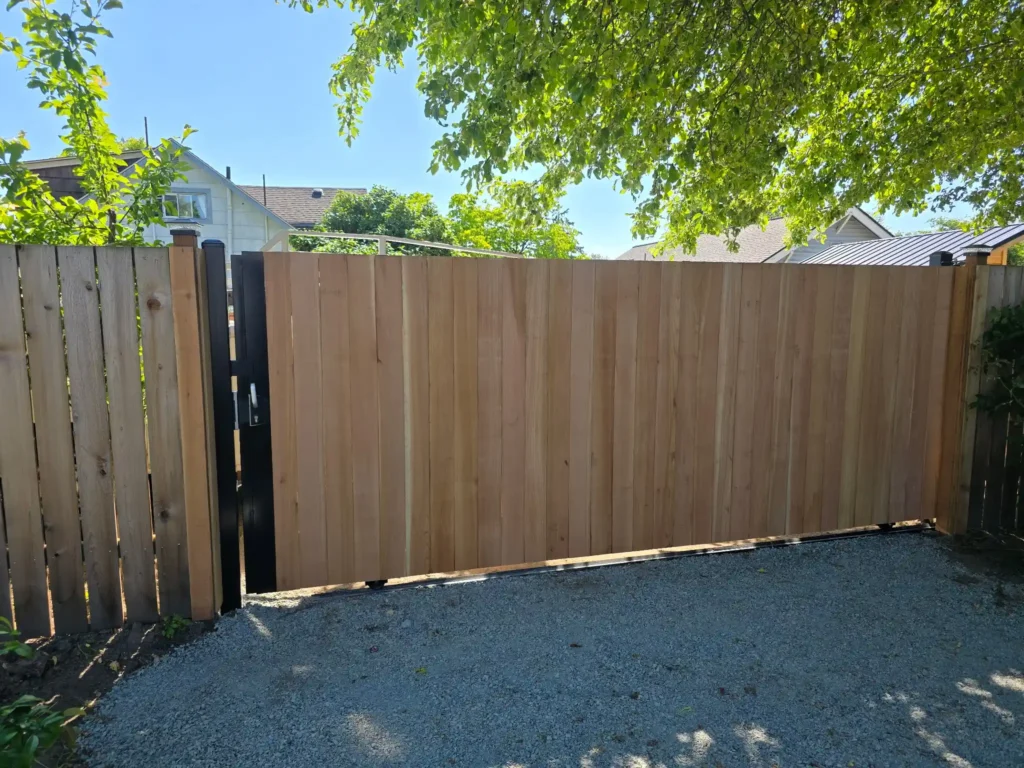
A motorized driveway gate in Seattle is a highly integrated, multi-component entry system combining structural panels (cedar wood, aluminum, or mixed materials) with dedicated operators, access control, and emergency backups engineered for the Pacific Northwest climate. System selection depends entirely on lot geography: swing gates require deep, level driveways, while sliding gates solve steep slope or shallow clearance challenges but demand strict track drainage management over Seattle’s 156 annual rainy days. Compliance requires adhering to strict local and national regulations—including UL 325 and ASTM F2200 independent entrapment protections, Seattle’s 10-foot driveway sight triangle mandate, a Stand-Alone Low-Voltage electrical permit executed by a licensed contractor, and KnoxBox entry systems for emergency fire apparatus access routes.
A motorized driveway gate in Seattle WA is a complete entry system, not just a panel with an opener bolted on. It includes a custom gate sized for your driveway, an operator matched to that gate’s weight, safety sensors, access controls, a power source with backup, and a plan for emergency access. All of it should be designed around your slope, your clearance, and the Pacific Northwest weather.
If you’re a Seattle homeowner or property owner weighing this project, you’re making a real investment and you want it done right the first time. Done well, a motorized gate adds privacy, security, and curb appeal, and it can bump property value. The right choice depends on your property, which is exactly what we’ll walk through here, from installation to long-term repair.
What Is a Motorized Driveway Gate? The Full System Explained
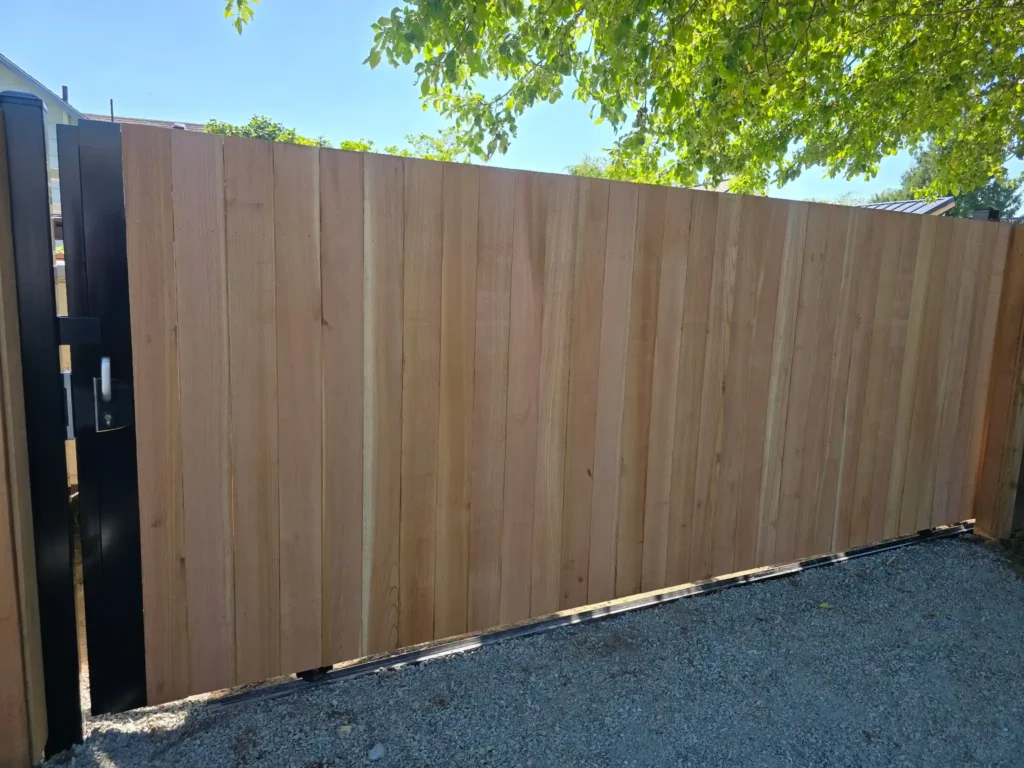
An automatic gate is a set of parts that all have to work together. When one piece is undersized or poorly matched, the whole gate system struggles, especially in wet weather. Here’s what the system includes:
- Gate panel: cedar wood, aluminum, or a custom mixed-material design.
- Posts, hinges, rollers, and track: the structure that carries the gate’s weight and keeps it moving straight.
- Gate operators (the motor): sized to the gate’s weight, length, and how often you’ll use it. Different gate operators suit swing gates versus sliding gates.
- Safety devices: obstacle detection that stops or reverses the gate.
- Access control systems: keypads, remotes, intercoms, or smart access.
- Power and battery backup: so the gate keeps working when the electricity doesn’t.
- Manual or emergency release: lets you open the gate by hand if needed.
- Pedestrian access: a separate walk-through where foot traffic is likely.
Think of it as one system built around your driveway, and every section below builds on that idea. Electric gates and automated gates all rely on this same foundation, and gate automation ties every piece together.
Why Seattle Homeowners Choose Motorized Driveway Gates for Curb Appeal
The big three reasons come down to privacy, security, and curb appeal. Custom driveway gates keep unwanted vehicles out and give your entry a finished, intentional look. Many homeowners come to us for residential driveway gates, and customers across the Seattle area tell us they want:
- Pet containment: a secure boundary so dogs stay in the yard.
- Controlled access and security: you decide who comes and goes.
- Convenience in the rain: with roughly 156 days of measurable precipitation a year here, remote access to your entrance from the car is a real quality-of-life upgrade.
- RV, alley, and long driveway access: gates sized for the way you actually use your property.
- Property value: a well-built gate can add somewhere in the range of 5 to 10 percent, depending on the home.
On Seattle’s slopes and tighter lots, custom gates designed for your specific layout also improve neighborhood privacy without feeling closed off.
Swing Gates vs. Sliding Gates: Which Fits Your Driveway?
Swing Gates
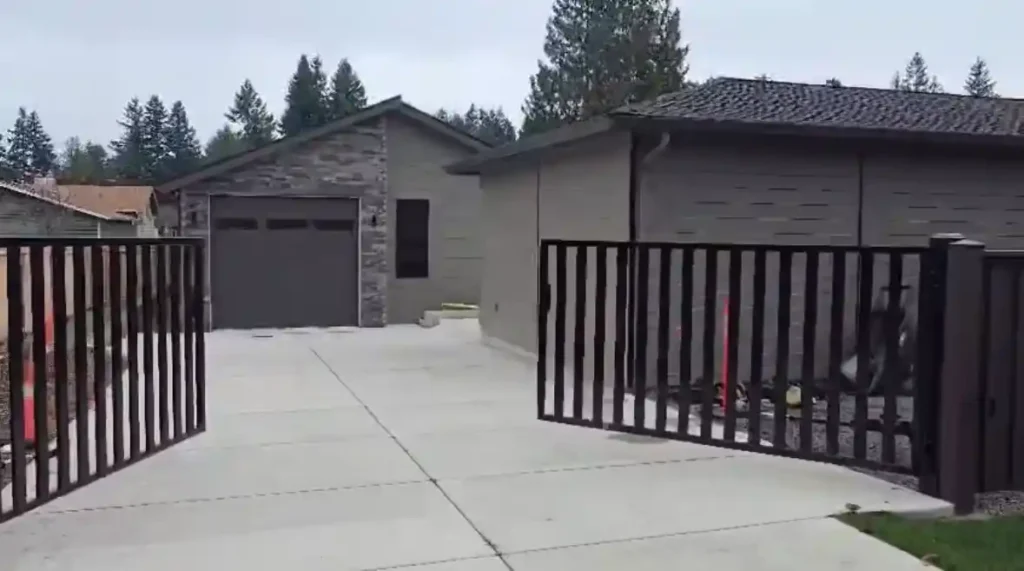
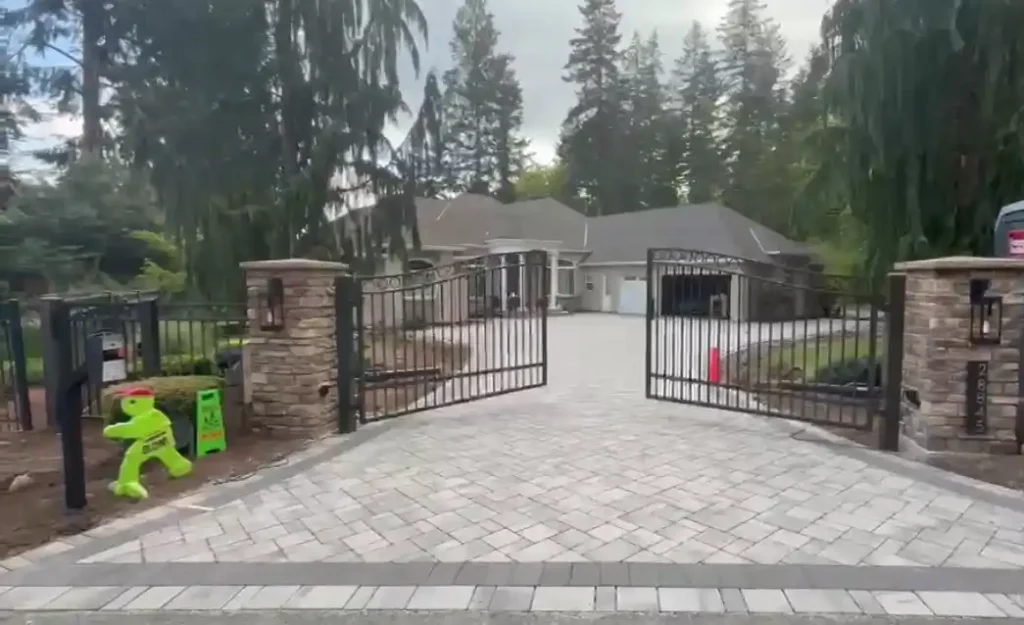
Swing gates need room to open inward and look great on residential entries. They work best on flatter driveways where the panel won’t catch on a slope, a parked car, the sidewalk, or landscaping as it swings. The gate installation is simpler when the ground is level.
Sliding Gates
Sliding gates are the better pick when driveway depth is limited or the ground rises steeply near the entry. They slide to the side instead of swinging out, so they need clearance along a fence line. Their tracks, rollers, and motors take more abuse in the rain, so drainage matters.
Configurations include single swing, double swing, and slide, in cedar wood, aluminum, or a custom blend. These gate types each fit different lots. We assess your slope, clearance, and layout before recommending one, because the right answer is different on almost every property.
Can You Motorize an Existing Manual Gate?
Often, yes. Manual gates can be automated when the gate is structurally sound, the posts are stable, and it moves smoothly by hand before any gate motor gets involved. If it drags or sags now, automating it just adds strain. Hardware sometimes needs a repair or upgrade, and the operator has to match the gate’s weight. Any automatic gate also has to meet UL 325 and ASTM F2200, which we’ll cover below. In some cases rebuilding the gate is the smarter call than motorizing a weak one, and we’ll tell you honestly which situation you’re in. No cookie-cutter jobs here.
Custom Gate Installation: Permits, Codes, and Placement
Don’t assume you never need a permit, and don’t assume you always do. Seattle’s SDCI fence guidance generally allows fences up to 8 feet without a construction permit, with caveats. In neighborhood residential and multifamily zones, height is usually limited to 6 feet, plus up to 2 feet for architectural features like an arbor. In a front or street-side setback, the limit drops to 4 feet. On sloping sites, a fence can reach 8 feet if the average height between posts is 6 feet.
Flood-prone areas, critical areas like steep slopes or wetlands, and right-of-way placement can all change what’s required. Even when no permit is needed, the driveway gate installation still has to meet code.
Driveway Sight Triangle and Visibility
A gate can be beautiful and still create a hazard if it blocks your view pulling out. For driveways under 22 feet wide, Seattle requires a clear sight triangle roughly 10 feet from the driveway intersection, kept open vertically between 32 and 82 inches. Residential lots with fewer than three parking spaces may qualify for an exception. Our professional team helps you think through placement early so there are fewer surprises, because we know Seattle neighborhoods, terrain, and permitting.
Electrical Work, Power, and Backup for Automated Gates
Seattle SDCI requires an electrical permit whenever wiring is installed or altered, and a Stand-Alone Low-Voltage System specialty permit covers gate operator wiring. Professional electrical work must be done by a Washington-licensed electrical contractor. Our team coordinates the installation so any electrical work is handled in compliance with Seattle and Washington rules.
Power usually runs on a dedicated circuit from the house through conduit. Battery backup keeps electric gates operating during an outage, and solar is an option where the site actually supports it. If the power stays out long enough, the manual release lets you open the gate by hand so you’re never stuck. This applies to swing gates and sliding gate systems alike.
Gate Safety Standards Explained: UL 325 and ASTM F2200
Two standards govern automated gate safety, and they’re simpler than they sound. UL 325 covers the operator, its motors, and the safety system. ASTM F2200 covers how the physical gate is built for automation. A safe motorized gate meets both.
UL 325 requires at least two independent entrapment protections for each entrapment zone. Those come from non-contact photo eyes and contact edge sensors that stop or reverse the gate. The operator monitors these safety devices and checks them every cycle, and bypassing that monitoring is never allowed. When the gate senses an obstruction during opening or closing, it has to begin reversing within 2 seconds. Gate controls should sit at least 6 feet from the gate to prevent reach-through injury, and at least two warning signs must be visible.
One more point that matters: vehicular gate operators are not for people. Where foot traffic is likely, you need a separate pedestrian gate. These rules exist for a reason. The CPSC found nearly 25,000 automatic-gate injuries between 1990 and 2000, including around 9,000 children. That’s why we never disable a sensor to make a gate more convenient.
Emergency Access for Fire and First Responders
For long driveways, multifamily buildings, and commercial sites, emergency access is part of responsible planning. Under the 2021 Washington Fire Code (the basis for Seattle’s Fire Code), security gates across a fire apparatus access road must be approved by the fire code official, have an approved means of emergency operation, and stay operational. Seattle uses the Knox Rapid Entry System. A KnoxBox can house an emergency gate switch, but it requires prior review by Seattle Fire Prevention and is typically mounted about 6 feet high, within 5 feet of the main access point. Any business or commercial property in the Seattle area should plan for this early.
Access Control Systems for Your Driveway Gate
You have plenty of ways to open and manage the gate system:
- Remote control units for your vehicles
- Keypads with entry codes
- Intercoms, often with a camera
- Smartphone and smart-access controls
- Vehicle detection sensors
- Timers for scheduled access
- Visitor and commercial access systems for added security
We install keypads, gate openers, intercoms, and smart-access options. Whatever you choose, the convenience should never override the required safety sensors.
Best Materials for Pacific Northwest Weather: Wood and Metal Gates
Seattle gets about 39 inches of rain across roughly 156 wet days a year, so materials and hardware have to hold up to constant moisture.
- Cedar wood gates: warm, private, and easy to customize, including horizontal designs with a natural look. They need thoughtful construction plus staining and sealing to stay looking sharp.
- Aluminum and metal gates: durable, low-maintenance, and corrosion-resistant.
- Custom and mixed-material designs: the best of both when your entry calls for it.
Whatever the panel, we use corrosion-resistant hardware, plan drainage around posts and tracks, and protect the operator and its motors from moisture. Careful fabrication and quality materials are what keep a gate long-lasting here instead of failing its first wet winter, and they support the long term durability our clients count on.
Maintaining and Repairing a Motorized Gate in Seattle Rain
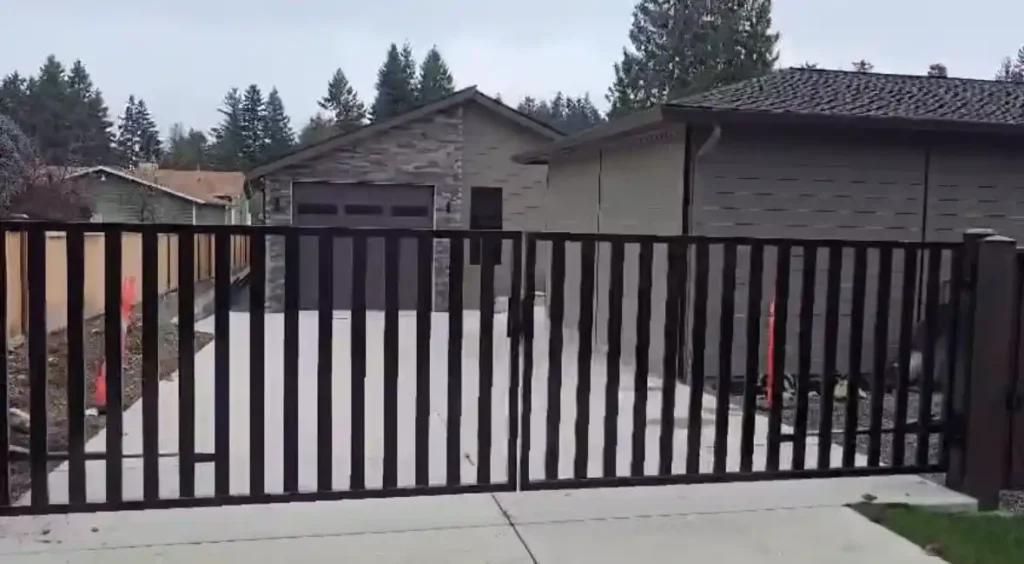
A well-maintained gate can last 20 to 30 years. Regular maintenance and timely repair make the difference:
- Keep tracks and rollers clear of debris
- Test the photo eyes and edge sensors
- Watch for corrosion and loose hardware
- Lubricate moving parts and reseal as needed
- Test the manual release
- Keep vegetation off moving parts
- Give it seasonal attention before the wet months
An annual inspection is standard. Manual gates run about $100 a year to maintain, and automatic gates roughly $200 to $500. Call our team for gate repair if the gate drags, reverses on its own, gets noisy, or stops responding. Catching a small issue early is far cheaper than the replacement of motors or a full gate system later, and in most cases a reliable fix costs a fraction of a new gate.
What to Ask Before Hiring a Seattle Gate Company
Whether you’re weighing electric gates or a simpler setup, ask before you commit:
- Are you licensed, bonded, and insured?
- Have you built motorized gates for Seattle weather and slopes?
- Will you assess my slope, clearance, sightlines, and power?
- What safety sensors will you install?
- How will emergency access be handled?
- Do you offer transparent pricing with a clear scope?
- What warranty is included, and do you handle repair and gate repair service after the final installation?
At DH Fence Pros, founded in West Seattle in 2015 by Dan Hignite, we answer all of those plainly. We’re a licensed, bonded, and insured company serving homeowners and businesses across the Seattle area, we bring 25+ years of combined crew experience, and we back our work with a 36-month installation warranty. You get clear communication, transparent pricing, and no hidden fees from estimate to final walkthrough. Our gate installation and repair service covers the full life of your gate, and our ability to design around your property is what sets the work apart. Fences, driveway gates, and full gate automation all come from the same craft-first team.
Frequently Asked Questions
Do I need a permit for a motorized driveway gate in Seattle WA?
Sometimes. Many residential gates under Seattle’s fence height thresholds don’t need a construction permit, but flood zones, critical areas, right-of-way placement, and electrical work can change that. We help you check before we build.
Are swing gates or sliding gates better for Seattle homes?
It depends on your driveway. Swing gates suit flatter entries with room to open, while sliding gates work better on steeper or shallower driveways. We assess your slope and clearance to recommend the right fit.
Do I need an electrical permit for an automatic gate opener?
Yes, an electrical permit is required whenever wiring is installed or altered, and gate operator wiring falls under a Stand-Alone Low-Voltage System specialty permit. Professional electrical work on electric gates must be done by a Washington-licensed electrical contractor.
What happens if the power goes out?
Battery backup keeps the gate running during most outages, and a manual release lets you open it by hand if the power stays out. You’re never locked in or out.
Are motorized gates safe for kids and pets?
When built to UL 325 and ASTM F2200, yes. Two independent entrapment protections per zone, photo eyes, edge sensors, and a fast auto-reverse keep the gate from closing on anyone. We never disable those sensors.
Ready to plan custom driveway gates built for Seattle’s weather, slopes, and daily use? Contact DH Fence Pros to schedule your free on-site estimate, or call or text (206) 330-6709, whichever’s easiest for you.