

Key Takeaway
Aluminum pool fencing in Seattle must meet Washington’s 2021 ISPSC standards: at least 48 inches high, pickets spaced under 4 inches apart, and a self-closing, self-latching gate that swings away from the pool. Aluminum is an excellent fit for Seattle’s wet climate, resisting corrosion and lasting 20 to 30 years with minimal upkeep. Cost depends on footage, gates, slope, and site conditions, so an on-site estimate is the only reliable way to price your project.
Is Aluminum Pool Fencing in Seattle a Good Choice? A Safety, Style & Cost Guide Starting Point
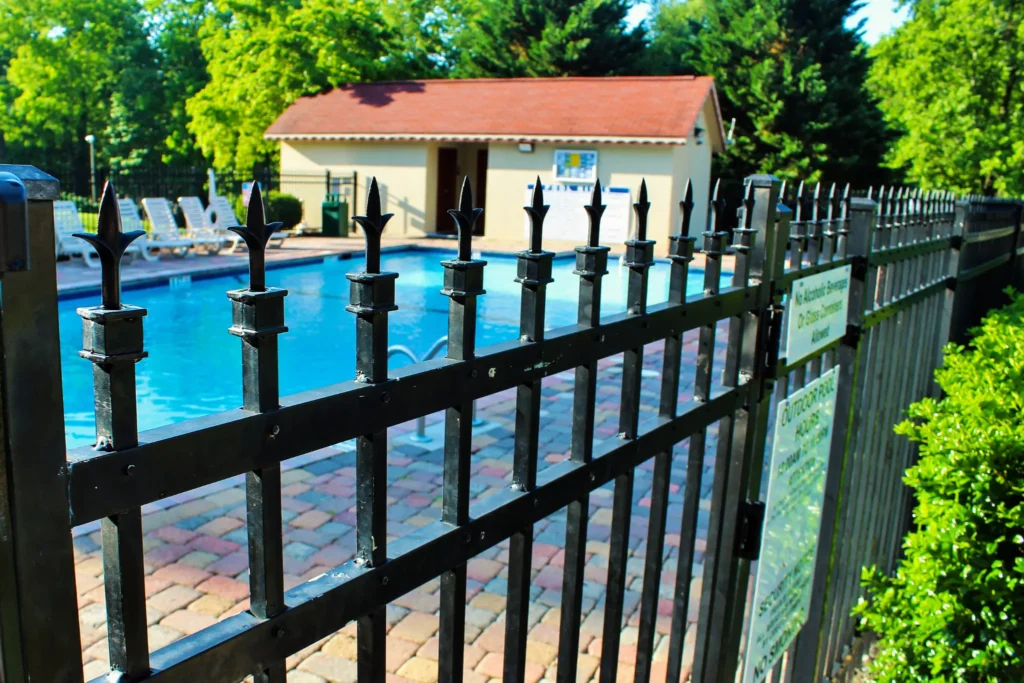
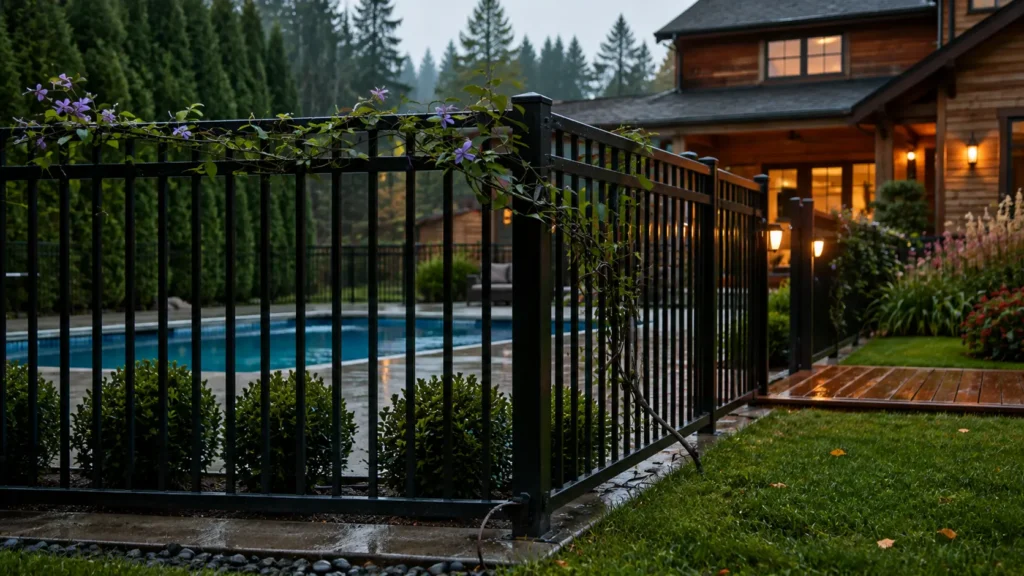
Yes. For most Seattle homeowners, aluminum is a strong pick for a pool fence, as long as it’s built as a true pool-safety barrier: at least 48 inches high, hard to climb, correctly spaced, and paired with a self-closing, self-latching gate. Aluminum fences also hold up well here. They naturally resist corrosion in our wet climate and can last 20 to 30 years or more with very little upkeep.
If you’re planning a pool fence in and around Seattle, this guide walks you through the safety rules that apply, the style options that keep your outdoor space open, and the real factors that affect fence cost. One thing to know up front: pricing depends heavily on your site, so a free on-site estimate will always beat generic per linear foot numbers online.
Why a Pool Fence Is More Than a Regular Backyard Fence
A pool fence is a life-safety barrier. That’s the whole point, and it changes how the fence gets designed.
The Washington Department of Health notes that drowning is the second leading cause of injury-related death for children ages 1 to 14, and that among kids ages 1 to 4, most drownings happen in residential pools. Many of those children had been out of sight for less than five minutes.
The design details do the work. The CDC reports that a four-sided isolation fence separating the pool from the house and yard reduces a child’s drowning risk by 83% compared with three-sided fencing along property lines. King County Public Health adds a sobering reality check: half of children at age 7.5 can reach a latch set at 60 inches, and 95% of kids under 9 can fit through a 6-inch opening. Those numbers are why spacing, fence height, and latch placement matter so much around water.
Seattle and Washington Pool Fence Safety Codes and Local Regulations
Washington points private residential pools, spas, and hot tubs to the 2021 International Swimming Pool and Spa Code (WAC 51-51-0327), which took effect March 15, 2024. King County publishes clear residential guidance that spells out the barrier details. These are the safety codes and local requirements you’ll run into, and the core numbers behind them.
| Requirement | What it means |
|---|---|
| 48 inches minimum | Barrier height above grade (some configurations require more) |
| 4-inch sphere test | No opening may let a 4-inch sphere pass through |
| 2 inches / 4 inches | Max bottom gap: 2 inches over grass or gravel, 4 inches over solid surfaces |
| 20-inch setback | Minimum distance from the water’s edge to the barrier |
| 36-inch clear zone | Kept clear of climbable structures outside the barrier |
These are the basics. On unusual lots, always confirm final requirements with Seattle SDCI or your local building department, since site conditions and enforcement can vary. Meeting code compliance is what ensures safety around the pool area, not just a fence that looks the part.
How Tall Does a Pool Fence Need to Be in Seattle?
The common residential minimum is 48 inches (4 feet). Some situations call for taller barriers, so effective fence height can range from 48 to 60 inches depending on layout and whether the house forms part of the enclosure. If a door in your home opens directly to the pool area, that door typically needs an alarm.
Gate Rules: Self-Closing, Self-Latching, and Outward-Swinging
Pedestrian gates should open outward away from the pool, close on their own, and latch on their own. Self closing gates and self latching gates aren’t optional extras here; they’re a core part of the barrier. King County guidance sets a 54-inch threshold for the latch release: if the release sits lower than 54 inches, it should be on the pool side, at least 3 inches below the top of the gate, with no opening larger than 1/2 inch within 18 inches of the release. Fussy details, but they keep small hands from reaching through to open the gate.
Picket Spacing and Climb Resistance
Vertical pickets stay under 4 inches apart to pass the sphere test. Horizontal rails are the tricky part. Where they’re 45 inches or more apart, vertical spacing up to 4 inches is allowed. Where they’re closer than 45 inches, the rules tighten (spacing can drop to around 1 3/4 inches) and the members belong on the pool side so the fence can’t be used as a ladder. This is why the way aluminum fence panels are built and oriented matters as much as the material itself.
Residential vs. Commercial or Multifamily Pool Fencing
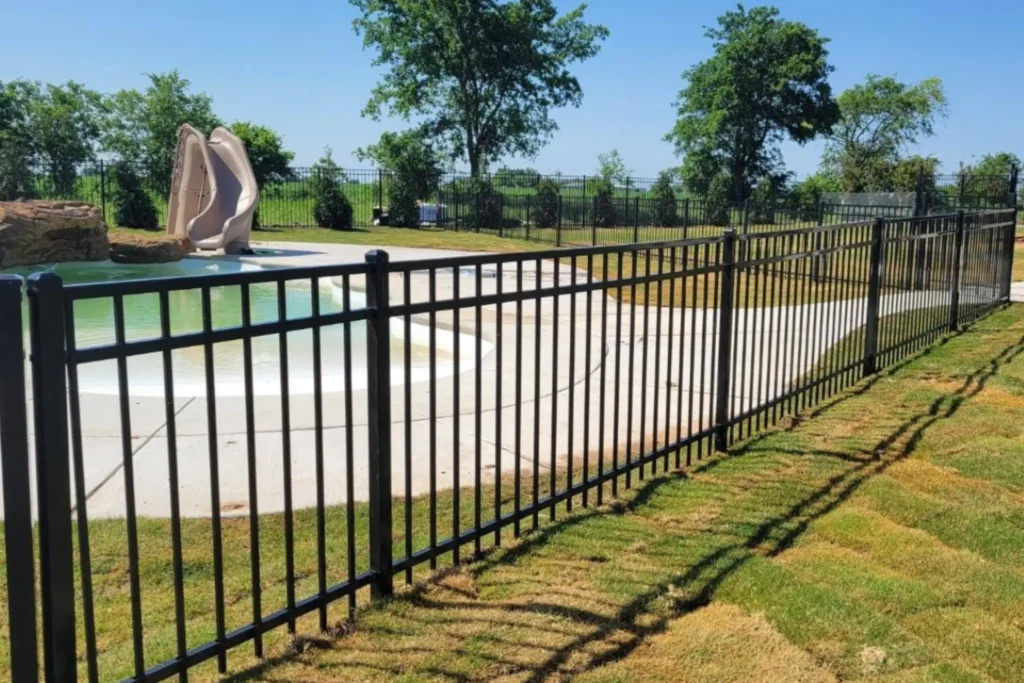
The rules differ by property type. Private single-family homes follow local codes and the ISPSC, not the state’s water recreation rules. Regulated facilities such as public pools and some multifamily or commercial properties fall under WAC 246-260, which is stricter: a 60-inch latch height threshold, an 18-inch solid radius around a lower latch, and chain link mesh fencing no larger than 1 1/4 inches. We build for both residential and commercial properties across the Greater Seattle area, so we scope your project to the code that actually applies to it.
Do You Need a Permit for a Pool Fence in Seattle?
Seattle SDCI generally does not require a construction permit for a fence 8 feet or shorter, as long as it has no masonry or concrete elements over 6 feet and isn’t in a flood-prone area. Flood-prone lots and taller fences do require a permit. This matters for waterfront properties in particular, where drainage and flood zones change the rules.
Zoning is where pool rules and city rules can bump into each other. In neighborhood residential and multifamily zones, fence height is generally capped at 6 feet, with 2 more feet allowed for architectural features like an arbor. In a front or street-side setback, fences are limited to 4 feet. So your 48-inch pool barrier is fine height-wise, but if part of it lands in a street-side setback, placement matters.
Slopes add wrinkles too. On graded sites, a fence above a retaining wall that raises grade is limited to a combined 9 feet 6 inches, and lots near environmentally critical areas carry extra restrictions. This is exactly where a crew that knows Seattle terrain, permitting, and local codes saves you a failed inspection. On anything unusual, we’ll help you confirm the details with SDCI before we build.
Why Aluminum Fences Work Well in the Pacific Northwest
Our weather is hard on cheap fence materials. Constant rain, damp soil, and long wet winters rot and rust things that aren’t built for it. Aluminum sidesteps that problem. It’s corrosion resistant in a way other materials aren’t, and a durable powder coating adds an extra layer of protection against moisture. That powder coating fuses a hard, even finish to the metal, so it resists chipping and fading through years of Pacific Northwest rain and harsh weather conditions.
Aluminum fences also hold their shape. They don’t sag, bend, or warp over the seasons, and a well-installed fence can last 20 to 30 years, often longer with minimal upkeep. Upkeep is light too, usually under an hour a year. It’s recyclable, which is a nice bonus for eco-minded homeowners.
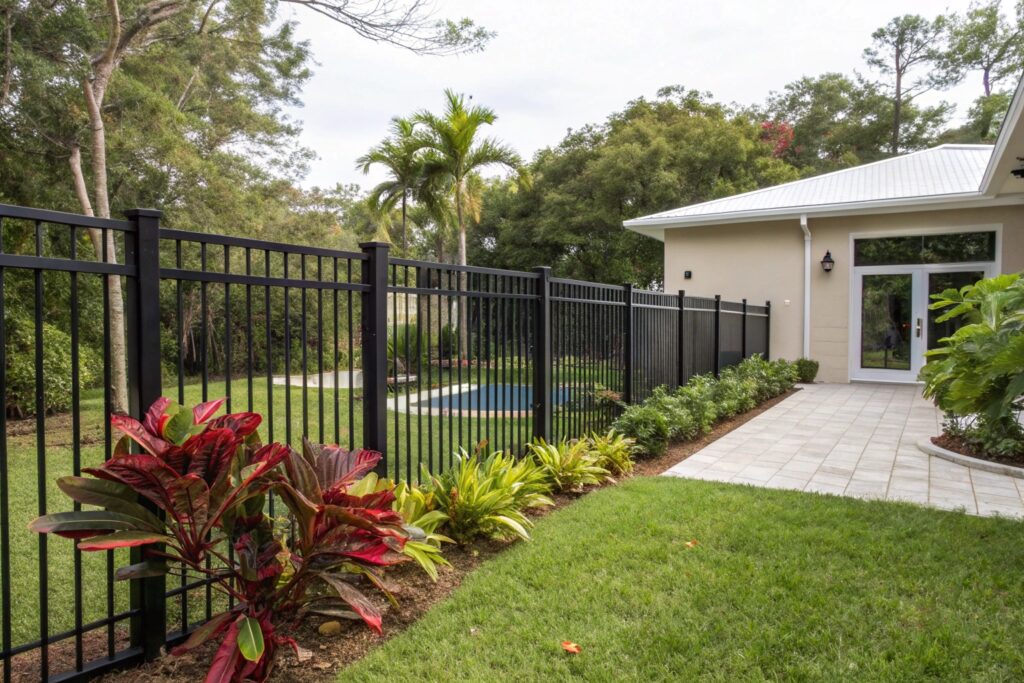
The open sightlines are the real advantage around a pool. Clear visibility lets you watch kids and pets in the water from the patio or kitchen window without a solid panel to block sightlines. And ornamental aluminum reads as clean and modern, so it works with both traditional and contemporary Seattle homes while adding aesthetic appeal and curb appeal. Aluminum is low maintenance, not maintenance-free, but for the money it asks of you, that’s a fair trade.
Why Aluminum Is a Low Maintenance Choice Next to Other Materials
Compared with wood fencing, aluminum asks very little of you. There’s no staining, no sealing, and no boards to replace. Set against other fence materials like vinyl fencing or wrought iron, aluminum lands in a sweet spot: it won’t rust like older iron, and it keeps its finish better than many alternatives. The powder coating handles the weather, so your routine comes down to an occasional rinse and a gate check. That almost no upkeep reality is a big part of why so many pool owners land on aluminum fences after weighing the other options.
Aluminum Pool Fence Style Options That Don’t Close In Your Yard
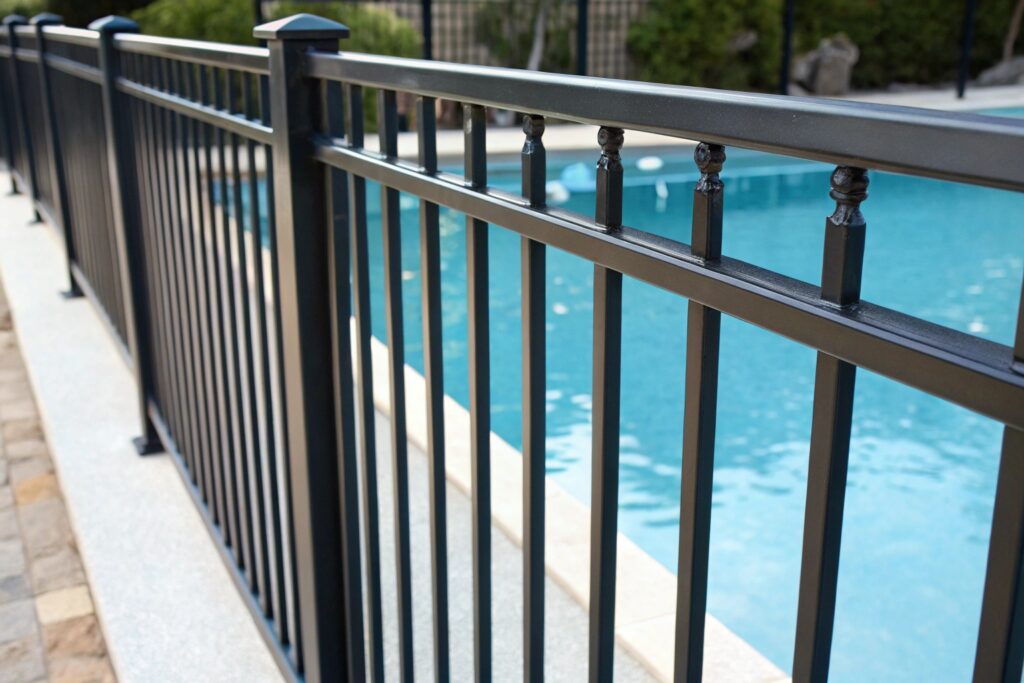
Safety and an open feel aren’t at odds. Black ornamental aluminum is the popular choice because the thin pickets nearly disappear against greenery, keeping the yard feeling large. A 2-rail flat top gives a clean modern line. If you have small children or pets, a puppy picket design tightens spacing near the bottom so nothing slips through, while staying under the 4-inch rule everywhere. These are the key features many homeowners look for.
Some homeowners also ask about a mesh pool fence, a removable option with fine netting stretched between posts. It can be handy as a temporary or seasonal layer, but most pool fences that serve as the permanent barrier are built from rigid aluminum fence panels for long term stability and a finished look. We’ll walk you through where each fits.
Gate placement is part of the design, not an afterthought. We position gates for how you actually use the yard, then match the hardware to code. If you already have cedar, horizontal, hogwire, or aluminum fencing on the property, we can match or complement it so the pool barrier looks intentional. No cookie-cutter jobs here. We tailor the layout to your yard, your privacy, and the way you want the space to feel.
Aluminum Fence Cost Breakdown: What Affects the Price of Pool Fencing?
We don’t post per linear foot pricing, and honestly, you should be skeptical of anyone who quotes a pool fence sight unseen. Too much depends on your specific yard. Here’s the cost breakdown of what actually moves the fence cost:
- Total linear footage and the number of corners, since more material scales the total cost
- Fence height and the aluminum grade, style, and finish
- Number and width of gates, plus code-compliant gate hardware
- Slope, retaining walls, stairs, or tiered yards on sloped terrain
- Soil and drainage conditions at the footings, and mounting on a pool deck
- Removal and disposal of an existing fence
- Core-drilling, concrete, or deck mounting on hard surfaces
- Electrical coordination for automatic gates or access control as additional features
- Labor costs tied to site access, terrain, and how complex the fence installation is
- Permit context, local requirements, and any plan requirements
Aluminum usually carries a slightly higher upfront cost than the lowest-end fence materials, but it earns that back over a fence that lasts decades with almost no upkeep. That makes it cost effective in the long run, and it protects your home value. The two biggest levers are high quality materials and labor costs, and a difficult, sloped site raises the effective cost per linear foot compared with a flat, open run. Most residential pool fence installs run about 2 to 4 days once we’re on site, after we’ve marked fence lines and located utilities. You get a written scope with transparent pricing and no hidden fees, so the final price is a number you understand, and final payment isn’t due until the work is complete and you’re happy with it.
Professional Installation: Common Seattle Challenges We Solve on Sloped Yards
Seattle yards are rarely flat and simple, and the installation process around a pool takes more planning than a straight backyard run. Slope is the big one for pool fencing, because a fence that follows a grade change can open up a bottom gap wider than the 2 inches code allows over grass. We step or rack aluminum fence panels and adjust footings so the barrier stays compliant along its whole run.
Wet conditions and drainage affect how footings are set and cured. Tight side yards, shared fence lines, existing landscaping, and pool equipment placement all shape the layout. Because Dan’s background covers grading, drainage, retaining walls, and motorized gates, we solve the awkward site conditions instead of forcing a stock panel where it doesn’t fit. Professional installation is the difference between a pool fence that passes inspection the first time and one that fails on a gap or a gate detail. We love a challenge, and the tricky yards are where good workmanship shows.
How to Maintain an Aluminum Pool Fence in Seattle
Ongoing maintenance is minimal, which is part of the low maintenance appeal. A few habits keep it safe and looking sharp:
- Rinse and wipe down the fence panels and hardware a couple of times a year
- Test the gate’s self-close and self-latch regularly, since this is your main safety point
- Keep toys, patio furniture, and anything climbable out of the 36-inch clear zone outside the barrier
- Inspect posts, gates, and footings after a big Pacific Northwest windstorm
- Trim back vegetation so nothing gives a child a foothold near the fence
Because the powder coating shrugs off moisture, you won’t be repainting or resealing the way you would with wood, which is one more way aluminum keeps increasing durability over the years. That’s the practical payoff of aluminum in our climate.
What to Ask Before Hiring a Pool Fence Contractor in Washington
If you’ve been burned by a contractor before, this section is for you. Every construction contractor in Washington must register with L&I, which means carrying a surety bond and general liability insurance. You can verify active registration, bonding, and insurance yourself through L&I’s contractor lookup tools before you sign anything.
Beyond the paperwork, ask the questions that separate a fence installer from a pool-barrier builder:
- Have you built pool barriers to current Seattle and King County safety codes?
- What gate hardware do you use for self-closing and self-latching?
- How do you handle sloped yards and bottom gaps during pool fence installation?
- Will I get a written scope and clear payment schedule?
- Who cleans up, and who handles the final inspection?
- What warranty backs the high quality materials and the professional installation?
How DH Fence Pros Approaches Aluminum Pool Fencing
We started in West Seattle in 2015, founded by Dan Hignite, and we’ve stayed a founder-led, craft-first crew ever since. Between us we bring 25+ years of combined hands on experience, and we’re fully licensed, bonded, and insured.
Every pool fence we build is custom to your yard: tuned to your slope, drainage, pets, and the balance of privacy, security, and curb appeal you’re after. We keep the job site clean, keep you informed from the on-site estimate through the final walkthrough and the final inspection, and stand behind the fence installation with a 36-month installation warranty. Transparent pricing, no hidden fees, no surprises. That’s how we like to work, and it’s why Dan’s name keeps showing up in our reviews.
Frequently Asked Questions
What is the minimum height for a pool fence in Seattle?
Do pool fence gates need to open away from the pool?
Can aluminum fences meet pool safety code?
How much does aluminum pool fencing cost?
Can my house count as part of the pool barrier?
How do I verify a fence contractor in Washington?
Schedule Your Free On-Site Pool Fence Estimate
Because pool fencing is site-specific, the best next step is a quick visit to your yard so we can build the right plan for it. Call or text us at (206) 330-6709, or request a fence consultation online, whichever’s easiest for you. We’ll look at your slope, gates, and layout, and give you a clear, honest estimate on your aluminum pool fence. Serious About Service. Passionate About Fences.