
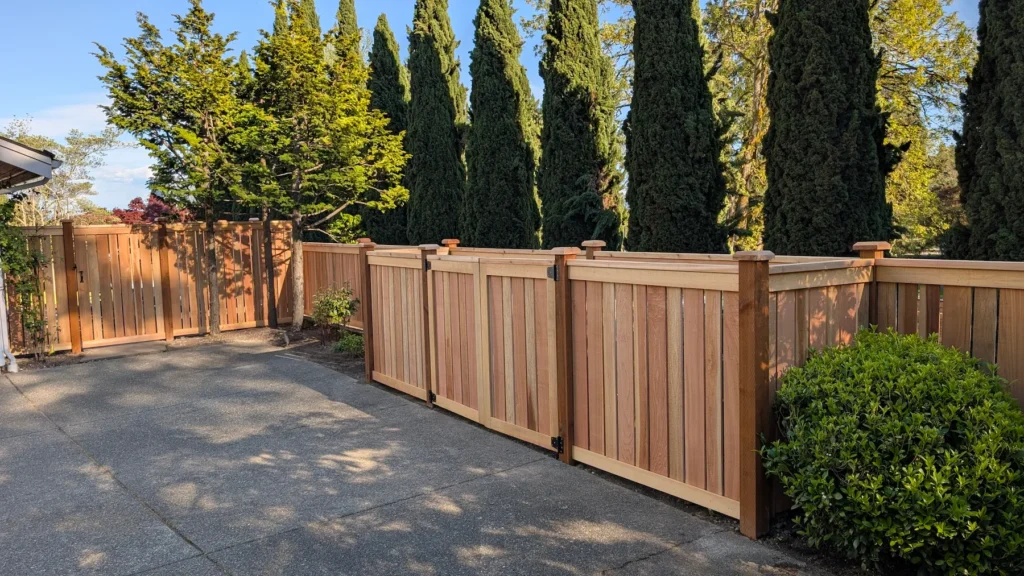
In Seattle, the failure point of a fence is rarely the cedar boards themselves. More often, the real issue is the foundation of the fence: the posts set into the ground and the moving parts of the fence — especially the gates.
A fence is only as strong as the structure supporting it. While cedar boards can last for many years when properly maintained, the posts and gate systems are typically where we see premature failure occur.
Fence posts are what support the entire structure long term. In most residential fence applications, pressure-treated posts are used because they are designed for long-term ground contact. These posts can be set directly into the ground, but proper installation is critical.
One of the most common issues we see in failed fences is simply not enough concrete surrounding each post.
This becomes even more important in situations like:
All of these situations place additional strain on the posts and require stronger footing support beneath the surface.
The next major failure point is gates.
Unlike a standard fence panel, a gate is constantly moving and placing stress on the supporting post. One post is typically responsible for carrying the entire weight of the gate while also resisting the force created every time the gate opens and closes.
If the supporting posts are not set properly or allowed enough time to cure before the gate is installed, sagging can occur over time.
We commonly see issues such as:
Gate size also matters. If a gate is built too wide, it can simply become too heavy for a single post to support long term, even with strong hardware and quality construction. There is a practical limit to how large a gate can be while still maintaining proper long-term performance.
This is why proper gate framing, hardware selection, post installation, and realistic sizing all matter significantly.
Another major cause of premature fence failure is lack of maintenance.
Staining a fence can dramatically help prolong the life of the fence boards and overall condition of the structure. A quality stain helps:
While staining does need to be redone every few years, it can significantly extend the overall lifespan of a cedar fence.
In Seattle, moisture management is critical.
We often see fences deteriorate early because of long-term dirt, mulch, or leaf buildup sitting against the base of the fence. Constant moisture trapped at the bottom of the boards can accelerate rot and weaken the fence over time.
Sprinklers are another surprisingly common issue. Sprinkler systems that constantly soak the fence can quickly deteriorate the integrity of the wood.
Plants and vines can also create problems. While they may look attractive initially, vines growing over fences add weight, trap moisture, and accelerate deterioration.
One of the most overlooked parts of fence construction is addressing soil and grade differences between neighboring properties.
When one side of the property sits higher than the other, soil pressure can gradually push against the fence over time. This added pressure can lead to leaning, rot, and structural failure if not properly addressed.
In many cases, retaining solutions are necessary to protect the long-term integrity of the fence.
This may include:
Keeping long-term soil pressure and moisture away from the fence is one of the most important ways to improve fence longevity.
A fence that lasts is about much more than just the cedar boards you see above ground.
Long-term performance comes down to:
At DH Fence Pros, we focus heavily on the structural side of fence construction because that is what truly determines how a fence performs years down the road.
A well-built fence should not only look good when it is first installed — it should continue performing properly through Seattle’s wet climate and changing seasons for years to come.

Transform your Seattle property with custom fence installation backed by 25+ years of expertise and 80+ 5-star reviews. Contact DH Fence Pros today for a professional estimate and expert service you can trust.
Fences in Seattle often lean because of improper post installation, inadequate concrete support, soil movement, moisture exposure, or pressure from slopes and retained soil. In many cases, the issue is not the cedar boards themselves, but the structural foundation beneath the fence.
Most residential fence posts in Seattle should typically be set approximately 18–24 inches deep, depending on the style and height of the fence, terrain, soil conditions, and whether gates are attached. Taller fences, fences on slopes, and heavy gate posts often require deeper and stronger footing support.
Fence gates commonly sag because the supporting posts are not strong enough, were not allowed enough time to cure, or the gate itself is too large and heavy for a single post to support long term. Proper framing, hardware, and post installation are critical for long-term gate performance.
Yes. Staining helps protect cedar fences from excessive moisture absorption, UV exposure, and seasonal movement caused by Seattle’s wet winters and dry summers. Regular staining can help reduce warping, preserve appearance, and prolong the overall life of the fence.
Yes. Sprinklers that constantly soak the base of a cedar fence can accelerate rot and deterioration over time. Keeping excessive moisture away from the fence is important for preserving the long-term integrity of the wood.
Reliable, on-time coverage across the Greater Seattle Area.
DH Fence Pros
Serious About Service. Passionate About Fences.
RESOURCES
Monday – Saturday: 8:00am – 8:00pm
Contact Form: Available 24/7 (We respond within 1 business day)
© 2025 DH Fence Pros. All Rights Reserved.
We’ve partnered with Enhancify to offer fast and flexible financing for fences and driveway gates.