

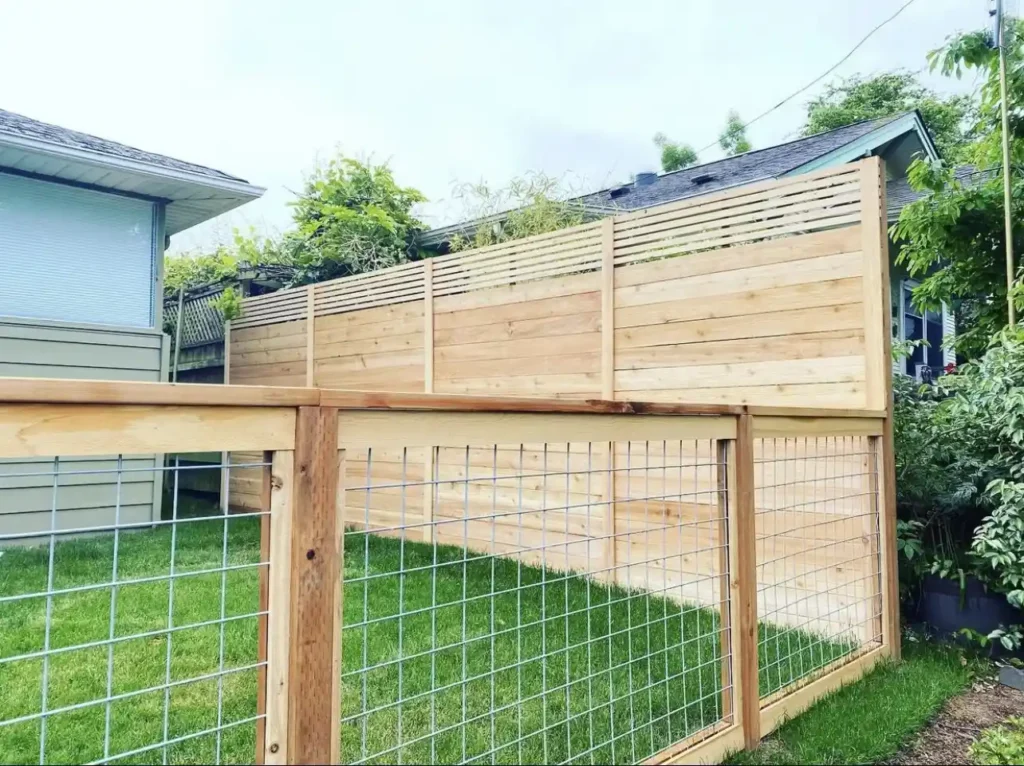
Hog wire fencing is an ideal choice for the Pacific Northwest climate, featuring an open grid of heavy-gauge galvanized panels that allows wind and natural light to pass through, promoting faster drying and discouraging moss growth across 156 annual rainy days. The design combines architectural curb appeal with functional pet containment and garden protection, easily adapting to sloped Seattle properties through stepped or racked layouts. While building construction permits are technically exempt for structures up to 8 feet tall (without heavy masonry over 6 feet), local SDCI residential zoning limits backyard heights to 6 feet—allowing up to 2 extra feet of open structural work like an arbor—and restricts front setbacks to a maximum height of 4 feet.
The best hog wire fencing ideas for Seattle yards pair open welded-wire panels with cedar, steel, or aluminum framing to keep pets and gardens protected without blocking light, airflow, or views. The strongest fence styles are built for Pacific Northwest rain, sloped lots, and front-yard height limits, with the right level of privacy, security, and curb appeal for each part of your yard. If you’re planning a fence and want it to look sharp and hold up through Seattle winters, you’re in the right place. Every style below is tied to a real yard need, so you can pick one that fits your property instead of a generic picture.
What Is a Hog Wire Fence?
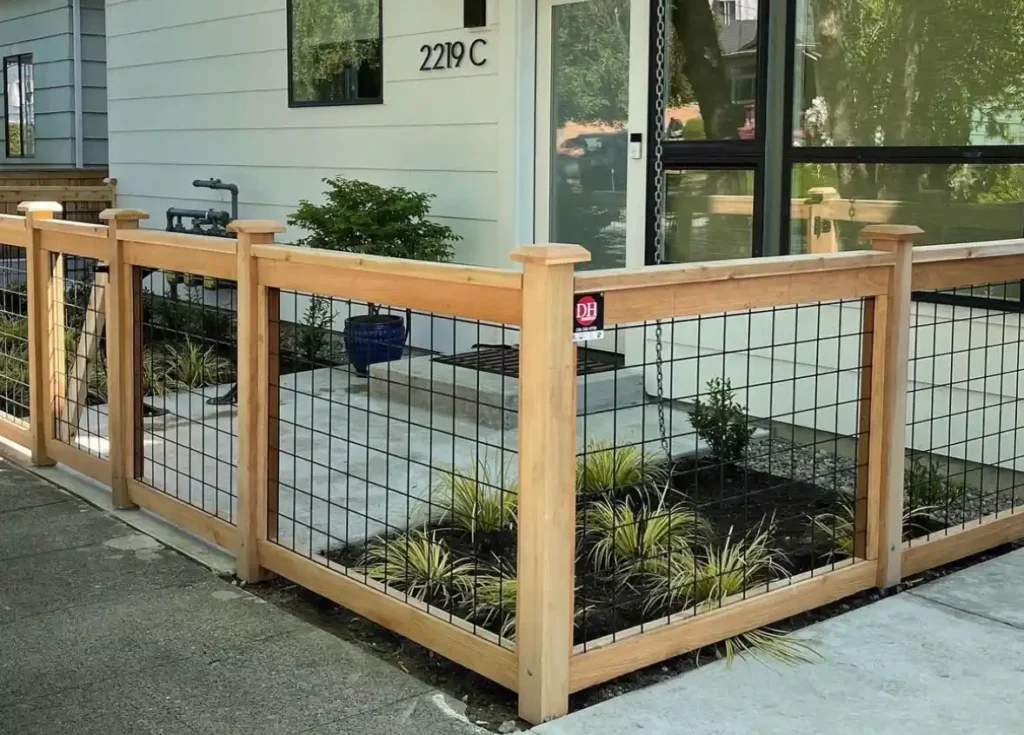
A hog wire fence is an open grid of heavy-gauge welded (sometimes woven) wire panels held inside a frame of cedar, steel, aluminum, or pressure-treated wood. Some designs use metal frames for a modern edge, while others use wood frames for warmth. The frame gives the hog wire panels rigidity and support, while the posts anchor everything and the wire keeps the fence visually permeable so you can still see through it. The term gets used broadly for hog panels, cattle panels, and welded-wire fence panels, which look similar at a glance. Galvanized coatings help the metal wire resist corrosion. Hog wire is a strong pick for visibility, airflow, gardens, pets, and marking a boundary, and it’s a great option where you want a sturdy line without a solid wall. What it won’t do on its own is give you full privacy, and that tradeoff shapes almost every decision below.
Why Hog Wire Fencing Works So Well in Seattle Yards
Seattle averages around 39 inches of rain a year across roughly 156 wet days, though it varies a lot by neighborhood and microclimate. That moisture is exactly why the open-grid design fits our climate. Solid privacy boards trap dampness, while hog wire lets wind and air move through, helping the yard and the fence dry faster and discouraging moss and mold. You keep your garden and your views open, which matters on the smaller lots common across the Greater Seattle area. Hog wire fencing also pairs naturally with cedar, horizontal, and aluminum fencing, plus custom gate details, so it can carry your whole design language. Done right, it delivers privacy, security, and curb appeal without closing off the space. It works for residential yard fences and commercial perimeters alike.
Before You Choose a Hog Wire Style
A hog wire fence should fit your property, not a template. These are the questions our crew walks through on an on-site visit so the design matches how you actually use your yard:
- Do you want openness, or do you need privacy in certain spots?
- Is pet containment a goal, and how big are your pets?
- Is this a front yard, side yard, garden, patio, or full perimeter?
- Is the yard sloped or uneven, or is it mostly flat?
- Is there a retaining wall involved?
- Are there utilities, property-line questions, or right-of-way concerns near your neighbors?
- Do you want a natural cedar look, a modern black finish, or a mixed-material design?
- What does your budget allow, and how does that shape the material and the size of the project?
Your answers point to the right style. Here are twelve fence styles to consider.
12 Hog Wire Fence Ideas: Stunning Styles for Seattle Yards
These twelve styles are grouped loosely by look, yard zone, and terrain, so you can find the one that fits your situation. They cover different areas of the property, from front yards to backyard living spaces.
1. Classic Cedar-Framed Hog Wire Fence
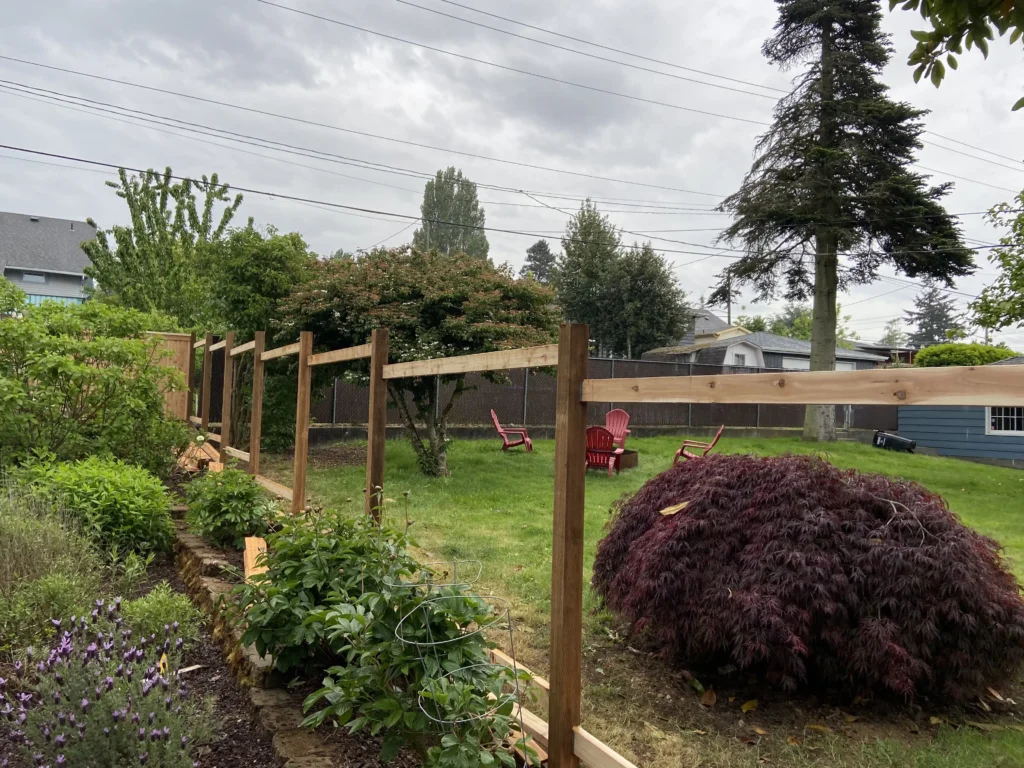
Best for gardens, backyards, and property lines where warmth matters. Cedar posts and rails hold welded wire infill for a soft, traditional feel with wide-open sightlines. Seattle-ready: western redcedar heartwood is naturally rot-resistant, which helps this wood stand up to our wet weather when it’s stained and detailed properly. A durable, long-lasting choice that still lets your garden breathe.
2. Black Powder-Coated Hog Wire With Cedar Posts
Best for modern homes and high-contrast curb appeal. Black powder-coated wire panels set against warm cedar posts create a clean, striking line at the edge of your yard. Seattle-ready: powder coating minimizes corrosion in damp, near-coastal air, so the finish stays crisp. Sleek, low-maintenance, and hard to miss from the street. This is one of the most popular modern looks for front yards.
3. Horizontal Cedar and Hog Wire Hybrid
Best for homeowners who love horizontal cedar boards but want more light and visibility. Alternate solid horizontal cedar boards with open wire panels to balance screening and openness. The vertical boards and horizontal runs together give the design real character. The result feels contemporary without walling off the yard. Great for a side yard where you want a little cover but not a solid barrier.
4. Hog Wire Garden Trellis Fence
Best for climbing plants and edible gardens. The wire grid doubles as a trellis, so vines and greenery add softer, seasonal privacy over time. Seattle-ready: the open design keeps airflow moving through the foliage, which helps leaves dry between rains and cuts down on mildew.
5. Raised-Bed Hog Wire Garden Enclosure
Best for vegetable gardens and keeping pets out of your beds. The wire enclosure ties directly into raised beds to define a growing space. If you have small, curious animals, ask about mesh size, since tighter openings keep out the critters that squeeze through standard hog panels.
6. Low Front-Yard Hog Wire Fence
Best for curb appeal and garden edges out front. Keep it low and open for a neighborly boundary that still reads as intentional. Seattle limits front and street-side fences to about 4 feet in the cited residential zones, so height matters here (see the rules section below). Visually permeable and welcoming, which is why so many front yards use this approach.
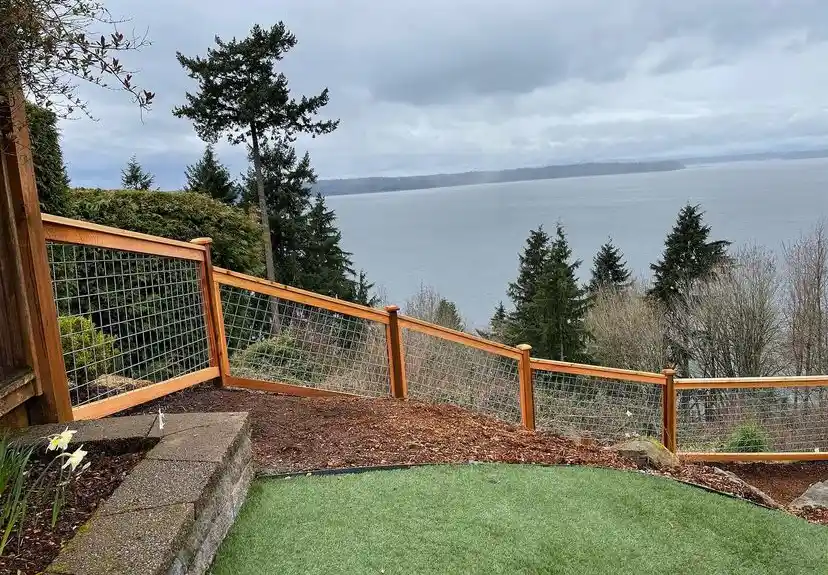
7. Stepped Hog Wire Fence for Sloped Yards
Best for steeper Seattle lots. Level fence panels step down the grade in even sections for a clean, architectural line. This is a common look on Seattle hillsides. Slope changes how height is measured under city code, so plan the step pattern around the rules below to keep it compliant and good-looking.
8. Racked Hog Wire Fence That Follows the Grade
Best for gentle slopes. Instead of stepping, the panels rack to flow with the ground, closing the gaps at the bottom you’d get from level panels on uneven terrain. That tight bottom line makes it a solid pick for pet containment where the yard rolls.
9. Hog Wire and Cedar Privacy Combo
Best for yards that need partial screening near a patio or alley while staying open elsewhere. Use solid cedar boards where you want cover and wire where you want light and views. It’s an honest way to handle the privacy tradeoff without turning the whole yard into a box.
10. Steel-Post or Aluminum-Frame Hog Wire Fence
Best for a sleek, durable, low-maintenance modern look. Steel or aluminum metal framing holds up well in wet Seattle soil, and hot-dip galvanized steel is built for damp climates. The finish is corrosion-resistant and clean-lined, a refined alternative to a chain link fence when you want something with more presence than plain chain link. We’ll say corrosion-resistant, not rustproof, because no metal is truly the latter.
11. Custom Hog Wire Gate Feature
Best for walkways, side yards, and garden entries. A custom hog wire gate with matched hardware can echo your driveway gate design for a cohesive look. No cookie-cutter jobs here, so the gate is built to your opening and your style.
12. Patio Divider With Hog Wire, Cedar, and Lighting
Best for outdoor living zones where you want structure and ambiance, not full enclosure. A short hog-wire-and-cedar divider with integrated lighting defines the patio while keeping the space feeling larger. Openness is the whole point, and it works nicely as a backyard fence between a living area and the rest of the lawn where you gather friends.
Quick Style Guide by Yard Need
Not sure where to start? This table matches each style to the yard need it solves best, so you can narrow things down fast before your on-site visit.
| Style | Best For | Key Benefit |
|---|---|---|
| Classic Cedar-Framed | Gardens, backyards, property lines | Warm, traditional look with open sightlines |
| Black Powder-Coated With Cedar Posts | Modern homes, front yards | High-contrast curb appeal, low maintenance |
| Horizontal Cedar and Hog Wire Hybrid | Side yards wanting partial cover | Balances screening and openness |
| Garden Trellis Fence | Climbing plants, edible gardens | Doubles as a trellis, seasonal privacy |
| Raised-Bed Garden Enclosure | Vegetable gardens, keeping pets out | Defines a protected growing space |
| Low Front-Yard Fence | Curb appeal, garden edges out front | Neighborly, welcoming boundary |
| Stepped for Sloped Yards | Steeper Seattle lots | Clean, architectural stepped line |
| Racked Following the Grade | Gentle slopes, pet containment | Tight bottom line, no gaps |
| Cedar Privacy Combo | Patios, alleys needing partial screening | Cover where you want it, views elsewhere |
| Steel-Post or Aluminum-Frame | Sleek, low-maintenance modern look | Corrosion-resistant, refined lines |
| Custom Gate Feature | Walkways, side yards, garden entries | Cohesive design with matched hardware |
| Patio Divider With Lighting | Outdoor living zones | Structure and ambiance without enclosure |
Seattle Fence Rules to Know Before You Build
A quick rundown before you commit to a style. The Seattle Department of Construction & Inspections (SDCI) is the authority here.
- Fences 8 feet high or less generally don’t need a permit, as long as masonry or concrete elements aren’t over 6 feet and the fence isn’t in a flood-prone area.
- Many neighborhood residential and multifamily zones cap fence height at 6 feet, with up to 2 more feet of open features like arbors or trellises.
- Front and street-side setbacks are limited to about 4 feet.
- On slopes, a fence can reach 8 feet if the average height between posts is 6 feet, so a taller line is possible where the grade allows.
- A fence on a retaining wall used to raise grade is capped at a combined 9 feet 6 inches, so check before treating it as a simple upgrade.
- Washington law requires calling 811 at least two business days before digging posts. Any HOA may add its own rules.
Rules change, so verify current SDCI requirements before building.
Best Materials for a Seattle-Ready Hog Wire Fence
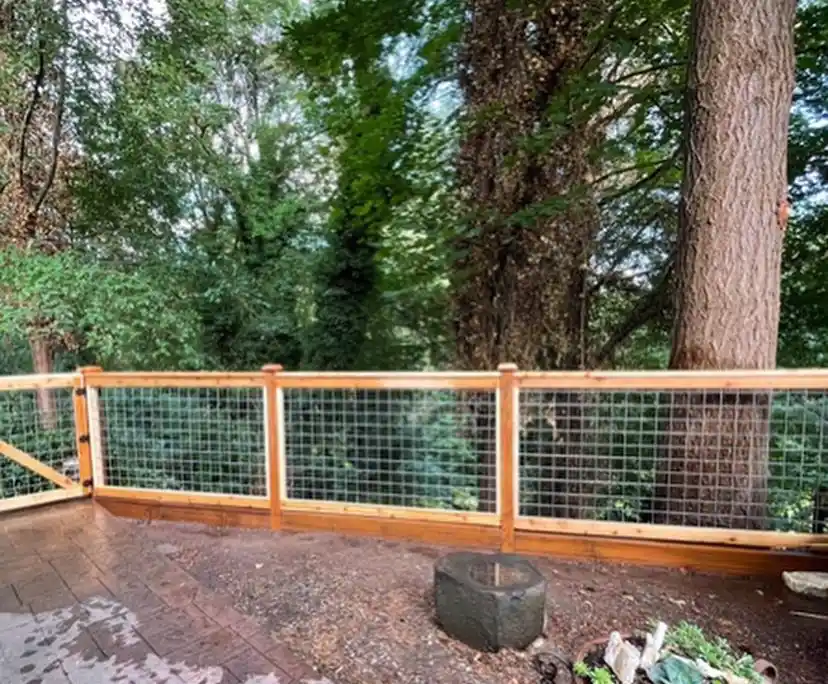
Material choice is what separates a fence that lasts from one that fails after a few wet winters, and it also drives the cost of the project. Here’s what we recommend for Pacific Northwest conditions:
- Cedar frames: western redcedar heartwood resists rot naturally. This wood still needs periodic stain or seal to hold its color and shed moisture, and quality boards are less likely to warp over time.
- Wire panels: galvanized or powder-coated hog wire panels are designed to resist rust in our damp air.
- Metal framing: steel or aluminum posts hold up in wet soil, and hot-dip galvanized steel is a strong long-term option with minimal upkeep.
- Posts in ground contact: ground-contact-rated treated posts where the design calls for it, set in concrete for drainage and secured for a stable frame on any surface.
We’ll always call these materials corrosion-resistant rather than rustproof, because that’s the honest word. Good detailing and professional craftsmanship matter as much as the material itself. For upkeep, see our cedar fence maintenance guide.
How Cost and Budget Shape Your Hog Wire Fence
Hog wire fencing spans a wide range depending on the frame material, the size of the panels, and how much custom work the layout calls for. A simple cedar frame with standard hog panels sits at one end, while a powder-coated steel frame with custom gates and lighting sits at the other. Pricing is generally figured by the linear foot, and slope, retaining walls, and long runs all add labor costs. The honest way to plan your budget is a free on-site estimate, where we measure your yard and give you transparent pricing with no hidden fees, so the number you see is the number you pay. Whether you want to install a fresh line or replace an aging one, we scope it clearly. We never publish a one-size figure, because no two Seattle yards are the same.
When Hog Wire Isn’t the Best Choice
Straight talk: hog wire isn’t right for every yard. If you need full privacy everywhere, privacy cedar fencing is the better call, or a hybrid that uses wire only where views are welcome. Have very small pets? Ask us about mesh size and bottom detailing before you assume standard panels will contain them. Hog wire and cattle panels are also used to contain livestock on larger rural properties, which gives that rustic, country feel some homeowners love, though tighter mesh matters for smaller animals. For a pool or spa, hog wire needs a code review first, since standard openings may not meet pool-barrier rules under Washington DOH and CPSC guidance (barriers at least 4 feet tall, no 4-inch sphere passing through). And if heavy security screening is the goal, we’ll talk through alternative or hybrid designs.
Why Work With DH Fence Pros
Dan Hignite founded DH Fence Pros in West Seattle in 2015, and we’ve grown into a tight, craft-first crew serving the Greater Seattle area. We’re fully licensed, bonded, and insured, and we build custom cedar, horizontal, hog wire, and aluminum fencing, plus driveway gates, retaining walls, and staining, all engineered for Pacific Northwest rain, wind, moisture, and slopes. That versatile range lets us create a look that fits your home and adds real beauty and functionality. The difference between a fence that lasts and one that fails often comes down to who you hire, so it pays to choose a team with genuine support behind every install. You get transparent pricing with no hidden fees, a 36-month installation warranty, and a free 30-minute on-site estimate where we walk your property and match the design to your yard. Of course, every project is handled by a professional crew that respects your time and cleans up when the work is done. Financing is available through Acorn.
Frequently Asked Questions
Do hog wire fences provide privacy?
Not on their own. Hog wire is designed for visibility and airflow, so it defines a boundary without blocking views. For screening, pair wire panels with solid cedar boards or add climbing plants over time.
Is hog wire fencing good for dogs?
Yes, for many dogs. On sloped yards, a racked design closes gaps at the bottom that pets could slip under. For small breeds or diggers, ask about mesh size and bottom detailing so the fence actually holds them.
Does hog wire fencing rust in Seattle rain?
Quality panels are galvanized or powder-coated to resist corrosion, and metal frames can be hot-dip galvanized for wet climates. No fence is rustproof, but the right materials and installation are built to last through our winters, and that durability is worth every bit of the planning.
How tall can a hog wire fence be in Seattle?
Many residential zones cap height at 6 feet, with front and street-side setbacks limited to about 4 feet. On slopes, up to 8 feet is allowed if the average between posts is 6 feet. Always verify current SDCI requirements.
Can hog wire fences work on sloped yards?
Absolutely. Stepped panels give steep lots a clean, level line, while racked panels flow with gentler grades. Both are common on Seattle hillsides and can be planned around the city’s slope-averaging code.
Ready to see which style fits your property? Call or text us at (206) 330-6709 or request a free estimate to schedule your on-site visit. Serious About Service. Passionate About Fences.