

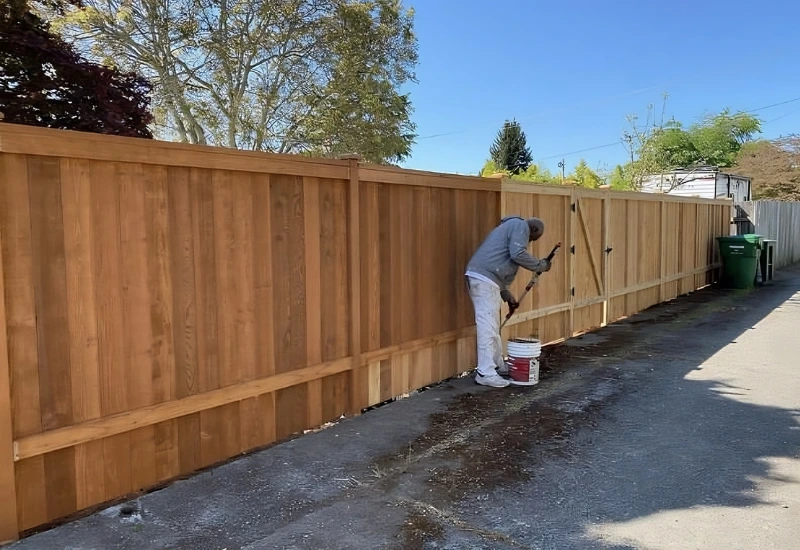
Cedar fences are a favorite choice for Seattle homes because they look natural and handle Pacific Northwest weather better than most wood types. However, Seattle’s heavy rainfall and long wet seasons can still damage cedar if it is not properly stained.
This guide explains how to stain your cedar fence, how often to do it, and what products work best in Seattle’s climate. If your cedar fence needs repairs before staining, our team at DH Fence Pros can help restore it.
Why Cedar Fence Staining is Important in Seattle
Seattle weather can cause cedar to absorb moisture quickly. This leads to moss growth, discoloration, and early aging. If you want to know how cedar performs in our climate before staining, read our Cedar Fence Seattle Benefits and Cost Guide for more details.
Staining helps prevent:
Wood rot
Moisture absorption
Moss and mold growth
UV fading during summer
Warping and cracking
Premature aging
Additionally, stain makes the fence look cleaner and more uniform, which is helpful for homes near trees, bushes, or constant shade.
How Often Should You Stain a Cedar Fence in Seattle
Seattle homeowners should plan to stain their cedar fence every 2 to 3 years. The exact timing depends on:
How much shade the fence gets
Whether it touches soil or plants
Amount of rainfall and moisture
The stain product used
New cedar fences should be stained 4 to 8 weeks after installation once the wood is fully dry.
Best Stain Types for Seattle Weather
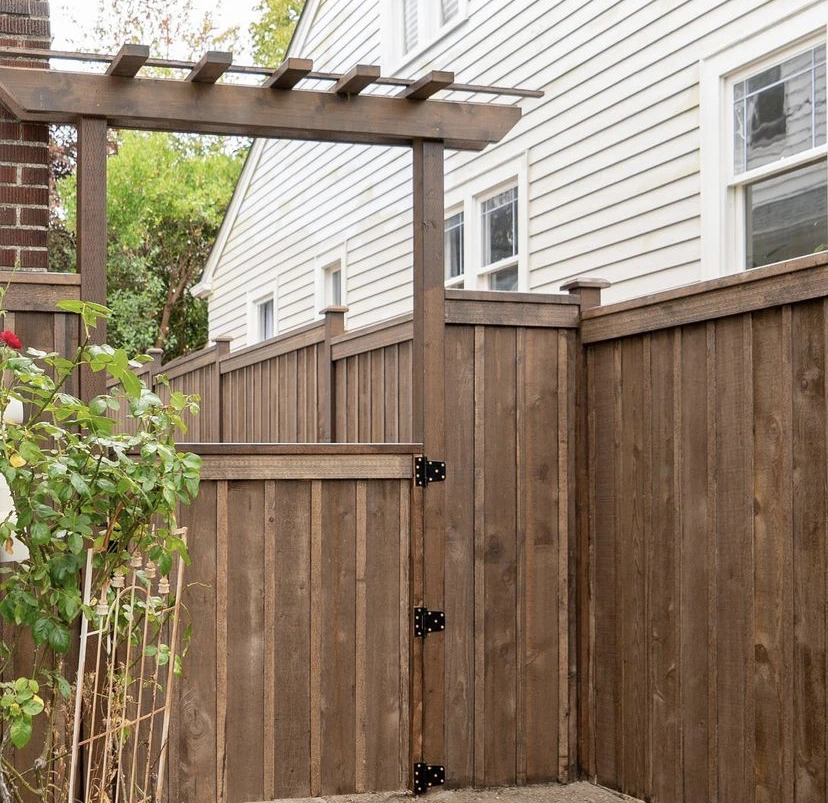
Because Seattle sees moisture nearly year round, the stain you choose matters. Here are the best types for long lasting results:
Oil Based Stains
Offer deeper penetration and better moisture resistance.Semi Transparent Stains
Protect well while showing some natural wood grain.UV Blocking Stains
Protect against sun exposure during dry months.Mildew Resistant Formulas
Designed for shaded or moss prone areas.
Oil based and semi transparent stains work best in Seattle because they protect cedar from constant rain. However, if you prefer a material that does not need staining, our Aluminum Fence Seattle Guide explains why many homeowners choose low maintenance metals for wet climates.
How to Prepare a Cedar Fence for Staining
Proper preparation is the key to a long lasting finish. Follow this simple process:
Step 1: Clean the fence
Remove dirt, mildew, and moss. A light pressure wash is helpful but keeps the pressure low.
Step 2: Let the wood dry
The fence must be completely dry before applying stain. In Seattle, drying usually takes 24 to 48 hours.
Step 3: Sand rough spots
Light sanding helps stain absorb evenly and prevents blotching.
Step 4: Cover nearby surfaces
Use painter’s tape and plastic to protect plants, grass, or concrete.
Best Time to Stain a Fence in Seattle
The best staining season in Seattle is:
Late spring
Summer
Early fall
Additionally, check the forecast to ensure 24 to 48 hours of dry weather. Avoid staining when temperatures drop below 50 degrees or rain is expected.
If you are unsure when your fence is ready, our team can provide guidance based on local weather trends and wood condition.
DIY or Hire a Professional
You can stain your cedar fence yourself, but Seattle’s climate makes the job more technical. Hiring a professional ensures:
Correct pressure washing
Proper drying time
Repairs before staining
Commercial grade stains
Smooth and even application
You can stain your cedar fence yourself, but hiring a trained contractor ensures proper cleaning, drying, and application. If you want to understand the advantages of hiring a licensed company, visit our blog on Benefits of Hiring Licensed Fence Contractors in Seattle.
How to Maintain a Stained Cedar Fence
Even after staining, simple upkeep helps protect your fence:
Rinse off dirt or pollen once a year
Trim plants touching the fence
Remove moss early
Check for fading or water absorption
Re stain when water stops beading on the surface
Additionally, fences with heavy tree coverage or constant shade may need more frequent touch ups.
How long does stain last on a cedar fence in Seattle?
Most stains last 2 to 3 years because of Seattle’s moisture and rain. Homes with heavy shade or tree coverage may need touch ups sooner.
When is the best time to stain a fence in Seattle?
The best time is late spring through early fall when the weather stays dry and temperatures are above 50 degrees.
Can I stain my fence right after pressure washing?
No. The fence must be completely dry. Moisture inside the wood can prevent stain from absorbing properly.
Do I need to clean my cedar fence before staining it?
Yes. Cleaning removes dirt, mildew, and moss so the stain can penetrate the wood evenly.
Does cedar turn gray if I do not stain it in Seattle?
Yes. Cedar exposed to Seattle’s rain and UV light will naturally fade and turn gray over time.
Is oil based stain better for Seattle’s wet climate?
Oil based stain is usually the best choice because it penetrates deeper and handles moisture well.
Do you offer financing for fence maintenance or staining?
Yes. We offer financing through Acorn. You can request information through our Contact Page and we will guide you through the simple process.