

Key Takeaway
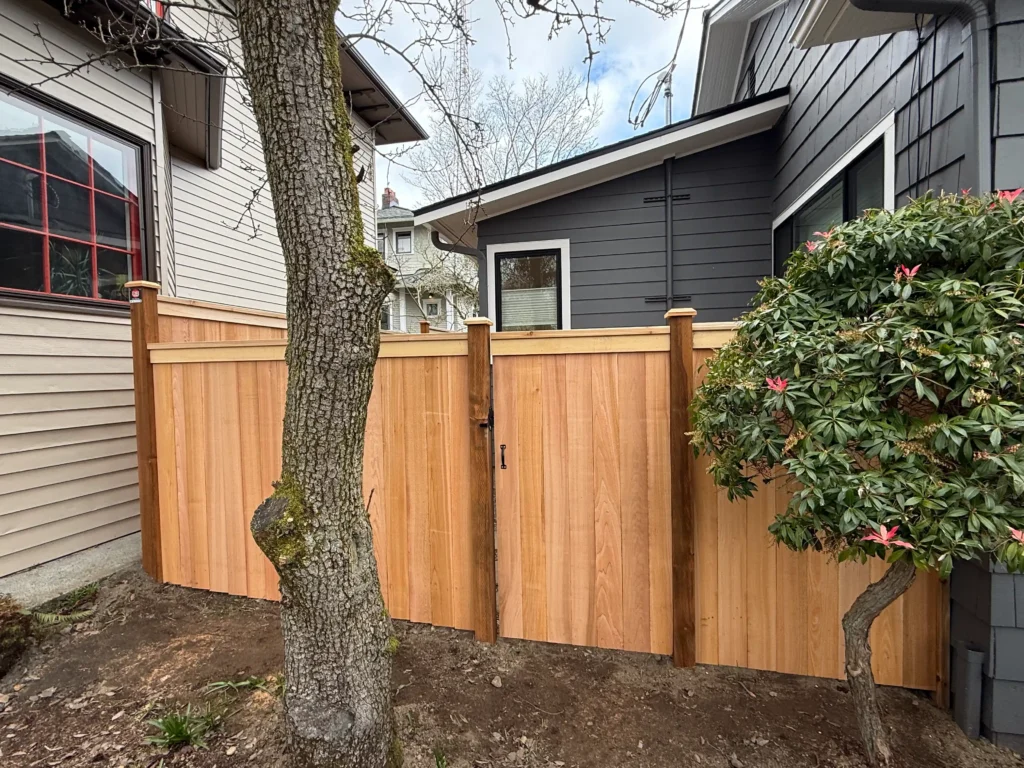
For cedar fence panels vs. pickets, choose panels on straight, level runs where speed matters, and choose individual pickets for sloped yards, tight privacy, pets, or gates. Pickets are installed board by board, letting crews rack to grade and close bottom gaps that rigid panels leave open. Cedar of either type lasts 15 to 25 years in Pacific Northwest weather, outlasting pine by a decade or more.
Here’s the short version. Choose cedar fence panels when your run is straight, level, and simple, and you want a fast, uniform install. Choose individual pickets when you need a custom fit: slopes, tight privacy, pet containment, gates, or easy board-by-board repairs. Panels come pre-assembled and go up quickly. Pickets are installed one board at a time, which lets a crew shape the fence to your actual yard.
If you’re comparing options before you buy materials or hire a crew, that’s the decision in a nutshell. This guide breaks down the real differences so you can decide with confidence. One Seattle-specific note before we go deeper: local yards rarely give you perfect flat conditions. Between slopes, mature landscaping, and shared property lines, the panels-versus-pickets choice matters more here than it does on a flat lot somewhere else.
What’s the Difference Between Fence Panels and Wood Fence Pickets?
Three terms come up constantly, and it helps to define them plainly.
Pre-built cedar fence panels are pre-assembled sections. They commonly run 3 to 6 feet high and are typically built with 2×4 rails and 1×6 boards. You buy them as a unit and set them between posts.
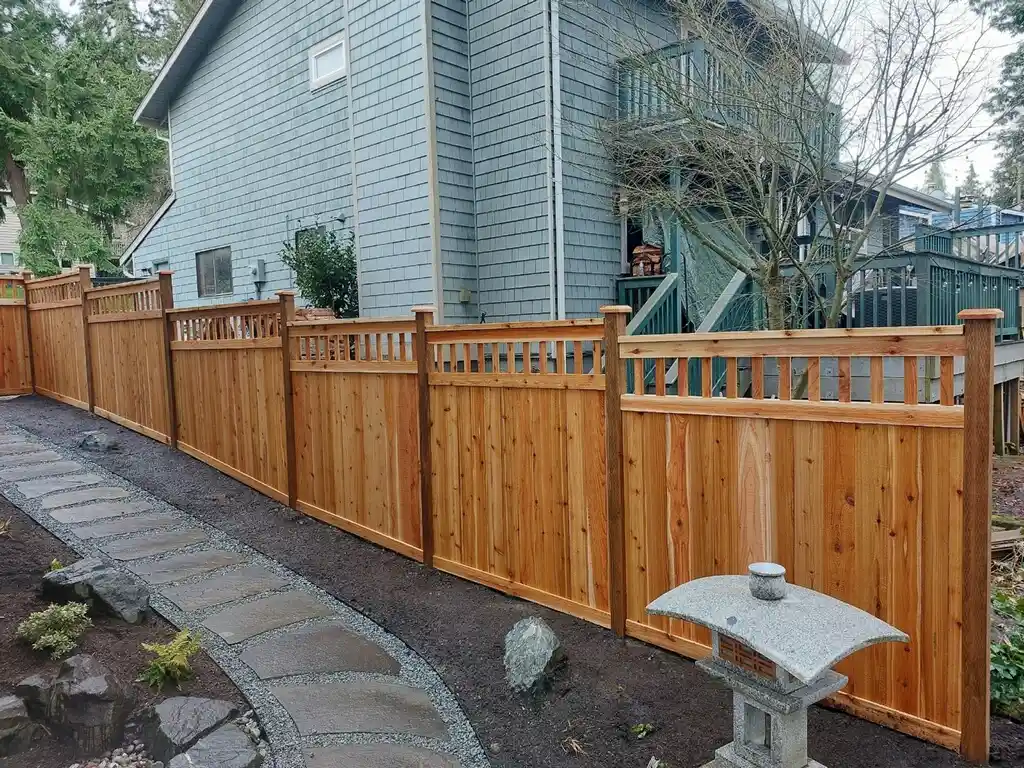
Individual cedar pickets are single boards installed one at a time onto rails a crew has already set. This is the piece-by-piece approach, and it’s how we build most of our cedar fences.
Site-built (or stick-built) fencing is when a crew builds panel-like sections right on your property instead of using pre-made panels. Rails, posts, and wood fence pickets all go together on site.
Here’s the distinction the rest of this article leans on: “panel” isn’t one quality level, and a site-built fence isn’t the same as a pre-made panel. A section built on site can be shaped to your grade and property line in a way a factory panel can’t. That difference is what changes how a fence actually fits your yard.
Side-by-Side Comparison: Panels vs Fence Pickets
Panels win on speed and consistency. Wood fence pickets win on fit and control. Here’s how these fence materials stack up.
| Factor | Cedar Panels | Cedar Pickets |
|---|---|---|
| Best for | Straight, level, simple runs | Custom, complex yards |
| Customization | Limited | High |
| Slopes / uneven ground | Hard to adjust | Adapts to grade |
| Privacy | Good on flat ground | Tighter, gap-free |
| Pets | Bottom gaps possible | Cut-to-grade closes gaps |
| Repairs | Replace a whole section | Swap one board |
| Installation speed | Faster | More labor |
| Quality control | Whatever’s in the panel | Boards picked individually |
| Long-term fit | Uniform | Tailored to your yard |
When Cedar Fence Panels Make Sense
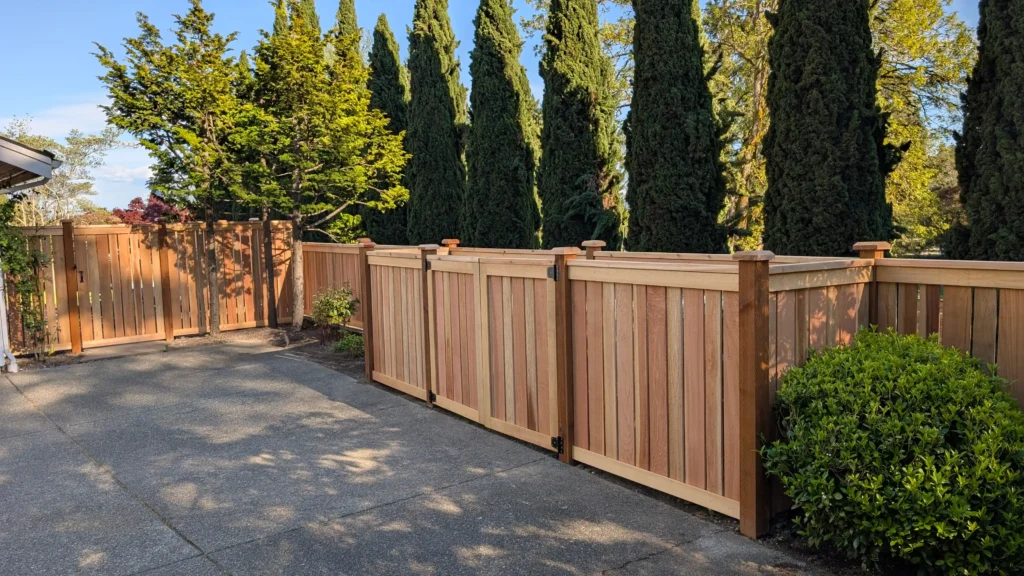
Panels are a fine call in the right conditions:
- Flat, straight runs with no grade change
- Simple rectangular yards
- Matching an existing panel-style fence
- Shorter or decorative sections
- A clean, repeatable look you want done quickly
One caveat: not all panels are equal. Before you buy, inspect the cedar board quality, check that the assembly is sturdy, look at rail size, and confirm the fasteners are corrosion-resistant. Real Cedar advises exactly this, because a panel can be solid or flimsy depending on how it was built and what materials went into it. A cheap panel that racks or sags a year later isn’t a bargain, and it usually needs more maintenance to keep looking right.
When Individual Pickets Are the Better Choice
This is where custom work earns its keep. Individual pickets are the stronger option when your yard has anything but perfect flat conditions:
- Sloped or uneven ground
- Tight privacy needs
- Pet containment
- Custom gates that need to line up cleanly
- Shared property lines
- Mature landscaping and existing trees to work around
- Clean transitions at corners and retaining walls
Because boards go up one at a time, a crew can select each one and cut to fit. That also means easy repairs later: if a board splits, you swap that picket, not the whole section. You get to choose the style too, like dog-ear pickets (a 45-degree top cut common on privacy fences) or flat-top pickets with a straight cut. No cookie-cutter jobs here. When a yard has real character, mature trees, or a tricky grade, a picket-built fence handles it and helps you create the perfect fence for your space.
Sloped Yards: Why Fence Pickets Usually Win
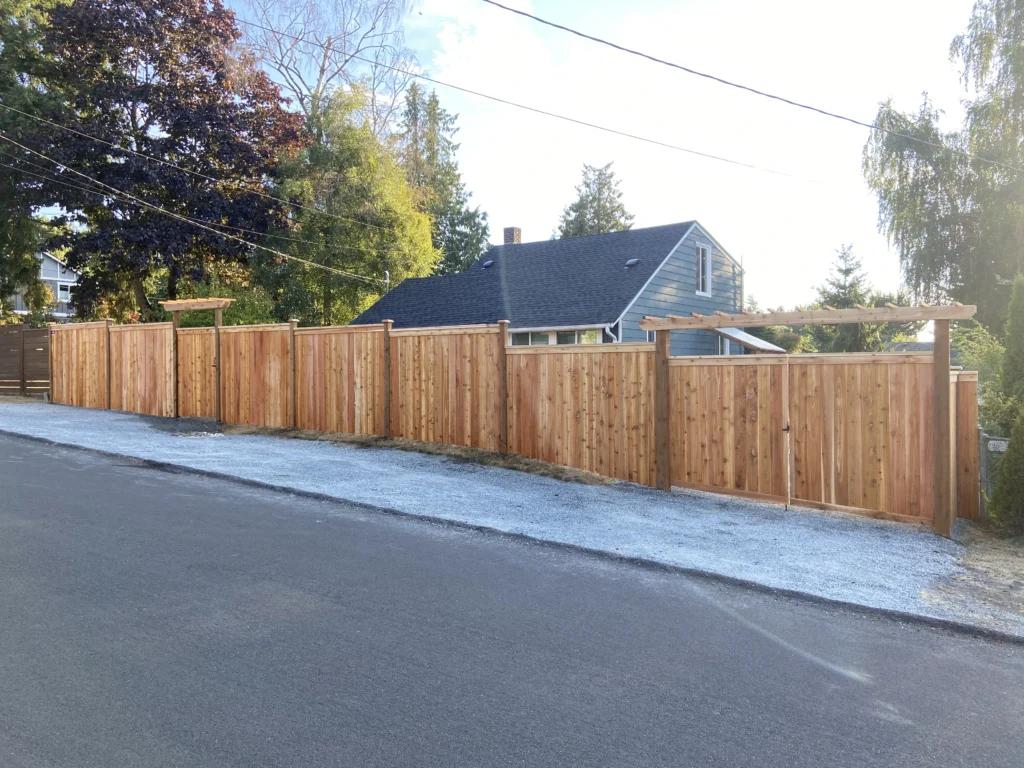
On a slope, panels force a stepped pattern. Each rigid section sits level, so you get a staircase profile with triangular gaps under the low edge of every panel. Picket-by-picket lets a crew rack the fence, contouring the boards to follow the grade so the bottom stays tight to the ground.
Plenty of Pacific Northwest lots have real grade changes, including the steep hillside properties you see around West Seattle. Seattle’s rules account for this: on a sloped lot, fence height can be averaged over each 6-foot segment, and no portion may exceed 8 feet. We build cedar fences on slopes using stepped or racked methods depending on the terrain, so the finished line looks intentional instead of patched together. Setting the fence posts plumb and to the right depth is what makes either method hold.
Privacy, Pets, and Bottom Gaps
That bottom gap on a sloped panel run isn’t just a look issue. It’s an escape route for a dog and a weak spot for privacy. Custom pickets close it. Tight board spacing, board-on-board layouts, and cut-to-grade pickets keep the line snug against the ground on privacy fences.
For dogs, we often add an optional pressure-treated 2×6 kickboard at the base. It discourages digging and adds durability at the spot that sees the most wear. The payoff is privacy, security, and curb appeal that actually holds up, not a fence that looks good on day one and leaves gaps a month later.
How Long Do Cedar Fences Last in Pacific Northwest Weather?
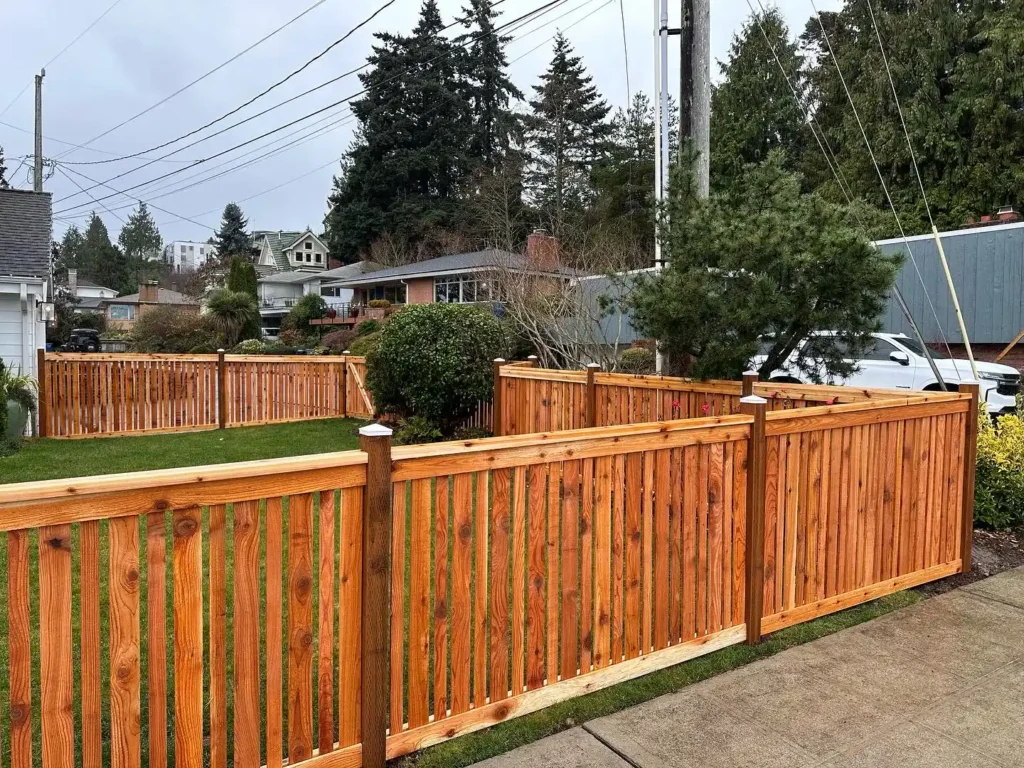
Cedar is the material foundation here for a reason, and a quality cedar fence rewards that choice for years. With proper care, a cedar fence commonly lasts 15 to 25 years, while a pine fence or whitewood typically runs closer to 10. Western Red Cedar carries natural oils that resist moisture, decay, and insects, and it’s one of the lighter softwoods with a low shrinkage factor, so it resists warping and twisting as conditions change. It’s also sustainably sourced from responsibly managed trees.
That matters in this climate. Sea-Tac averages about 39 inches of rain a year across roughly 156 wet days. All that moisture and harsh weather is why detailing counts: good drainage, ground clearance at the base, and airflow so boards dry out between storms. Fence posts in ground contact should be properly treated, because that’s where rot starts first. Western Red Cedar gives you a strong head start; the fence construction has to protect it.
Cedar vs Pine: The Wood You Choose Matters
When homeowners weigh wood fences, the choice usually comes down to cedar versus pine. Both are softwoods, but they behave differently over years of Pacific Northwest weather. Western Red Cedar resists rot and pests on its own, and it holds up better than many other woods on the market. A pine fence, even pressure-treated, tends to move more, needs more upkeep, and often gives up years of life to cedar. The difference shows up most at the fence posts and the bottom rail, where moisture collects.
Wood fence pickets in cedar also take stain and paint more evenly. Pine can blotch and drink finish unevenly, which means more coats and more frequent work to maintain a clean look. If you want the finish to sit right the first time, cedar makes the job easier.
Fasteners and Finish: The Details You See Later
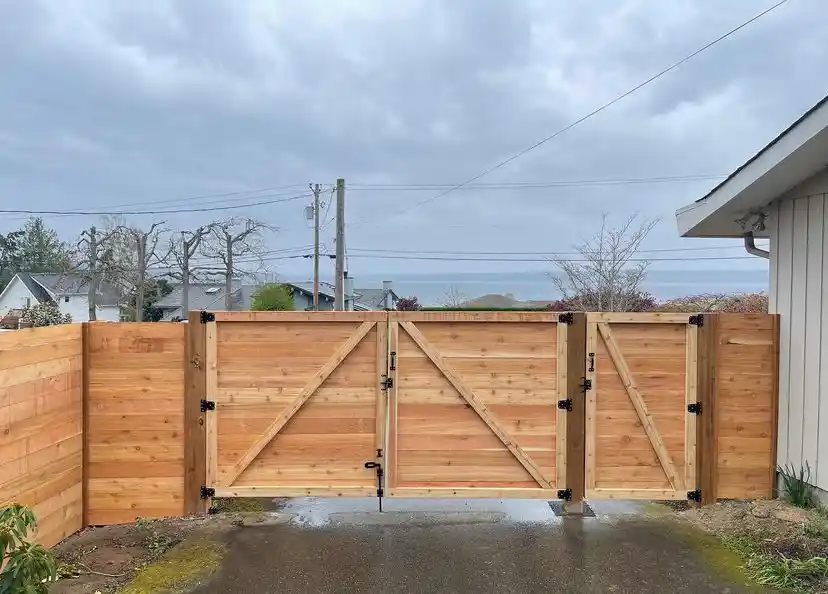
Fasteners are the detail homeowners notice a year in. In wet weather, use stainless steel (304 is fine for most jobs, 316 for salt-air exposure near Puget Sound) or hot-dipped galvanized. Avoid electroplated nails, which rust and streak, and avoid copper, which reacts with cedar’s oils and stains the wood. A few basic tools and the right fasteners make all the difference at this stage.
Finish makes a difference too. Where practical, stain or seal before install and coat all six sides of each board, so hidden edges are protected. If you plan to paint instead of stain, prime the wood first so the surface holds up. Don’t leave new cedar weathering unfinished for more than about two weeks or the surface may need extra prep. This is one more edge for individual pickets: pre-finishing each board coats those hidden edges more cleanly than trying to reach into an already-assembled panel. Plan on refreshing semi-transparent stain every 1 to 4 years, solid-color every 3 to 6. That routine care is what keeps cedar fences looking sharp for the long haul, since cedar requires only modest upkeep to stay solid.
What Do Cedar Fences Cost vs a Pine Fence?
As a general national reference, cedar tends to have a higher material cost up front than pine or whitewood, whether you compare by the panel or by the linear foot, which is why many homeowners are tempted to go cheaper. But whitewood is shorter-lived and needs more upkeep. Cedar fences last longer and ask for less maintenance over time, so the long-term value and even property value lean cedar. The materials cost more today, but the total cost of ownership often runs lower, and the longevity makes it a popular choice. Vinyl and aluminum are other options some people weigh, though this guide is cedar-focused. Our take: get it right once. These are industry ranges, not our pricing, and we don’t position on being the cheapest or most affordable option; we position on doing it right.
Questions to Ask Before You Choose Panels or Pickets
Before you sign anything, ask a contractor these:
- Are you installing pre-built panels or building on site?
- How will you handle slope and bottom gaps?
- What cedar grade and board thickness are your pickets?
- What fasteners will be exposed on the wood?
- How deep will you dig the holes and set the fence posts?
- Will the fence be stained, sealed, or painted, and when?
- How will gates line up in the center of the run and at corners?
- How will you protect landscaping and trees, and clean up?
- What’s included in the estimate, and when is final payment due?
- What warranty backs the installation?
Clear answers to these tell you whether you’re dealing with a crew that communicates and prices honestly, or one that’ll surprise you later. Whether you prefer panels or pickets, the right answers point you to a suitable solution for your project and your house.
Our Recommendation for Your Curb Appeal, and How to Get a Free Estimate
Panels can absolutely work on the right straight, flat property. But for many yards with slope, pets, gates, shared lines, or mature trees and landscaping, custom picket-by-picket cedar gives cleaner lines, tighter privacy, and repairs you can handle one board at a time. Balancing these elements is how you land on a durable fence that adds real curb appeal.
When you work with us, you get Dan’s direct accountability. Dan answers his phone, and you get clear communication from the first estimate to the final walkthrough. We’re licensed, bonded, and insured, and our installs come with a 36-month warranty. Schedule a free estimate and we’ll walk the property, check your slope and gates, talk through materials and styles, and give you a clear recommendation with transparent pricing and no hidden fees. Call or text (206) 330-6709. Financing is available through Acorn if that helps. Serious About Service. Passionate About Fences.