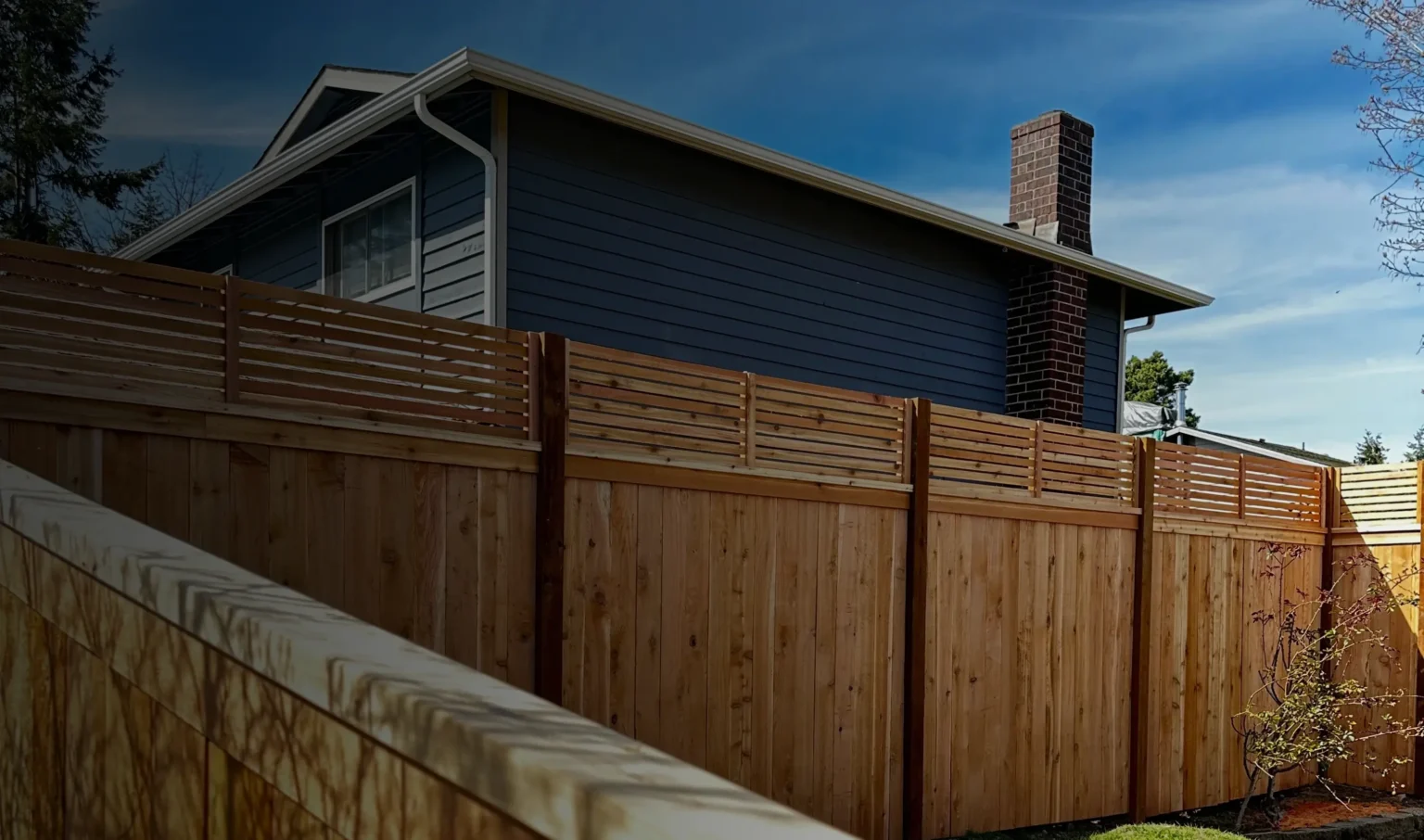
Built to Withstand Seattle's Wet Climate - 25+ Years of Expert Installation

Best Fence for Seattle Weather: Cedar vs. Aluminum Guide

Best fence for Seattle weather - cedar privacy fence in Pacific Northwest

Why Seattle Weather Destroys Fences

Seattle gets 37 inches of rain annually with humidity above 70% year-round. That’s 150+ rainy days keeping your fence perpetually damp. Consequently, this constant moisture is the enemy of any fence material.

This constant moisture causes:

  • Wood rot and decay
  • Rust and corrosion
  • Mold and mildew growth
  • Structural damage at ground level
  • Warping and sagging

The good news? Both cedar and aluminum are engineered to handle Seattle’s wet climate. They just work differently!
Cedar vs. Aluminum: How They Fight Moisture

Cedar uses natural oils to repel moisture and resist rot and insects. However, you’ll need to maintain it with regular sealing every 3-5 years to keep this protection active.
 
Aluminum takes a different approach. It doesn’t absorb moisture at all, so rust and corrosion are impossible. Additionally, its powder coating adds an extra protection layer that lasts for decades without maintenance.
 
In summary, both materials work in Seattle’s wet climate, but they require very different levels of commitment from you.
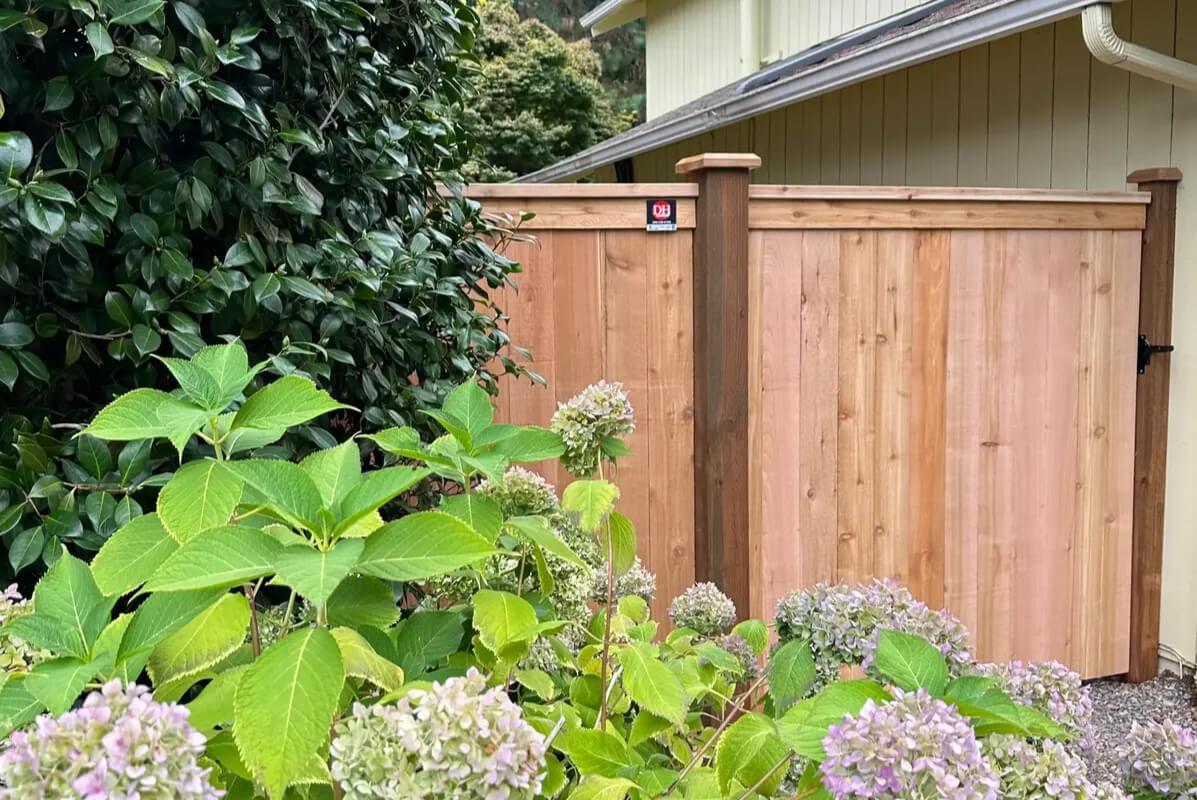
Cedar privacy fence with gate installed in Seattle residential yard

Cedar Fencing: Pros & Cons

Western Red Cedar is native to the Pacific Northwest and offers natural rot resistance thanks to its inherent oils. Therefore, it’s ideal for privacy fences, decorative designs, and traditional homes.

Cedar Fencing Pros

  • Natural beauty with warm tones and grain patterns
  • Complete privacy from solid panels and tight spacing
  • Lasts 15-25 years with regular maintenance
  • Customizable with stains, sealants, and designs
  • Eco-friendly renewable resource from Pacific Northwest forests
  • Enhances curb appeal and property value

Cedar Fencing Cons

  • High maintenance: resealing every 3-5 years required
  • Expensive upfront at $50-$80 per linear foot
  • Color fades to gray without regular sealing
  • Moss growth in shaded, damp areas
  • Rapid deterioration if neglected (rots in about 10 years)

Cedar Cost Estimate

100-foot privacy fence, (6ft tall)

  • Installation: $5,000-$8,000
  • Maintenance (every 3-5 years): $200-$500
  • 20-year total: $8,000-$20,000

Want the full breakdown? Read our complete cedar fencing guide for detailed costs, installation process, and maintenance tips.

Modern aluminum fence with vertical pickets installed in Seattle home

Aluminum Fencing: Pros & Cons

Why Aluminum is Gaining Popularity in Seattle

Because aluminum doesn’t absorb moisture, it never rots. Modern powder coating keeps it looking new for decades with virtually no maintenance. Consequently, it’s ideal for front yards, pool enclosures, modern homes, and low-maintenance properties.

Aluminum Fencing Pros

  • Zero rust and naturally corrosion-resistant
  • Minimal maintenance: just rinse with water 1-2x yearly
  • Lasts 20-30+ years with almost no upkeep
  • Modern aesthetic with clean lines and polished appearance
  • Lightweight and easier to install than steel
  • 100% recyclable and eco-friendly
  • Never fades, peels, or weathers

Aluminum Fencing Cons

  • Limited privacy: open designs, not solid panels
  • Can dent from heavy impacts (branches, equipment)
  • Higher upfront cost at $60-$100+ per linear foot
  • Less traditional aesthetic (metal versus natural wood warmth)
  • Privacy slats add extra expense if screening is needed

Aluminum Cost Estimate

100-foot decorative fence (4 ft tall, ornamental):

  • Installation: $6,000-$10,000
  • Maintenance (annual): $50-$100
  • 20-year total: $6,000-$13,000
 

For detailed costs, installation process, and durability information, see our complete aluminum fencing guide.

Cedar vs. Aluminum Comparison

Weather Resistance & Durability

Cedar holds up well in Seattle’s wet climate when you maintain it with regular sealing every 3-5 years. However, neglect it for even one season and rot will start. When properly maintained, cedar lasts 15-25 years.

In contrast, aluminum is engineered to handle moisture and never absorbs water, so rust and rot are not concerns. With only occasional rinsing required, it consistently lasts 20-30+ years.

Maintenance Requirements

Cedar demands commitment. You’ll need to:

  • Deep clean annually to remove moss and debris
  • Seal every 3-5 years during dry months
  • Inspect for soft spots and damage
  • Budget $200-$500 per maintenance cycle
 

Aluminum is hands-off. Just:

  • Rinse with water 1-2x yearly
  • Lubricate hinges annually
  • Inspect hardware occasionally
  • Budget $50-$100 per year
 

Long-Term Cost Over 20 Years

Cedar appears cheaper upfront at $50-$80 per foot, but maintenance costs add up:
  • Installation: $5,000-$8,000
  • Maintenance (4-5 cycles): $800-$2,500
  • Possible repairs: $500-$1,000 • 20-year total: $8,000-$20,000
 
In comparison, aluminum has similar upfront costs but minimal ongoing expenses:
  • Installation: $6,000-$10,000
  • Maintenance (20 years): $1,000-$2,000
  • 20-year total: $6,000-$13,000

Privacy & Aesthetics

Cedar excels at privacy with solid panels that create complete screening. It’s ideal for backyards where seclusion is desired. Furthermore, the natural wood warmth complements traditional and rustic homes beautifully.

In contrast, aluminum offers limited privacy with open designs but looks sleek and modern, perfect for contemporary homes and front yards. However, privacy slats are available but increase cost.

Environmental Impact

Cedar is a renewable resource from Pacific Northwest forests and an eco-friendly choice when sourced responsibly.

Similarly, aluminum is 100% recyclable, requires no toxic treatments, and lasts so long you’ll rarely need replacement, reducing waste over time.

How to Choose the Right Fence for Your Seattle Property

Step 1: Assess Your Maintenance Commitment

Question: Are you willing to seal your fence every 3-5 years?

  • If yes, then cedar works great
  • If no, then aluminum is better
 

Here’s why: Cedar neglected for even one season deteriorates quickly in Seattle’s wet climate.

Step 2: Determine Your Privacy Needs

Question: How much privacy do you need?

  • Backyard (complete privacy) → Cedar excels
  • Front yard (visibility okay) → Aluminum works
  • Pool enclosure (safety required) → Aluminum meets codes

Step 3: Consider Your Home’s Style

Cedar complements:

  • Craftsman homes
  • Traditional designs
  • Rustic properties
  • Pacific Northwest architecture
 

Aluminum complements:

  • Modern homes
  • Contemporary designs
  • Commercial properties
  • Minimalist aesthetics

Step 4: Calculate 20-Year Total Cost

Don’t just compare installation prices!

Cedar: $50-$100/ft installation + $200-$500 every 3-5 years = $8,000-$20,000 total

Aluminum: $50-$100/ft installation + $50-$100/year = $6,000-$13,000 total

Aluminum often saves $2,000-$7,000 over 20 years.

Step 5: Check Seattle Building Codes

Permit requirements:

  • Fences under 6 feet: Usually no permit needed
  • DH Fence Pros handles all permits and code compliance.

Maintenance Tips for Seattle Weather 

Seasonal Maintenance Schedule

Spring (March-May):

  • Deep clean to remove winter debris and moss
  • Inspect cedar for rot or damage
  • Wash aluminum with soap and water

Summer (June-August):

  • Apply sealant to cedar (ideal dry weather window)
  • Inspect gates and hardware
  • Best time for cedar maintenance in Seattle

Fall (September-November):

  • Trim vegetation away from fence
  • Seal cedar cracks before winter
  • Prepare for rainy season

Winter (December-February):

  • Monitor drainage around posts
  • Inspect for damage
  • Plan spring projects

Prevent Moisture Damage (Critical!)

For both cedar and aluminum:

  • Ensure proper drainage away from fence posts
  • Trim overgrown vegetation (traps moisture)
  • Maintain 1-2 inches clearance between soil and fence
  • Avoid piling mulch against fence base
 

Additionally, here are cedar-specific tips:

  • Use soft brushes (avoid pressure washing)
  • Apply sealant at 50-85°F for proper curing
  • Inspect annually for soft spots or discoloration
 

For aluminum, follow these guidelines:

  • Wash 1-2x yearly with mild soap and water
  • Lubricate hinges and latches annually
  • Touch up scratches in powder coating promptly

Conclusion

Deciding between cedar or aluminum? Both excel in Seattle’s wet climate, but serve different needs:

  • Choose cedar for natural beauty, complete privacy, and willingness to maintain
  • Choose aluminum for minimal upkeep, modern style, and long-term value
 

At DH Fence Pros, we’ve installed hundreds fences in Seattle for 25+ years. We understand how local climate affects different materials and help you choose the perfect solution.

Serving: West Seattle, Queen Anne, Mercer Island, Ballard, Capitol Hill, Greenlake, Magnolia, Bellevue, and surrounding neighborhoods.

Ready to Get Started?

Our licensed, bonded, and insured contractors will assess your property and recommend the best fencing options for Seattle’s unique weather conditions.

📞 Call us at (206) 330-6709 or request your estimate online

  • Licensed, bonded, and insured
  • 36-month installation warranty
  • Transparent pricing, no surprises
 
Which fence lasts longer in Seattle, cedar or aluminum?

Aluminum wins for longevity. Aluminum lasts 20-30+ years with minimal maintenance. Cedar lasts 15-25 years if regularly maintained.

Aluminum typically offers better long-term value. Despite similar upfront costs ($50-$100/ft), aluminum’s minimal maintenance can save thousands of dollars over 20 years compared to cedar’s regular sealing, staining, and potential repairs.

Yes, both work on slopes. Cedar can be stepped (sections follow slope) or sloped (continuous line). Aluminum can be racked (angled) or stepped. Professional installation ensures proper alignment and stability.

No permit is needed for aluminum fencing in Seattle. If your fence exceeds 6 feet in height, permits may be required. DH Fence Pros handles all permit applications and ensures compliance with Seattle building codes.

Every 3-5 years in Seattle’s climate. Apply sealant during dry summer months (June-August) for optimal absorption and curing.

Very little. Rinse with water 1-2x yearly, inspect hardware annually, and lubricate gates. No painting, staining, or sealing needed.

Yes, aluminum is ideal for coastal areas. West Seattle, Magnolia, and waterfront properties benefit from aluminum’s rust-proof design. Salt air damages other materials but not aluminum.

(function () { function sendLeadEvent() { if (typeof gtag === "function") { // GA4 recommended lead event gtag("event", "generate_lead", { form_name: "Elementor Estimate Form" }); // Optional: also fire your exact event name if you want it gtag("event", "form_submit", { form_name: "Elementor Estimate Form" }); } } function bindElementorFormTracking() { if (!window.jQuery) return; // Elementor Pro forms fire 'submit_success' on successful AJAX submit jQuery(document).on("submit_success", ".elementor-form", function () { sendLeadEvent(); }); } if (document.readyState === "loading") { document.addEventListener("DOMContentLoaded", bindElementorFormTracking); } else { bindElementorFormTracking(); } })();

Pay Over Time!

Get Your Fence NOW. PAY LATER.

We’ve partnered with Acorn to offer fast and flexible financing for fences and driveway gates.