

Key Takeaway
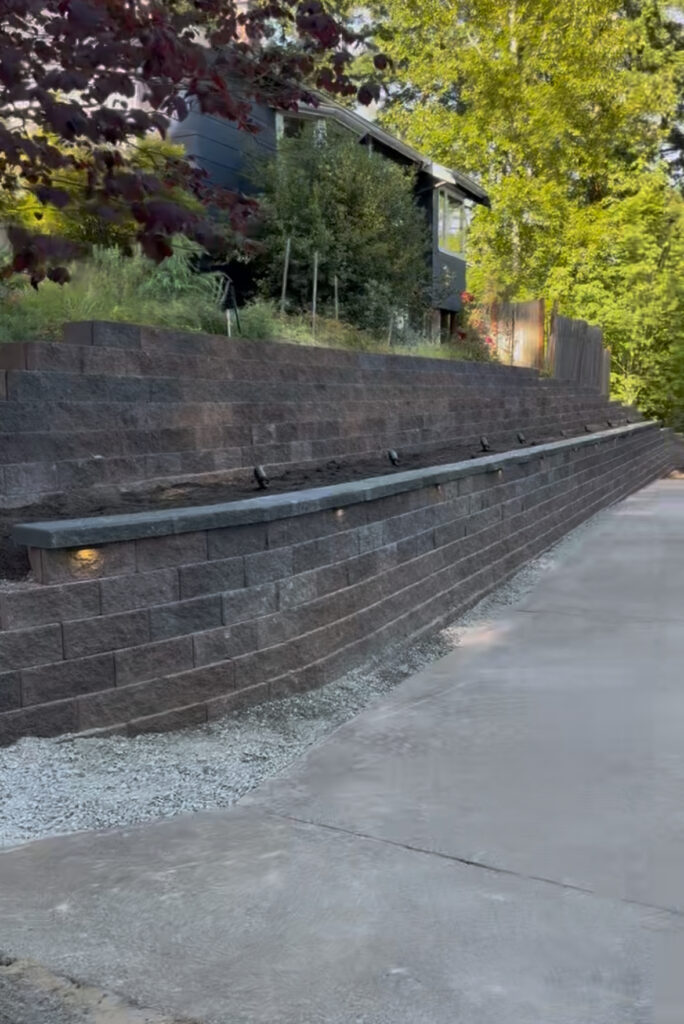
Retaining walls for sloped Seattle yards must be engineered around drainage, soil pressure, and permit rules specific to the Pacific Northwest. Walls 4 feet or lower may skip a construction permit only if the parcel is outside an environmentally critical area and poses no risk to neighboring properties. Seattle’s 39 inches of annual rain and clay-heavy soils make proper drainage design the single most critical factor in long-term wall performance.
A retaining wall can turn a sloped, eroding, or hard-to-use Seattle yard into stable, usable outdoor space. But here in the Pacific Northwest, a good retaining wall has to be designed around drainage, soil pressure, property lines, and Seattle’s permit rules, not just built to look nice on install day.
One thing worth clearing up early: many retaining walls 4 feet or lower may skip a construction permit, but only if certain conditions are met. It’s not automatic, and permits are one of the first things we check on any retaining wall project.
If you’ve got a slope you can’t really use, water problems after every storm, or an old wall that’s starting to lean, this is for you. Let’s walk through what actually matters before you build.
Why Sloped Yards Across the Pacific Northwest Need a Different Kind of Plan
Seattle sees about 39 inches of rain a year, spread across roughly 156 wet days. That water has to go somewhere. Add clay-heavy soils that hold moisture poorly, and a slope that looked fine in July can start migrating downhill by January. Learning to control soil erosion is a real problem on hillside lots here, and a retaining wall is often the fix.
We build retaining walls on Seattle slopes all the time. West Seattle, Magnolia, Queen Anne, Fremont, Green Lake: these hillside neighborhoods are full of older lots, tight property lines, and mature landscaping that make grade changes tricky. Roughly 8.4% of the city sits in slide-prone areas, so the way you handle sloped yards here matters more than in flatter parts of the country.
The goal isn’t just to hold back dirt. It’s to end up with a yard that works, an outdoor space you can actually use without fighting the terrain.
What a Retaining Wall Actually Does
Seattle’s building department defines a retaining wall as a structure that holds soil at a steeper angle than the soil could stand on its own. That’s the plain version. A rockery, by contrast, is placed rock used mainly to prevent erosion.
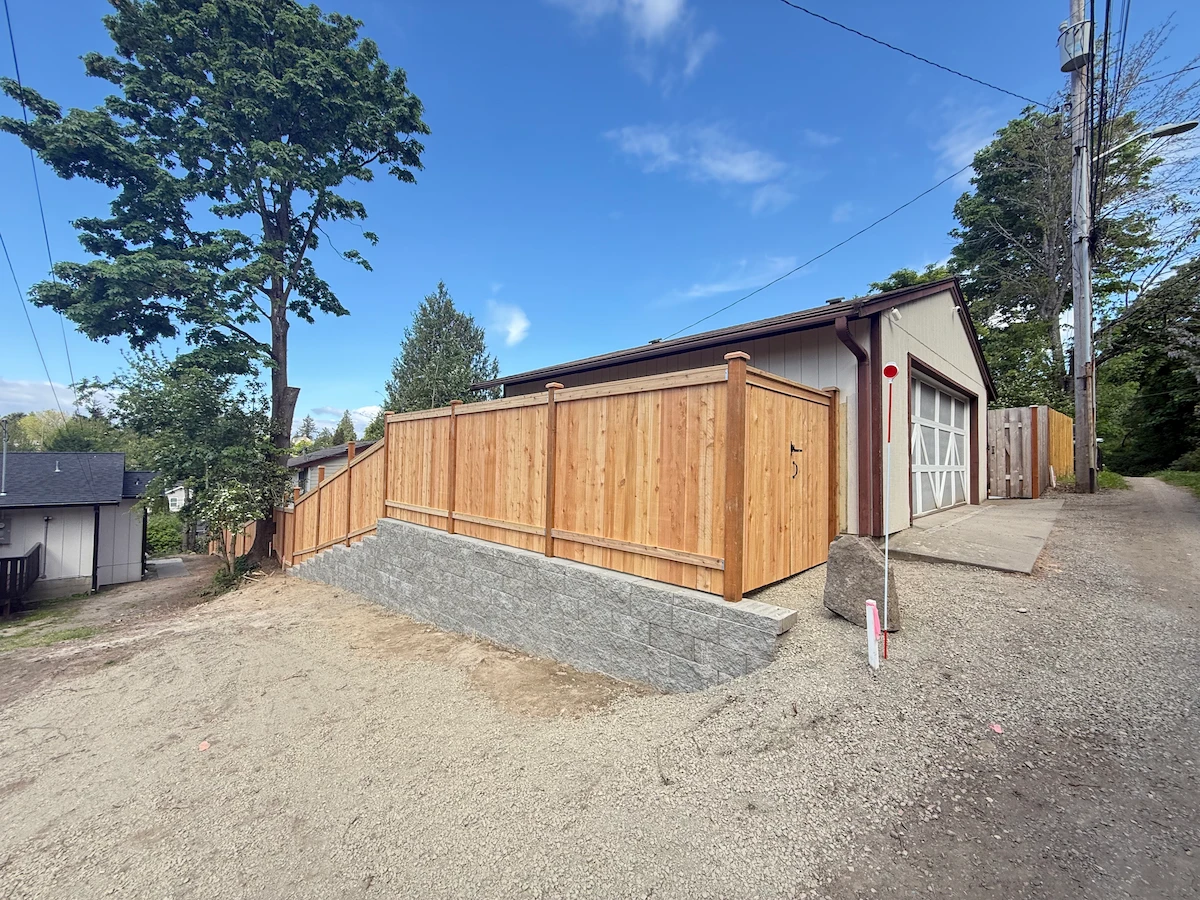
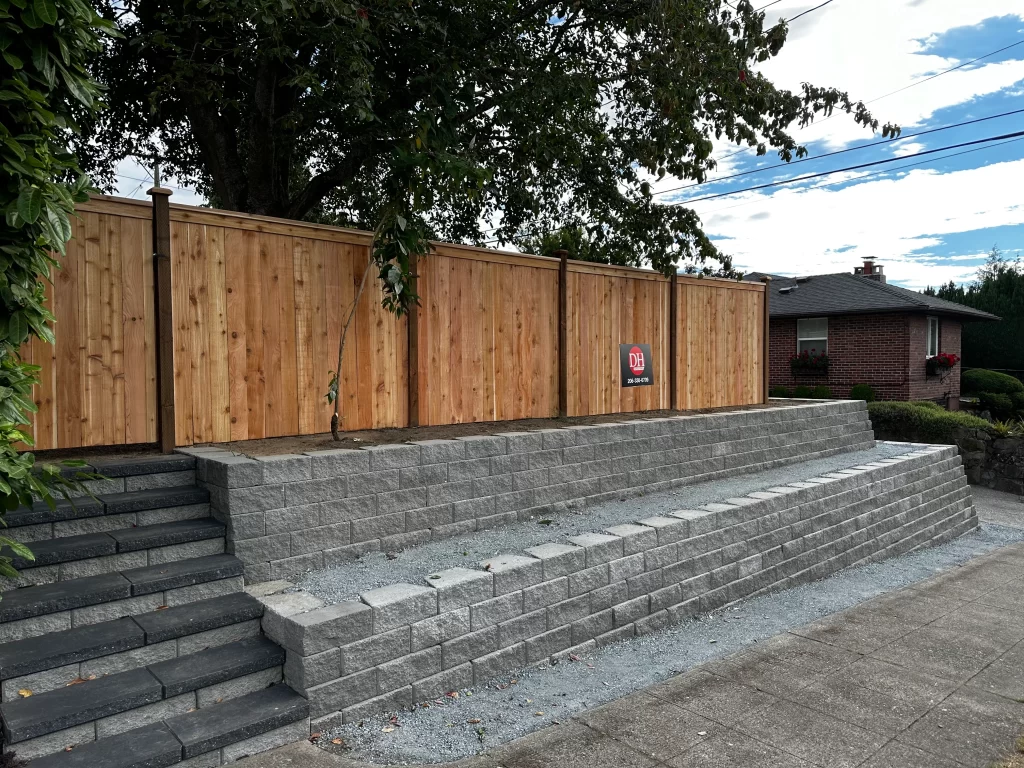
What that means for your yard: soil support, erosion control, and a flat, usable outdoor space where you had an unmanageable slope. A well-built retaining wall with proper drainage can last 50 years or more. And retaining walls rarely stand alone. They pair naturally with a fence for privacy, a gate for access, steps, garden beds, or a level pet-safe area. On sloped yards, that combination is often what turns a wasted hillside into real landscape you can live in.
Signs Your Seattle Yard May Need a Retaining Wall
- Soil washing out or gullying after heavy rain
- A fence starting to lean because the grade underneath is moving
- A slope too steep to mow, plant, or enjoy
- Water pooling at the base of a hill or ongoing drainage problems
- You want a level patio, path, garden, or space for pets and kids
- An old timber or block wall that’s bowing, leaning, or pulling apart
Seattle Permit Basics: The 4-Foot Rule and Its Real Exceptions
Here’s where a lot of generic advice gets it wrong. People say “under 4 feet, no permits,” and leave it there. Seattle’s actual rule is more specific.
A retaining wall may skip a construction permit only if all three of these are true:
- The wall is 4 feet or lower, measured from the bottom of the footing to the top of the wall
- The parcel is not in an environmentally critical area
- The work won’t damage adjoining properties or structures during or after construction
That third point is the trap most homeowners miss. A short wall close to a property line can still trigger permits because Seattle weighs the risk to your neighbor’s property. Walls 4 feet or taller always need a construction permit, and engineering usually comes into play.
Two more triggers to know. Moving significant soil can require a separate grading permit. And if you tie your wall’s drainage into a side sewer, that needs a side sewer permit. Seattle SDCI is the authority here, and it’s genuinely worth checking before you dig. If your property sits in King County outside city limits, additional requirements may apply through the county. We handle the permits legwork so you don’t have to.
How Retaining Wall Height Is Measured
Seattle measures from the bottom of the footing, even the part that’s underground, to the top of the wall. So a wall that only shows 3 feet tall above your yard can still cross the 4-foot line once you count the buried footing. This catches people off guard often, and it changes whether your project needs permits.
Environmentally Critical Areas and Steep Slopes in Seattle
Seattle flags a steep slope as one that’s 40% or steeper, or that rises at least 10 feet over a horizontal distance of 25 feet or less. These critical areas usually carry a 15-foot buffer at the top and bottom.
Why does that matter for a modest wall? Because if your parcel sits in an environmentally critical area (ECA) or a mapped slide-prone zone, even a small-looking retaining wall can require extra review. Work within 15 feet of the top or bottom of a steep slope may need steep slope relief, an exemption, or a land use permit. In those cases, the city can also ask for a topographic survey or a geotechnical report before you build.
None of this should scare you off. It’s part of the process, and it’s something we help you sort out early so there are no surprises later.
Drainage Design Is the Non-Negotiable Part You Cannot Skip
Drainage is the number one reason retaining walls fail in Seattle. When water builds up behind a wall with nowhere to go, it creates hydrostatic pressure. That pressure pushes on the wall until something gives: bulging, cracking, or a slow lean that ends in collapse. Bad drainage also feeds soil erosion behind the structure, which only makes things worse. Good drainage is non-negotiable on any wall we build.
A wall built to last through 39 inches of annual rain needs a real drainage design, not an afterthought. That means:
- Clean gravel backfill behind the wall so water can move freely
- Filter fabric to keep soil from clogging the gravel
- A perforated drain pipe at the base to collect and carry water away
- A safe discharge path that moves water somewhere it won’t cause problems
If you connect that drainage into a side sewer, remember it may require a permit. And you have to think about where the water flow ends up. Solving your slope by flooding your neighbor’s yard isn’t a solution. On our retaining wall installation jobs, drainage gets designed first. Everything else follows from it.
Material Choice: Retaining Wall Materials and Design Options for Seattle Yards
Material choice comes down to height, load, and how the wall needs to hold up in wet conditions. Concrete segmental block is the most common and works well for most residential retaining walls. Natural stone walls give a timeless look and handle Seattle’s climate beautifully while helping hold soil in place. Poured concrete is the pick for high-load situations. Timber walls can work, but wood has a shorter lifespan in Seattle’s wet climate, and we’ll tell you that honestly.
| Material | Best for | PNW durability |
|---|---|---|
| Segmental block | Most residential walls | Strong |
| Natural stone | Timeless curb appeal | Excellent |
| Poured concrete | Tall, high-load walls | Excellent |
| Timber | Lighter garden walls | Shorter |
As a general ballpark (national figures, not our pricing), the cost of timber and block walls often runs around $25 to $40 per square foot, while natural stone and poured concrete tend to land closer to $50 to $100 per linear foot. Cost varies based on height and site conditions, so your budget really depends on the slope grade and the materials you choose. Design-wise, you’ve got options: small garden walls, tiered walls that break a steep slope into steps rather than a single tall wall, driveway or side-yard retaining, and walls that carve out a patio or a level pet area. A tiered approach often makes the most of a difficult outdoor space and creates a more attractive result on uneven ground. These are rarely simple DIY projects once ground cover, grading, and drainage come into play.
Can You Put a Fence on Top of a Retaining Wall?
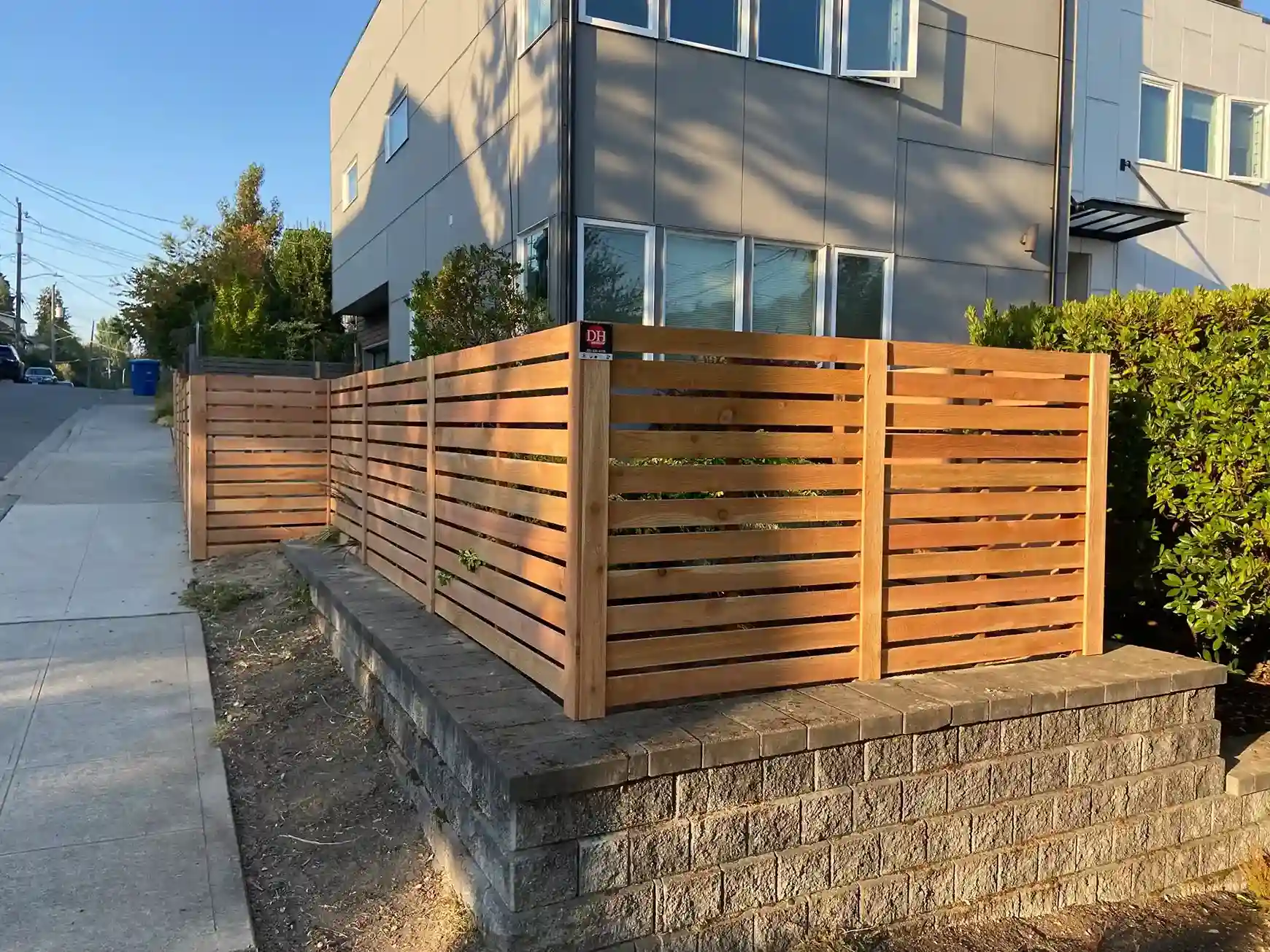
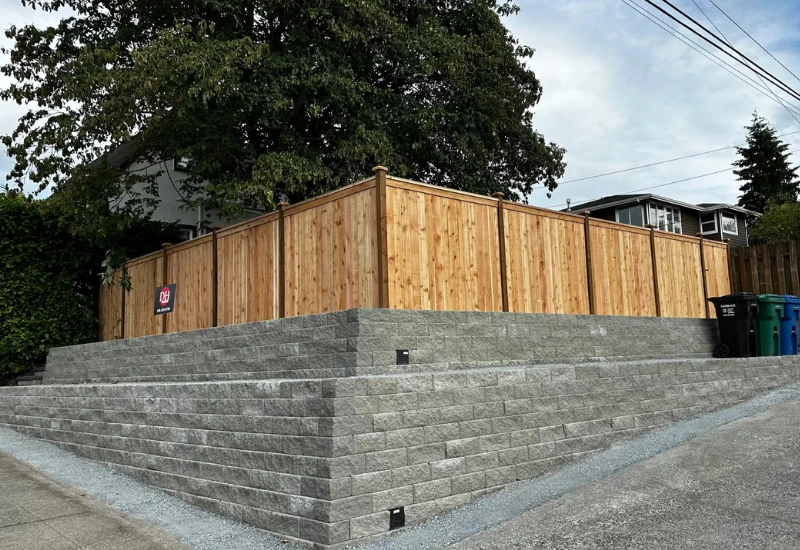
Yes, often. But you have to plan for it. In Seattle, when a retaining wall raises the grade, the combined height of the wall plus the fence on top is capped at 9 feet 6 inches. If the wall lowers grade instead, normal fence height limits apply. There’s also a 42-inch limit on open guardrails in certain spots.
A fence sitting on a wall adds load and catches wind, so the post support and footing plan have to account for that. Sometimes the smarter move is setting the fence a bit behind the wall rather than directly on top of it. This is where coordinating the wall and fence as one project pays off, giving you privacy, security, and curb appeal without a fight over footings later.
Property Lines, Neighbors, and Yard Access
Your wall needs to sit on your own property. Near a shared line, a survey is worth the peace of mind, because a wall over the line or one that risks your neighbor’s ground can trigger permits and disputes. A wall in the public right-of-way carries additional requirements through the city. On tight Seattle lots, staging and equipment access for excavation takes planning too, especially near the house. We work around your landscape and leave your yard clean when we’re done.
On-Site Assessment: What a Good Retaining Wall Estimate Looks Like
A real estimate starts with a real on-site assessment of your property. When we come out, we’re reading the slope and grade, the drainage path, and any signs of soil movement or erosion. We ask what you want the yard to do: a fence, a gate, room for pets, more privacy, better access.
As Dan puts it, we look at more than wall height. We look at what the slope, the water, and the fence all need to do together, balancing aesthetics with how the wall performs. From there we talk materials, design, budget, and whether your retaining wall project may need permits or engineering.
You’ll get clear communication from the first call, an honest on-site estimate, transparent pricing with no hidden fees, and a timeline you can plan around. We’re licensed, bonded, and insured, and our installations are backed by a 36-month warranty. A retaining wall is a serious investment, and we treat it that way.
Choosing a Licensed Contractor for a Seattle Retaining Wall
Start by confirming the contractor is licensed, bonded, and insured. You can verify that a licensed contractor holds a current registration, bond, and insurance yourself through Washington L&I’s Verify tool. State law requires general contractors to carry a $30,000 bond and specialty contractors $15,000, so that’s a real, checkable baseline before you commit to a wall installation.
Then ask the questions that separate a solid crew from a risky one: How do you handle drainage? Will this project trigger permits? How will the wall work with a fence or gate? What does cleanup and communication look like along the way? You want straight answers and transparent pricing, not a vague number and a shrug.
Frequently Asked Questions
Do I need a permit for a retaining wall in Seattle?
How is retaining wall height measured?
Can I build a fence on top of a retaining wall?
What drainage does a Seattle retaining wall need?
Can a retaining wall make my yard usable for pets and kids?
Ready to Tackle Your Slope?
If your yard is sloped, soggy, or just hard to use, the best first step is having someone look at it in person. We build custom retaining walls and fences for homeowners across the Greater Seattle area, engineered for our terrain and weather.
Call or text us at (206) 330-6709, or request a free estimate to get started. Whichever’s easiest for you.
Serious About Service. Passionate About Fences.