

Key Takeaway
The top modern privacy fence ideas for Seattle backyards include horizontal cedar, full board-on-board cedar, cedar with black metal accents, stepped fences for sloped lots, and cedar-hogwire hybrids. Horizontal cedar is the most popular choice, delivering clean lines and full privacy while standing up to Seattle’s 39-plus inches of annual rainfall when built with proper drainage, post support, and corrosion-resistant fasteners. Mixed-material designs let homeowners balance privacy with light and views.
If you want a modern privacy fence for a Seattle backyard, the strongest ideas are horizontal cedar, full-privacy cedar board-on-board, stepped fences for sloped yards, fence-and-retaining-wall combinations, and mixed cedar with hogwire or aluminum where you want privacy without walling off every view. Horizontal cedar slats give you that clean, elongated modern look, while a full board fence blocks most visibility for real backyard privacy. Cedar stays a favorite here because it holds up well in our wet weather. Below are practical, photo-ready fence ideas, each with a Seattle note on what works best in Pacific Northwest rain, on our slopes, and under local code.
What Makes a Privacy Fence Feel “Modern” in Seattle?
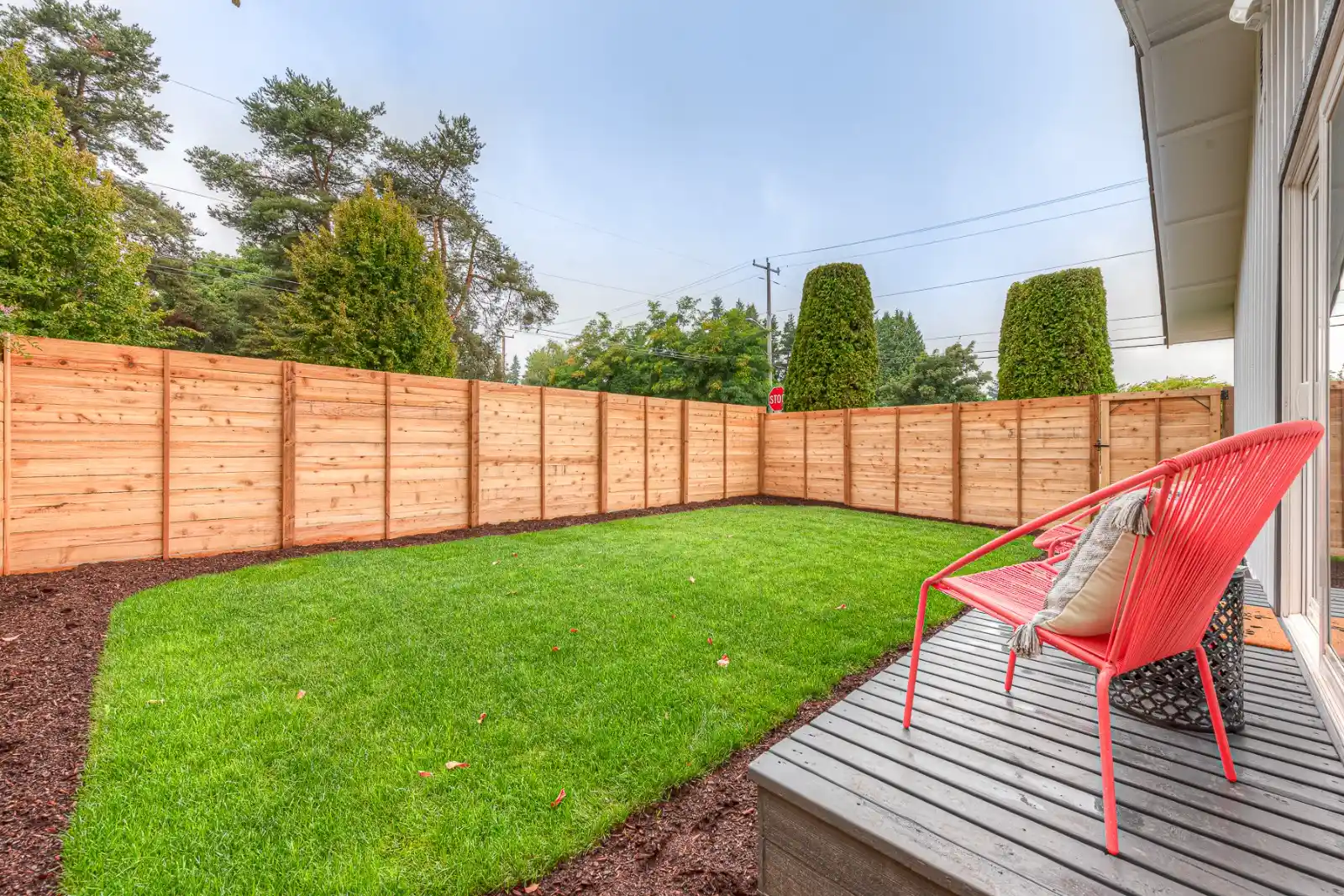
Modern usually means clean lines, horizontal cedar boards, mixed materials, natural cedar tones or dark stains, integrated gates, and selective privacy instead of boxing off the entire yard. The idea is a fence that looks finished and intentional, not just tall. This kind of fence design reads like part of the home rather than a barrier tacked on at the property line.
A horizontal wood fence is one of the most common ways to get a modern feel, especially in smaller backyards where the horizontal line makes the space read wider. Wood also gives you flexibility on height, spacing, and layout that panel systems don’t. One thing worth knowing: vertical boards shed water a little better in humid climates, so a horizontal wood fence in Seattle depends on good workmanship to perform. That’s board selection, rail placement, spacing, drainage, and fastening done right.
Here’s how we think about it. A modern privacy fence in Seattle is a design problem. You’re solving for privacy, security, and curb appeal while managing rain, grade changes, and how you actually use the backyard. Get those right together and the fence looks great on day one and stays solid for years.
Quick Seattle Fence Rules to Know Before You Fall for a Photo
Local code shapes what you can build, so it’s worth a quick scan before you commit to a look. Here are the basics for Seattle front yards and backyards, per SDCI:
- Permits: In many cases, Seattle does not require a construction permit for fences 8 feet high or lower, as long as there are no masonry or concrete elements over 6 feet and the fence isn’t in a flood-prone area.
- Height: In neighborhood residential and multifamily zones, fence height is generally limited to 6 feet.
- Open features: Up to 2 additional feet of mostly open architectural features, like an arbor or trellis, may be allowed above a 6-foot fence.
- Front and street-side setbacks: Fences in front yards and along the street side are often limited to 4 feet.
- Sloped lots: Seattle allows averaging height by 6-foot segments, with no portion higher than 8 feet when the allowed height is 6 feet.
- Retaining walls: If a fence sits above a wall that raises grade, the combined height is limited to 9 feet 6 inches.
- Special areas: Steep slopes, environmentally critical areas, mature trees, and shared property lines all deserve a check before you build.
Treat these as a “check your parcel” issue, not a one-size answer. Always confirm your specific conditions before building. When you work with us, Dan and the crew handle these checks so you don’t have to chase down code language yourself.
Modern Privacy Fence Ideas for Seattle Backyards
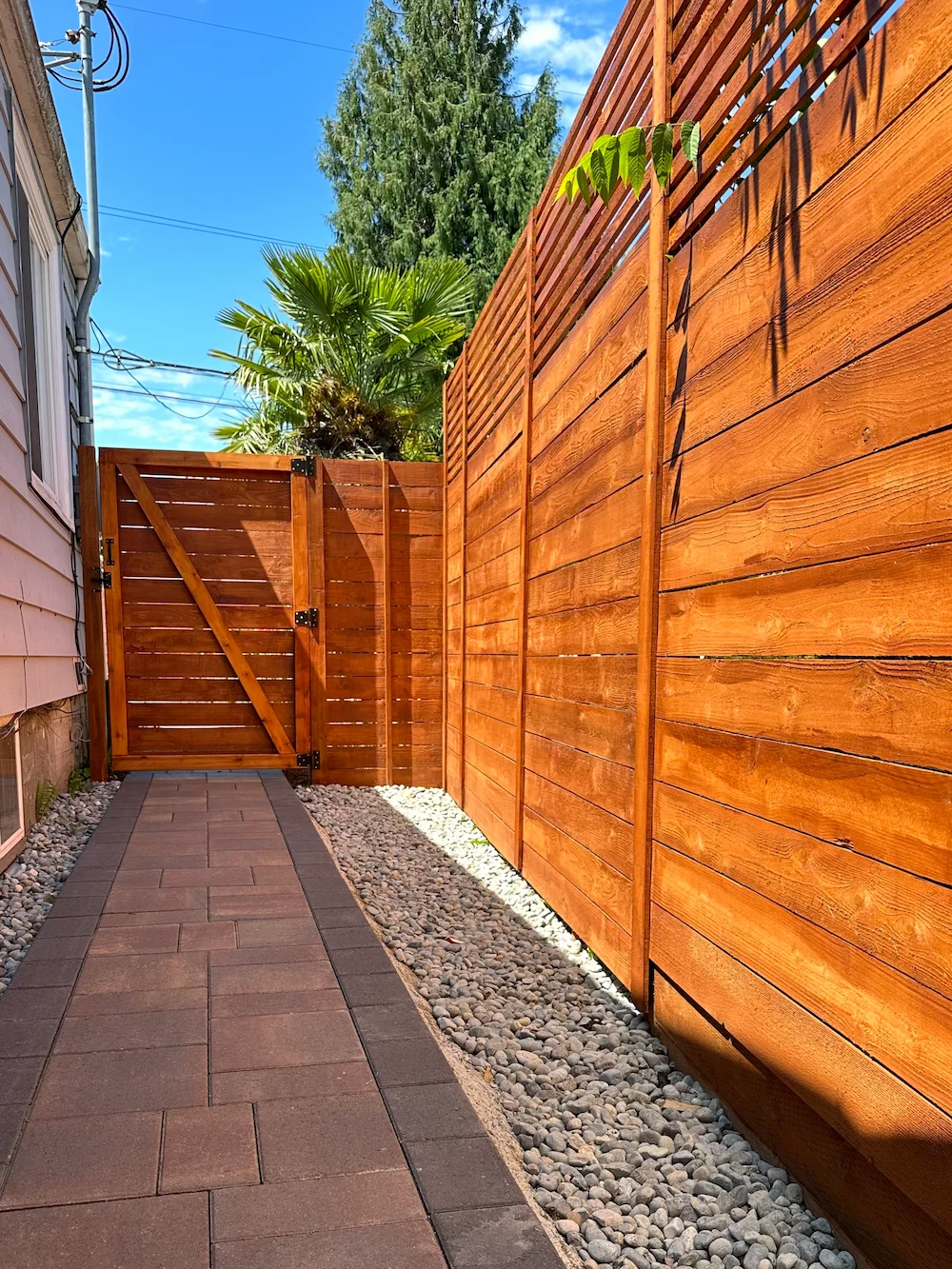
Each idea below covers what it looks like, the best Seattle use case, how much privacy it gives you, and a quick weather, slope, or code note. Where you see project photos, those are real fences our crew has installed around the Greater Seattle area. Use them to narrow your own fencing options and picture the style in your yard.
1. Horizontal Wood Fence in Cedar for Full Privacy
Best for: modern remodels, clean lines, full backyard privacy, and curb appeal.
Horizontal cedar slats create that clean, elongated look that pairs well with newer Seattle home styles and updated backyards. Run the boards tight and you get full privacy with a contemporary style. Western red cedar naturally resists decay, which matters a lot in a rainy climate, and this wood ages nicely here when it’s built and finished well. Many Seattle homeowners choose this direction first when they want a modern home to look complete out back.
Seattle note: horizontal boards need proper post support, correct rail spacing, and drainage so water doesn’t sit on the wood. This is where workmanship shows up over the years. See our horizontal cedar fencing page for more on height, spacing, and stain options.
2. Full-Privacy Cedar Board-on-Board Fence
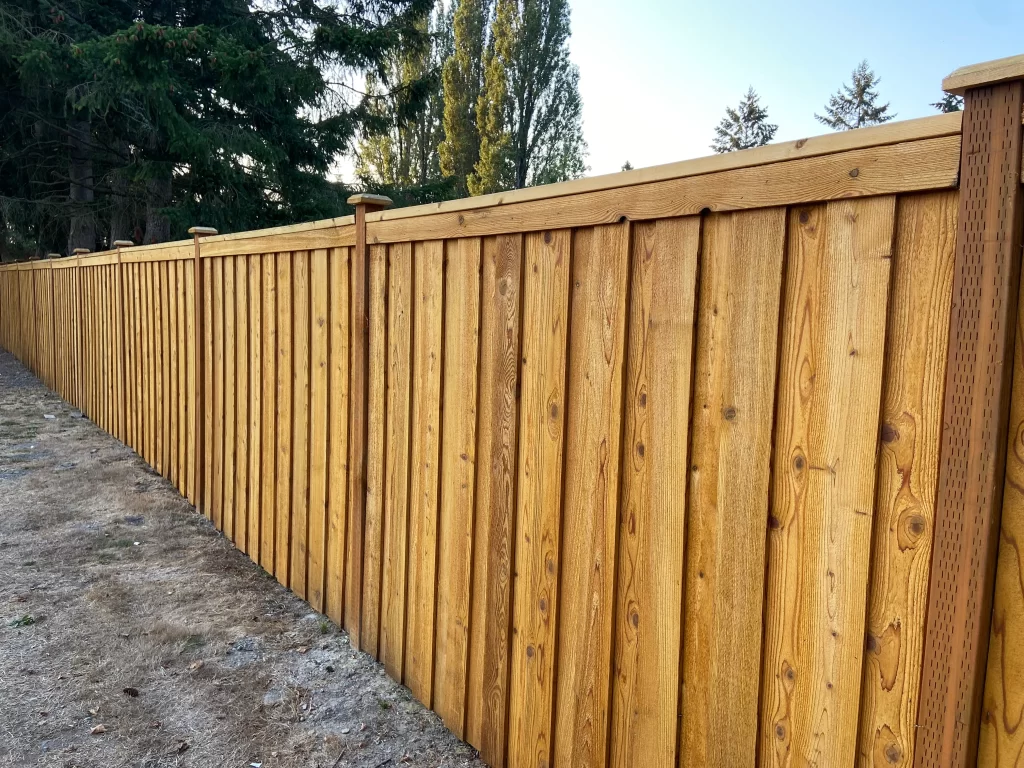
Best for: shared property lines, pets, kids, patios, and close neighbors.
A full panel cedar fence blocks most visibility, which is what most homeowners picture when they say “privacy fence.” Board-on-board takes it a step further by overlapping the vertical boards, so when cedar naturally moves with the seasons, gaps don’t open up and let sightlines through. It’s a strong, classic wood fence look with real backyard privacy, and it’s one of the more timeless wood fence styles you can build.
Seattle note: cedar resists decay and insects on its own, but long-term performance depends on keeping the wood able to dry and building with drainage in mind. Water that lingers is the enemy, especially in damp soil. Learn more on our privacy cedar fencing page.
3. Stained Cedar Privacy Fence
Best for: a warmer, darker, or more refined finish.
A cedar fence can be stained for both looks and protection. A stain lets you control the color, from a deep charcoal to a rich natural tone, while adding a protective layer that helps the wood stand up to exposure. A well-built and maintained wood fence can last decades, and finish plays a real part in that.
Seattle note: staining timing depends on sun exposure, drainage, and how much rain hits that run of fence. We handle this through our fence staining service, and we can tell you what a specific yard will realistically need based on what we’ve seen across the area.
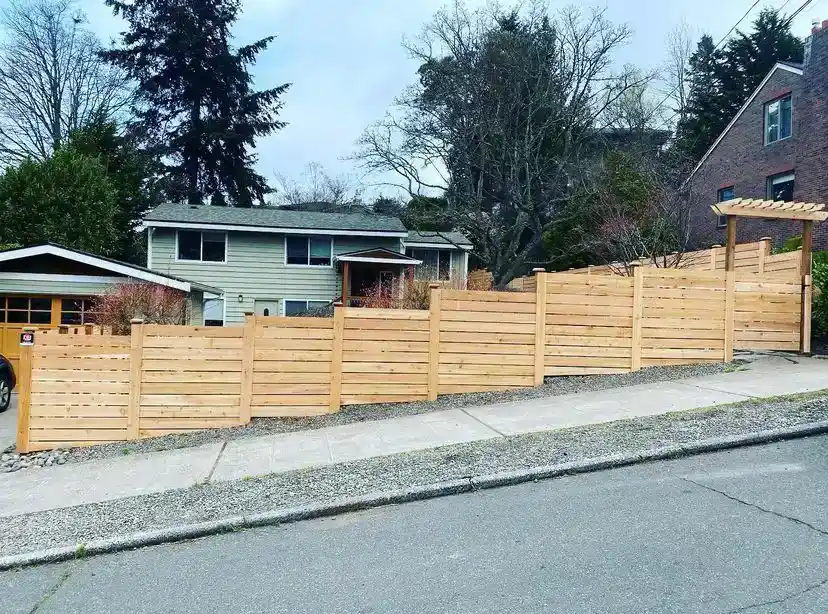
4. Stepped vs. Sloped Privacy Fences for Hillside Yards
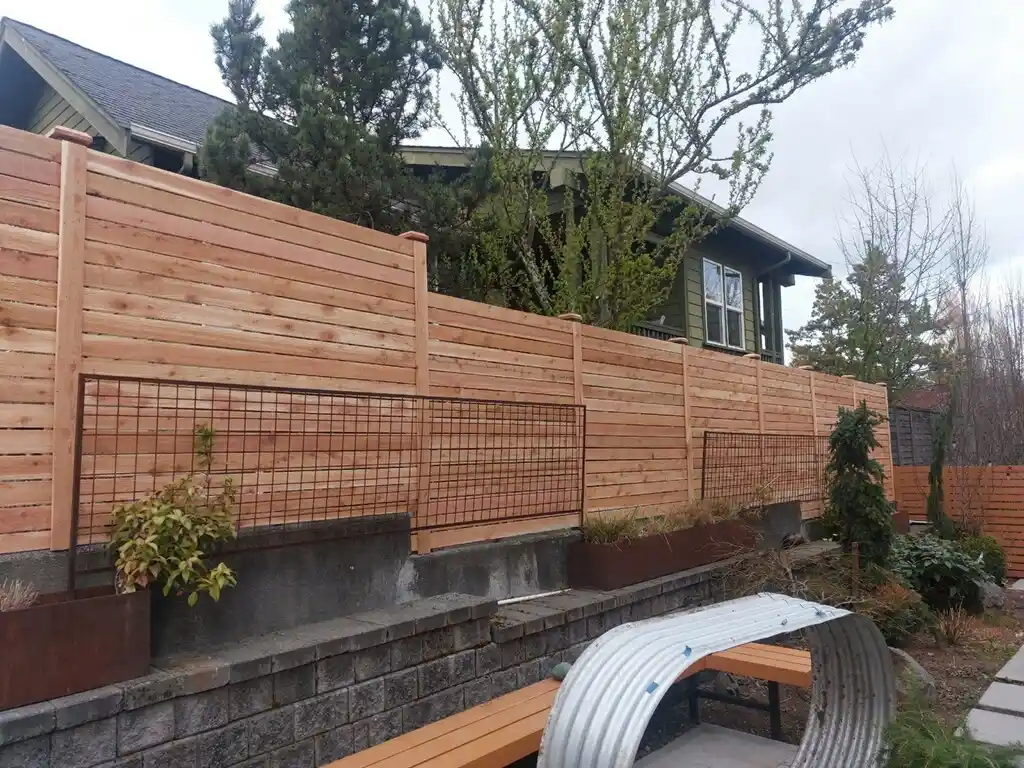
Best for: West Seattle, Queen Anne, Magnolia, Green Lake, and any property with a change in grade.
On sloped lots, there are two common ways to build a privacy fence: sloped or stepped.
A sloped fence follows the natural grade of the yard, keeping the bottom of the fence close to the ground. For privacy fencing, this is often the preferred approach because it minimizes gaps underneath the fence, provides the greatest level of privacy, and achieves the maximum allowable fence height across the slope.
A stepped fence keeps each section level, creating a stair-step appearance. This style is often used for horizontal fences, but it can leave triangular gaps where the ground falls away. An experienced fence contractor will close these gaps where needed so pets stay contained and privacy isn’t compromised.
Seattle note: SDCI lets you average fence height in 6-foot segments on a sloped lot, with no portion over 8 feet when 6 feet is allowed. Grade changes are one of our favorite problems to solve, and we plan the stepping so it looks deliberate.
5. Privacy Fence Above or Beside a Retaining Wall
Best for: terraced yards, downhill patios, uphill neighbors, and tight urban lots.
Many Seattle properties have significant changes in elevation between neighboring yards. Combining a retaining wall with a privacy fence is an excellent way to create a level, usable outdoor space while increasing privacy. Depending on the site, the fence can be installed at the top of the retaining wall or alongside it to maximize usable yard space and achieve the desired finished height. When designed together, the retaining wall and fence create a clean, cohesive look while providing long-lasting structural support and privacy.
Seattle note: when the wall raises grade, Seattle limits the combined wall-plus-fence height to 9 feet 6 inches. Dan’s background runs beyond fencing into grading, drainage, and walls, so we design these combinations to hold and drain. Concrete footings and a proper base are part of getting that right. See our retaining walls page.
6. Privacy Fence With a Custom Gate
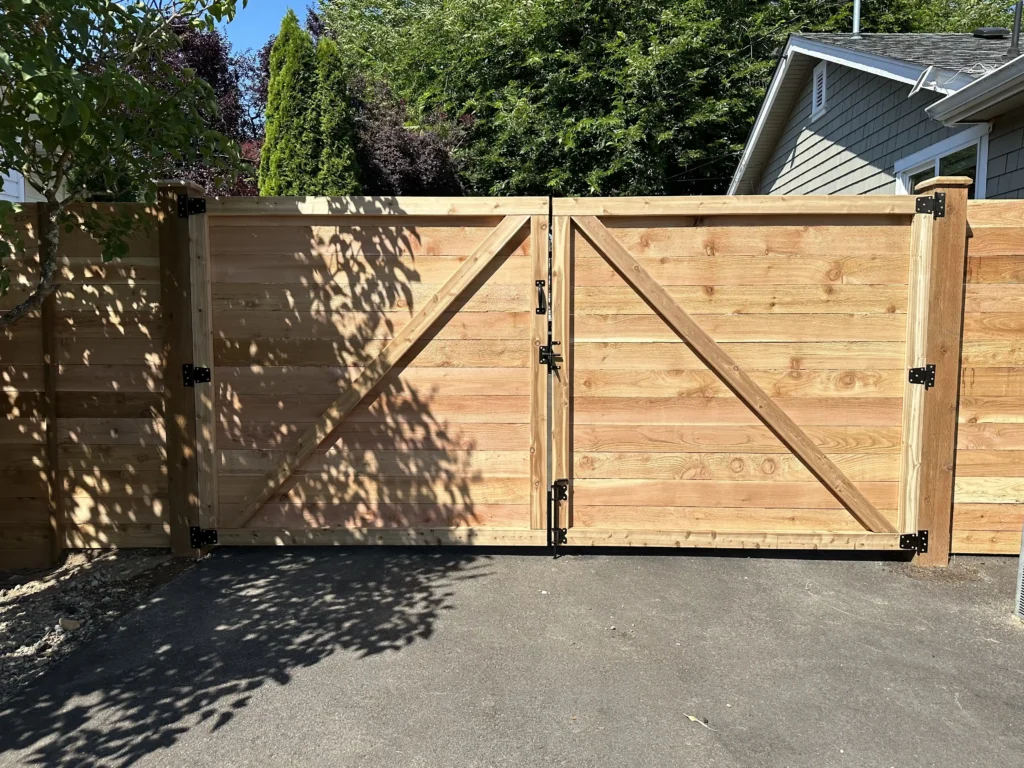
Best for: alley access, RV access, pets, garbage and recycling access, and driveway security.
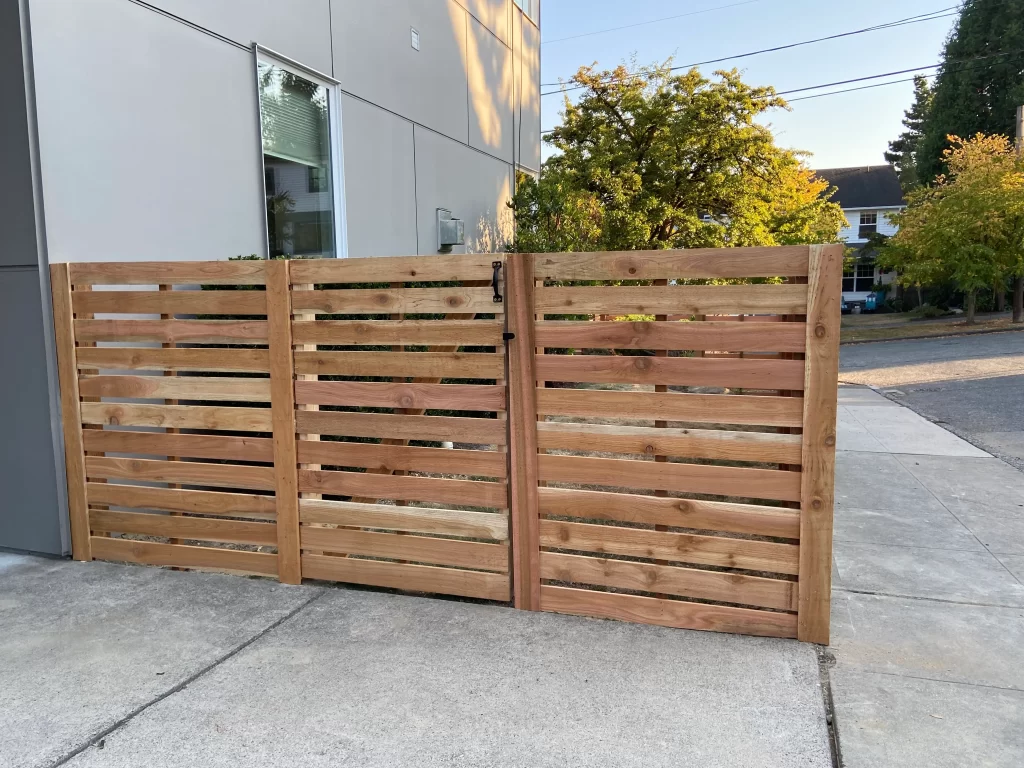
A gate is where a lot of fences fall short. Build it into the fence design from the start and it lines up, latches cleanly, and matches the fence instead of looking bolted on. We do custom pedestrian gates, wide RV and driveway gates, and automatic metal gate options for security.
Seattle note: gates can’t restrict required access or block a corner sight triangle, so placement matters. Explore options on our driveway gates page.
7. Cedar + Hogwire Hybrid for Partial Privacy
Best for: gardens, pets, side yards, and defining space without blocking light.
Hogwire panels framed in cedar give you a modern, open look that keeps sightlines and airflow while still marking a boundary. It’s not full privacy, so think of it as view-preserving. Where you need more privacy, combine solid cedar panels with hogwire so the private spots stay private. A shadow box fence is another way to get partial backyard privacy with airflow if you want wood all the way across a side yard.
Seattle note: hogwire is a great fit around a garden and pets, since it holds the boundary without shading your beds. See our hogwire fences page.
8. Aluminum Fence Sections With Privacy Landscaping
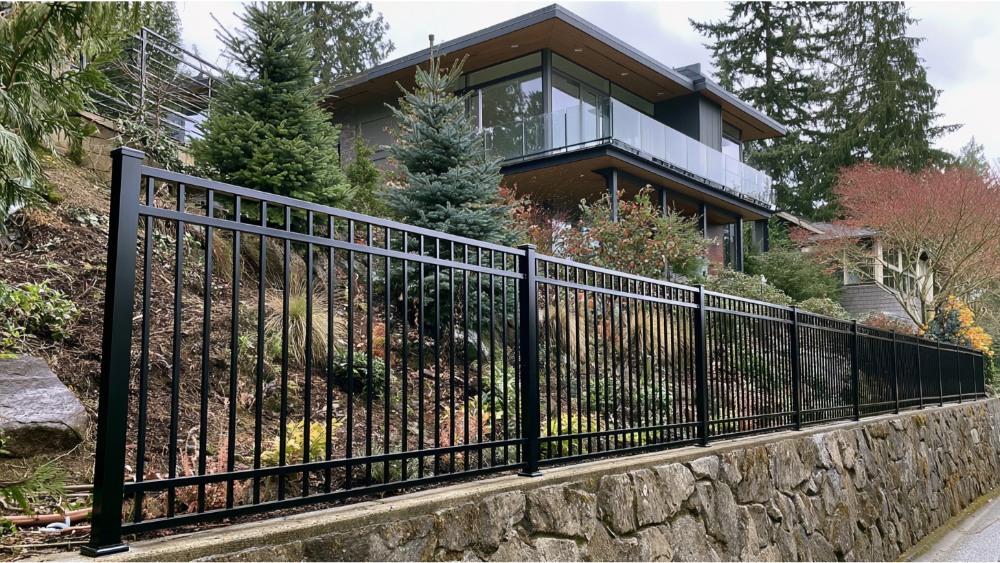
Best for: security, low maintenance, gates, front and side transitions, and commercial-style durability.
Aluminum resists corrosion thanks to a self-repairing oxide layer, which makes this metal a low-maintenance pick in a wet climate. On its own it isn’t a privacy barrier, so pair it with strategic planting or use it as a mixed-material accent alongside cedar. Composite and vinyl fencing are other low-maintenance panel materials if you want a fuller face without wood upkeep.
Seattle note: aluminum shines for security-focused runs, gates, and clean transitions between the front yards and the backyard. See our aluminum fences page.
9. Patio Privacy Screen (Not the Whole Yard)
Best for: small Seattle yards, second-story sightlines, patios, hot tubs, and outdoor dining.
Sometimes the privacy problem is one spot, not the whole yard. A targeted horizontal cedar screen around a patio or hot tub blocks the sightline that actually bothers you, often a neighbor’s second-story window, without closing off the rest of the outdoor space or cutting your light. In tight backyards, this keeps things feeling open while still giving you a private room outdoors to sit and unwind, so the yard doesn’t feel boxed in.
10. Privacy Fence With a Planting Layer
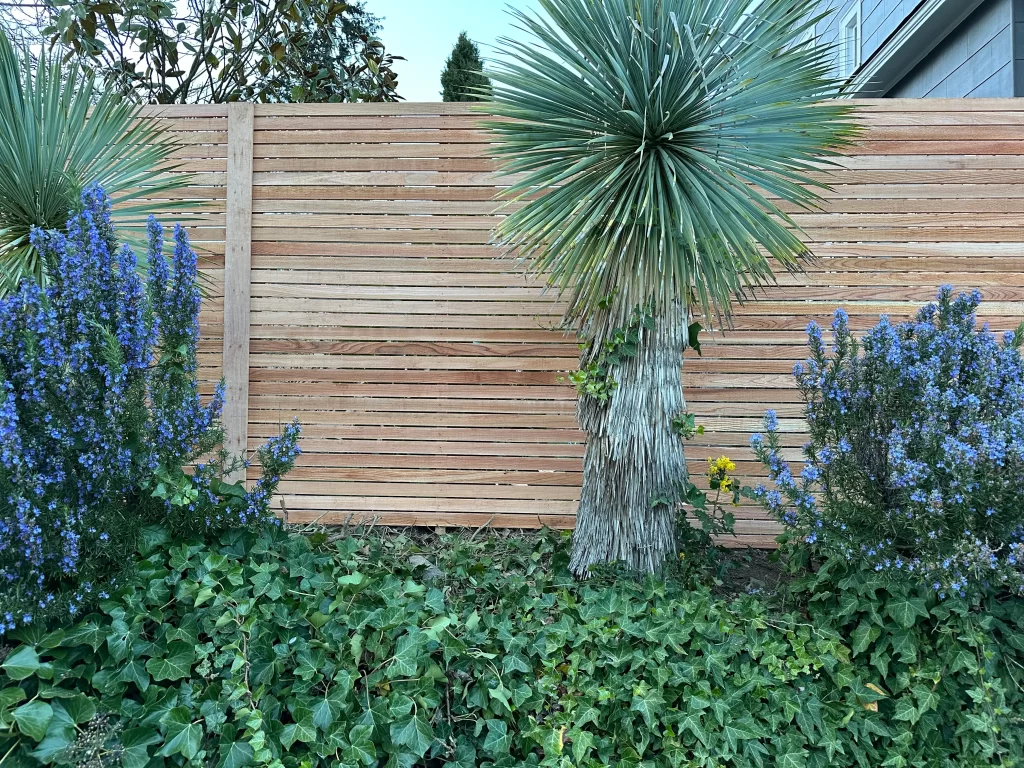
Best for: softening a solid fence and adding height and texture.
A cedar fence backed by a layer of shrubs or grasses feels finished and adds height where you want extra screening above the fence line. It’s a nice way to blend the fence into yard landscaping instead of having it stand alone, and the right plants create a softer edge where wood meets garden.
Seattle note: keep plantings from pressing wet foliage directly against the wood, since trapped moisture works against the fence. King County and WSU Extension both publish native plant resources worth a look. We build clean and leave your yard looking great, so the fence and the landscape work together.
11. Pet-Friendly Modern Privacy Fence
Best for: dogs, kids, and a secure yard.
A pet-friendly fence still looks modern. The difference is in the details: minimal gaps at the bottom, secure gate latches, reinforcement in dig-prone spots, and a solid lower section where a dog might react to movement through the fence. On a slope, closing off those triangular gaps matters even more.
Seattle note: we tailor the build to how your family and pets actually use the yard, so you get privacy, security, and a fence that keeps everyone where they should be. When we’re done, the yard is cleaned up and ready to enjoy.
A Quick Word on Traditional Fence Styles and Other Options
Modern isn’t the only way to go, and some yards call for a more classic look. Traditional fence styles like picket fences still have their place, and a white picket fence out front can add real curb appeal on the right home. Split rail suits a more open, country feel where you want a boundary without full privacy, and chain link remains a budget-conscious utility option for back corners and dog runs. Cedar picket, split rail, and chain link all serve different jobs, so the right fence depends on what you’re solving for. Whatever direction fits, the workmanship still has to match Seattle’s weather.
How to Choose the Right Modern Fence Design for Your Yard
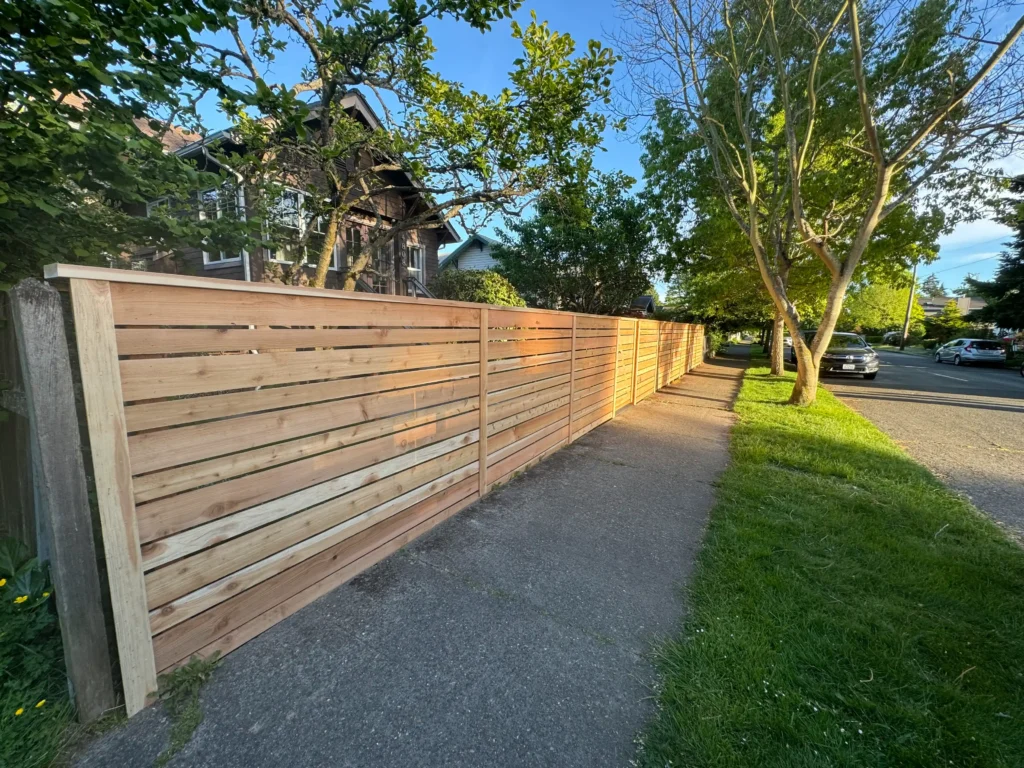
Start with the outcome you care about most, then work back to the fence design. Full panel cedar gives you maximum privacy, while a horizontal wood fence leads on modern style. Here’s a quick way to match your goal to a direction across the common fence styles:
| Your goal | Best fence direction |
|---|---|
| Maximum privacy | Full cedar board-on-board fence |
| Modern look | Horizontal cedar |
| Keep light and views | Cedar + hogwire panels or a partial screen |
| Sloped yard | Custom stepped or racked fence |
| Low-maintenance accents | Aluminum gates or metal sections |
| Pets and kids | Solid lower section, secure gates, minimal bottom gaps |
| Patio privacy only | Targeted cedar privacy screen |
| Curb appeal | Stained cedar with a clean cap and integrated gate |
Most yards mix a couple of these fence styles. That’s normal, and it’s the whole point of a custom fence built for your property. The right details, like clean top and bottom rails and matching post caps, pull the overall style together and give you a finished look. Fence posts that are set correctly are what keep the whole thing true for years.
Photo Planning Checklist for Your Estimate
The “with photos” idea cuts both ways. The photos you bring to an estimate make your quote faster and more accurate. Before your on-site visit, gather:
- Three to five inspiration photos of fence styles you like
- Photos of your existing fence, if there is one
- Shots from neighbor-facing angles
- Photos of any slopes, retaining walls, mature trees, or tight access
- Notes on gate needs (pedestrian, RV, driveway, automatic)
- Pet needs and any dig-prone spots
- Property-line or survey info if you have it
- Any HOA or neighborhood requirements
- The specific spots where privacy actually matters, not just total length
The more you show us about your backyard, front yards, and existing landscape, the tighter your estimate will be.
Why Seattle Privacy Fences Need Local Workmanship
Seattle-Tacoma Airport averages 39.34 inches of rain a year across 156.2 days with measurable precipitation. That’s a lot of wetting and drying cycles for a wood fence. USDA Forest Products Laboratory research is clear on why this matters: wood decay is held off when moisture stays below 20%, and serious decay sets in above roughly 30%. So the details that let a fence dry between storms are what keep it standing. This is why a fence built for the Pacific Northwest differs from one built for a drier place like the Austin area.
That means posts set to drain, boards and rails spaced and oriented to shed water, corrosion-resistant fasteners, and gates hung to stay aligned as the ground shifts. On our slopes and clay soils, post support and grading make the difference between a fence that stays true and one that leans. A crew that knows Seattle builds for the weather, not around it, whether the materials are cedar, hogwire, or aluminum. We also keep the job site clean and keep you in the loop from estimate to final walkthrough, because communication is part of the work, not a bonus.
Work With a Seattle Fence Crew That Builds Custom
We started in West Seattle back in 2015, and we’re still a founder-led crew. Dan Hignite’s name shows up in our reviews because he answers his phone and stays accountable from the first call to the final board. That’s on purpose. Every fence we build is custom built to create the outdoor space you actually want, and many homeowners tell us the difference shows in the details.
We’re fully licensed, bonded, and insured, with 25+ years of combined crew experience and a 36-month installation warranty on our work. You get transparent pricing with no hidden fees, and if financing helps, it’s available through Acorn. No cookie-cutter jobs here. We tailor every fencing project to your slope, your sightlines, your pets, and your privacy goals, and we help homeowners weigh the fencing options that actually fit their yard.
Ready to see what fits your yard? Book a free on-site estimate, a 30-minute property visit where we look at the real conditions and talk through your options. Call or text us at (206) 330-6709, or request a quote to schedule your fence consultation, whichever’s easiest for you.
Frequently Asked Questions
What is the best modern privacy fence for a Seattle backyard?
Horizontal cedar is the most popular modern choice because it gives clean lines and full backyard privacy while holding up in our climate. For maximum privacy on a shared line, a full cedar board-on-board fence is the strongest pick.
Are horizontal cedar fences good in Seattle rain?
Yes, when they’re built right. Cedar naturally resists decay, and a horizontal wood fence performs well here with proper post support, board and rail spacing, drainage, and finish that let the wood dry between storms.
How tall can my backyard fence be in Seattle?
In neighborhood residential zones, fence height is generally limited to 6 feet, with up to 2 more feet of open features like a trellis. Front yards and street-side setbacks are often capped at 4 feet, and sloped lots follow averaging rules. Always confirm your parcel.
Do I need a permit for a privacy fence in Seattle?
In many cases, no. Seattle often doesn’t require a construction permit for fences 8 feet or lower, provided there are no masonry or concrete elements over 6 feet and the fence isn’t in a flood-prone area. We check the specifics for your property.
How do I make my yard private without blocking all the light?
Use selective privacy. A targeted cedar screen around a patio or a cedar-and-hogwire hybrid along a side yard blocks the sightlines that bother you while keeping light and openness across the rest of your landscape.