

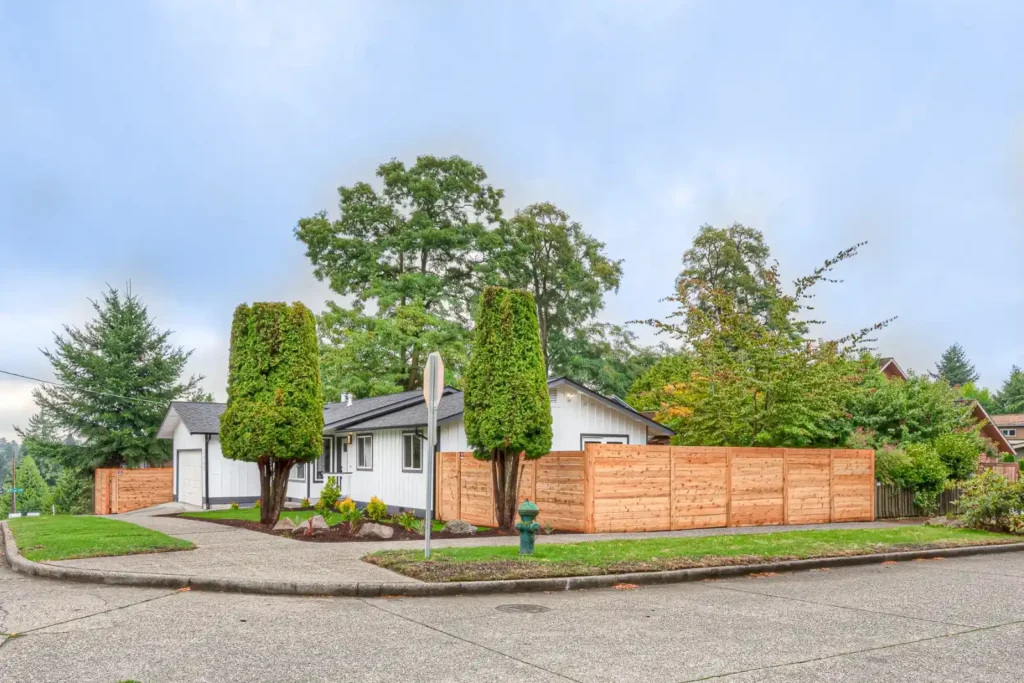
A standard 6-foot cedar privacy fence in Seattle typically costs $50 to $85 per linear foot installed, bringing most residential projects to a total of $7,500 to $12,750. Actual project costs vary based on factors like material grade, gates, steep lot slopes, old fence removal, and local labor rates. Because site conditions directly impact pricing, homeowners should secure an on-site estimate for an accurate, itemized quote.
A standard 6-foot cedar privacy fence in Seattle runs roughly $50 to $85 per linear foot installed. For a typical yard, that puts most projects in the $7,500 to $12,750 range. Custom designs, horizontal layouts, driveway gates, old fence removal, and steep lots can push the number higher. Here’s the honest part: that’s a public-market range from cost guides, not a flat price we hand out. Every Seattle property sits on different ground, and the only reliable number comes from an on-site estimate where we actually look at your lot.
The Short Answer: What Seattle Homeowners Should Budget
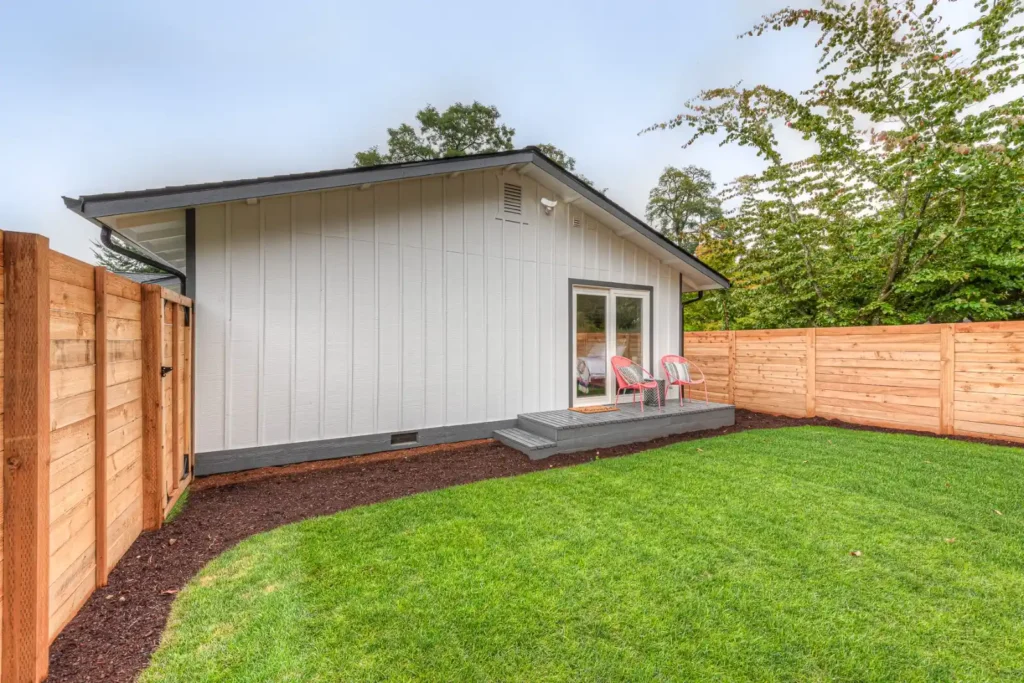
Most Seattle homeowners planning a 6-foot privacy fence should budget somewhere between $50 and $85 per linear foot once you factor in local labor costs and site conditions, with total projects commonly landing between $7,500 and $12,750. Custom and higher-end builds can climb to $75 to $90 or more per foot. Fence costs move with the details, so the same yard can carry very different numbers depending on what goes into it.
Here’s why “100 feet of fence” isn’t one price. That same fence length changes based on:
- Fence design and material grade
- Number of gates
- Slope and grade changes
- Post system and footings
- Old fence removal and haul-off
- Site access and landscaping
We don’t price every fence project off a flat per-foot chart. No cookie-cutter jobs here. We build the estimate around your actual property, because the average fence installation cost only gets you in the ballpark.
Why “Per Foot” Fence Installation Cost Can Be Misleading
A per-foot number means nothing until you know what’s inside it. One contractor’s $50 per foot might cover only boards and labor. Another’s $75 might include everything from footings to cleanup. That’s the difference that trips up homeowners comparing quotes, and it’s why the final cost of two “matching” bids can end up far apart. Costs vary based on what each contractor folds in.
A complete estimate should account for:
- Materials (boards, rails, hardware)
- Labor
- Fence posts and concrete footings
- Gates and gate hardware
- Old fence removal and haul-off
- Utility-locate coordination
- Staining or sealing
- Cleanup
- Warranty
- Any permit-related work
Seattle labor costs typically run 15 to 25 percent above national averages, which is part of why local quotes sit higher than the numbers you’ll find on national sites. Labor is one of the biggest levers on any fence installation cost, since a tight yard or a steep grade means more crew hours. We believe in transparent pricing with no hidden fees. A good estimate spells all of this out so you can compare real value, not just a headline number and appreciate the quality craftsmanship behind it.
What Changes the Fence Costs on a 6-Foot Privacy Fence in Seattle?
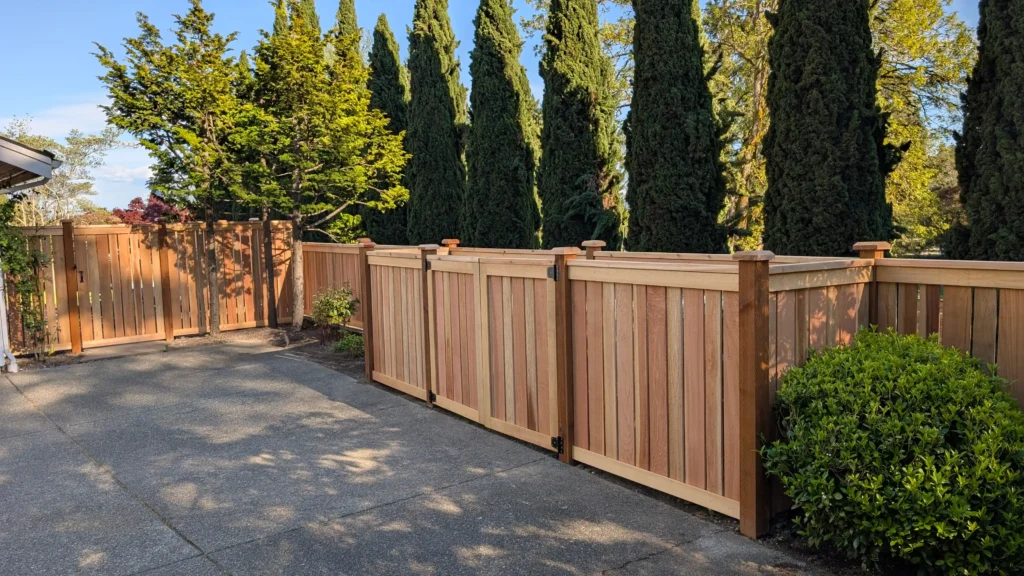
Seattle’s terrain, weather, and tight yards drive real cost differences. A flat lot in Shoreline with clear access is a different job than a sloped West Seattle backyard hemmed in by mature landscaping. Here’s what actually moves the number on a new fence, and why your specific property matters so much.
Western Red Cedar Grade and Fence Material Choices
Cedar grade and board style shape a big part of the price. Western red cedar is the Pacific Northwest choice because its natural oils resist rot and moisture, which matters when the cedar boards face year-round rain. A cedar fence generally runs $50 to $85 per linear foot. Chain link is another option people weigh, and a chain link fence usually costs less than wood fences up front, but it gives you almost no privacy and a very different look. Vinyl fences and wrought iron sit at the higher end of material choices, each with its own trade-offs in look and upkeep. For privacy, security, and curb appeal that lasts, cedar earns its place as our most-requested fence material.
Vertical vs. Horizontal Cedar Fence Style
Yes, horizontal cedar can cost more than a standard vertical privacy fence. The layout is tighter, the boards need more precise installation, and the clean modern look demands more materials and better selection. Board-on-board privacy layouts also add cost because they use extra lumber, and privacy slats can be worked in for even tighter coverage. The right fence style is partly budget and partly taste, so we walk you through how each option changes the number. If you’re drawn to the horizontal look, take a look at our horizontal cedar fencing options.
Fence Posts, Post Hole Digging, and Ground Contact
The post system is where cheap jobs quietly cut corners. Untreated posts can rot in three to five years under Seattle’s roughly 37 inches of annual rain. We set posts in concrete footings with proper ground-contact material so your fence stands straight through wind and wet winters, the kind of craftsmanship that doesn’t show up on a spec sheet but shows up ten years later. Rocky soil conditions raise post hole digging cost because holes take longer, and tree roots can slow a crew even further. This is exactly why the lowest bid isn’t always the best value: what you save upfront can cost you a whole new fence in a few years.
Gates, Old Fence Removal, and Site Access
Gates add cost per unit, so gate count and hardware matter. Each opening needs framing, hardware, and sometimes a custom build for RV or driveway access. Removing an old fence and hauling it off typically runs $5 to $12 per linear foot depending on what’s there and how it’s disposed of. Tight access and mature landscaping slow the crew down, which adds labor costs. Shared property lines call for care too, and neighbors often share fence costs, so knowing where your line sits keeps the project clean.
Sloped Yards, Uneven Ground, and Retaining Walls
Seattle’s hilly neighborhoods (West Seattle, Queen Anne, Magnolia, and much of North Seattle) mean deciding between stepped and racked panels on uneven ground, and sometimes adding a retaining wall to hold grade. Even a moderate slope changes the approach, and a steeper grade means more labor. This is where our broader construction background pays off. Dan’s experience runs from fencing into grading, drainage, and full builds, so slopes are a problem we solve, not one we shy away from. On a sloped lot, Dan will walk the grade with you at the estimate and explain exactly why a stepped or racked layout makes sense for your yard, not just quote a number and move on. We love a challenge. If your lot needs one, learn more about our retaining walls.
Seattle Fence Rules and Permit Costs That Affect Your Fence Project
Local regulations shape what you can build and where. Here’s the plain version, straight from Seattle Department of Construction and Inspections (SDCI):
- Fences 8 feet or less generally don’t need a permit, as long as they don’t include masonry or concrete elements over 6 feet.
- Neighborhood residential Seattle zones limit fences to 6 feet, with up to 2 feet of open architectural features like an arbor or trellis on top.
- Front yards and street-side setbacks are capped at 4 feet (42 inches), which is why many homeowners keep the tall privacy runs in the back and go lower in front.
- On slopes, height can be averaged over each 6-foot segment, but no section may exceed 8 feet where 6 feet is allowed.
- A fence above a retaining wall used to raise grade is limited to a combined 9 feet 6 inches.
- Permit costs, when needed, typically run $20 to $150.
Washington’s Dig Law also requires calling or clicking 811 at least two business days before digging, and post holes count as digging. The locate service is free. HOAs may add their own rules, and a property-line survey is smart before you build near a neighbor. We handle the code, slope averaging, and locate coordination so you don’t have to.
Cedar Privacy Fencing and Seattle’s Wet Climate
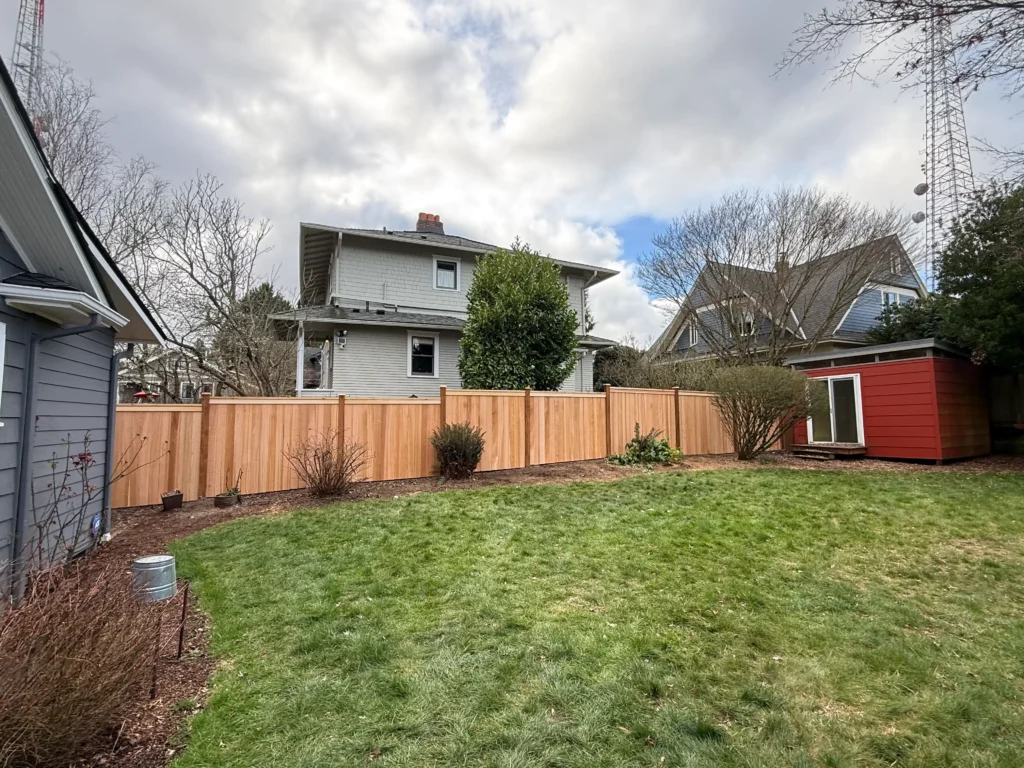
Will it hold up here? Cedar is the Pacific Northwest favorite for good reason. Western red cedar heartwood carries natural extractives that resist decay (USDA Forest Service), which helps it stand up to rain, wind, and constant moisture. With proper care, a cedar fence can last 15 to 20 years or more. That long term durability is a big reason wood fences remain the top pick over lower-privacy options like chain link for backyards in this climate. For those who want a lower maintenance route, aluminum is a cost effective option that still frames an outdoor space nicely and works well for pet enclosures.
Maintenance is straightforward planning, not a burden. Clean the fence about once a year, an oxygen bleach wash works well, and regular sealing or staining every 2 to 3 years locks out moisture and holds the color. That rhythm is what keeps cedar looking sharp through Seattle winters. See our cedar fencing and fence staining pages for more.
How to Compare Fence Estimates in Seattle
Use this checklist when you’re comparing quotes so you’re measuring the same thing across contractors:
- Is the contractor licensed, bonded, and insured? Verify it free through the Washington L&I contractor tool. General contractors carry a $30,000 bond, specialty contractors $15,000, plus liability coverage.
- Is the estimate itemized, not a single lump number?
- Are gates listed separately?
- Is demolition and haul-off included?
- Are post materials and hardware specified?
- Is staining included or priced separately?
- Is cleanup part of the job?
- Is there a workmanship warranty?
- Does the contractor explain Seattle height, slope, and 811 rules?
If a quote can’t answer these, that per-foot number isn’t telling you much. A contractor who verifies as legitimate and itemizes clearly is one you can trust with a big investment. It also protects you from unexpected expenses at the end of the job, when the total cost should match the accurate quote you signed instead of surprising you.
How to Save Money on a New Fence Installation in the Off Season
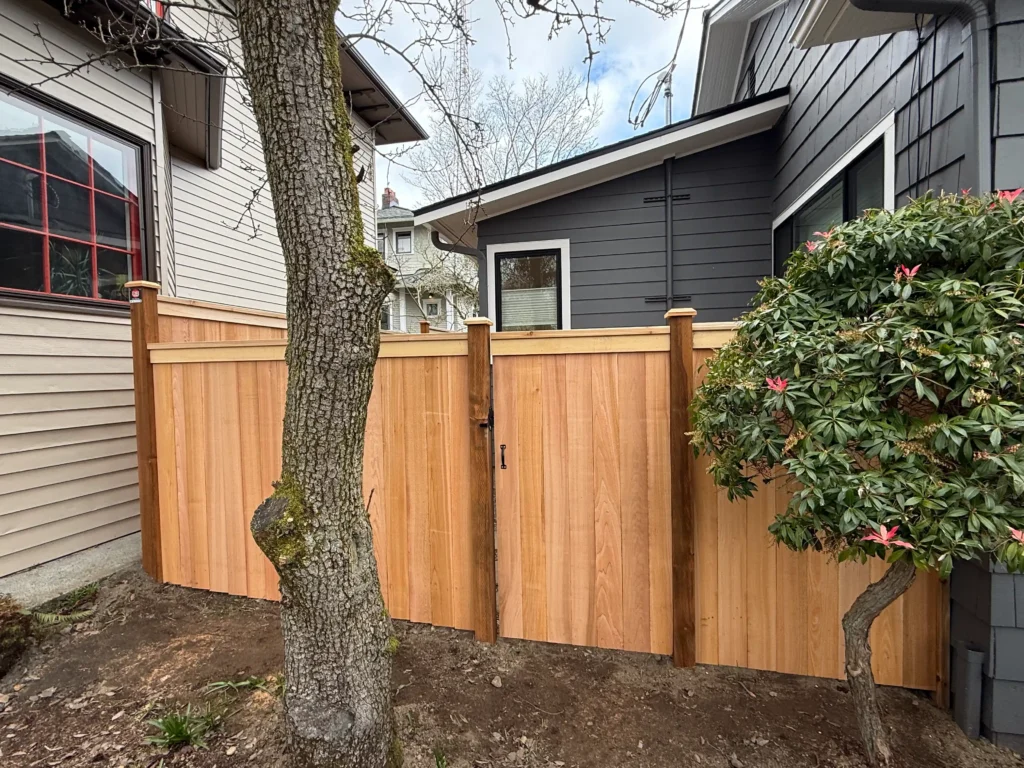
You don’t have to cut corners to keep the number reasonable. A few smart choices can trim the fence installation cost without sacrificing quality. Scheduling in the off season, usually late fall through winter, can mean more crew availability and a quicker start thanks to lower demand, since summer is the busiest stretch for fence installation. Reusing sound existing posts, keeping gate count sensible, and clearing the work area before we arrive all cut labor. And choosing western red cedar that you maintain on schedule saves money over the long run, because a fence you replace early is the most expensive fence of all.
What we won’t do is talk you into a thinner post system or skipped footings to hit a lower headline number. That’s the kind of shortcut that costs more later. Many homeowners find that a few timing and design decisions matter more than chasing the cheapest bid.
Why an On-Site Estimate Beats a Per-Foot Guess
The only way to price a real Seattle lot is to stand on it. A 30-minute on-site estimate lets us see the slope, soil, access, existing fence, and property line before we put a number on paper. We measure the actual linear footage and note any additional features you want, because estimates always vary based on what’s really in the yard. That’s how you avoid surprises later, and how the final cost stays true to what we quoted.
We started in West Seattle in 2015, and our crew brings 25+ years of combined experience to every build. Dan Hignite still answers the phone, and that founder-led accountability is the whole point. You get transparent pricing with no hidden fees, and final payment is due only after the work is complete. Every fence installation carries our 36-month installation warranty, and we finish with a clean yard and a final walkthrough so you know exactly what you paid for. We keep you informed from the first call to the last board.
Financing Your Seattle Privacy Fence
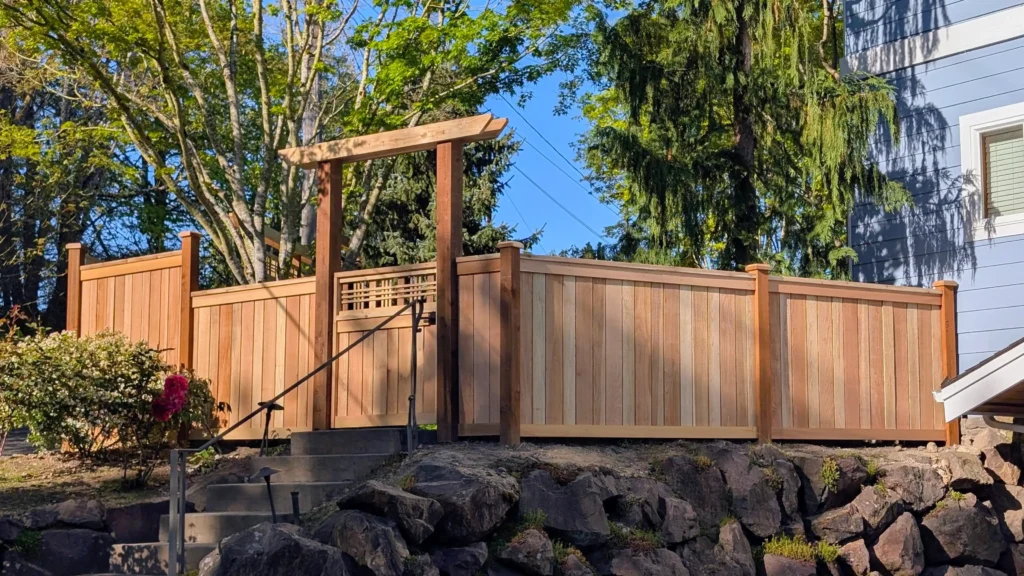
Want to move forward now and spread the cost over time? Financing is available through Acorn. Get Your Fence NOW. PAY LATER. Ask us about the Acorn application and we’ll point you to the next step.
Frequently Asked Questions
How much does a 6-foot privacy fence cost per foot installed?
Public cost guides put it at roughly $50 to $85 per linear foot installed for cedar privacy fencing in Seattle. Design, gates, demo, and slope shift the final cost.
How much does a 6-foot side fence cost in Washington state?
Expect a similar $50 to $85 per linear foot range across Washington state, though site conditions and location move it. Rural access, rocky soil, or a steep lot can raise the cost per foot.
Is a chain link fence cheaper than a cedar fence?
Usually yes. A chain link fence tends to cost less per linear foot than wood fences, but it offers little privacy and a plainer look. Premium materials like cedar, aluminum, or wrought iron cost more and deliver privacy, security, and curb appeal that chain link can’t match.
Do I need a permit for a fence in Seattle?
Generally no permit is needed for a fence 6 feet tall (and under 8 feet) in residential zones. Front yard fences over 42 inches or taller structures may require one. Permit costs typically run $20 to $150, per SDCI.
How much is 100 feet of wood privacy fence?
At $50 to $85 per foot, roughly $5,000 to $8,500 for materials and labor, before demo, gates, or slope work. A 100-foot, 6-foot cedar privacy fence with one gate commonly lands around $6,000 to $8,000 installed. Those extras adjust the total cost, which is why an on-site estimate is more accurate.
Get a Real Number for Your Seattle Property
Ready for a number built around your actual yard? Request a free on-site estimate, or call or text (206) 330-6709, whichever’s easiest for you. We build custom cedar, horizontal, hogwire, and aluminum fences across Seattle, Shoreline, Edmonds, Bellevue, and nearby King and Snohomish County communities. Serious About Service. Passionate About Fences.