

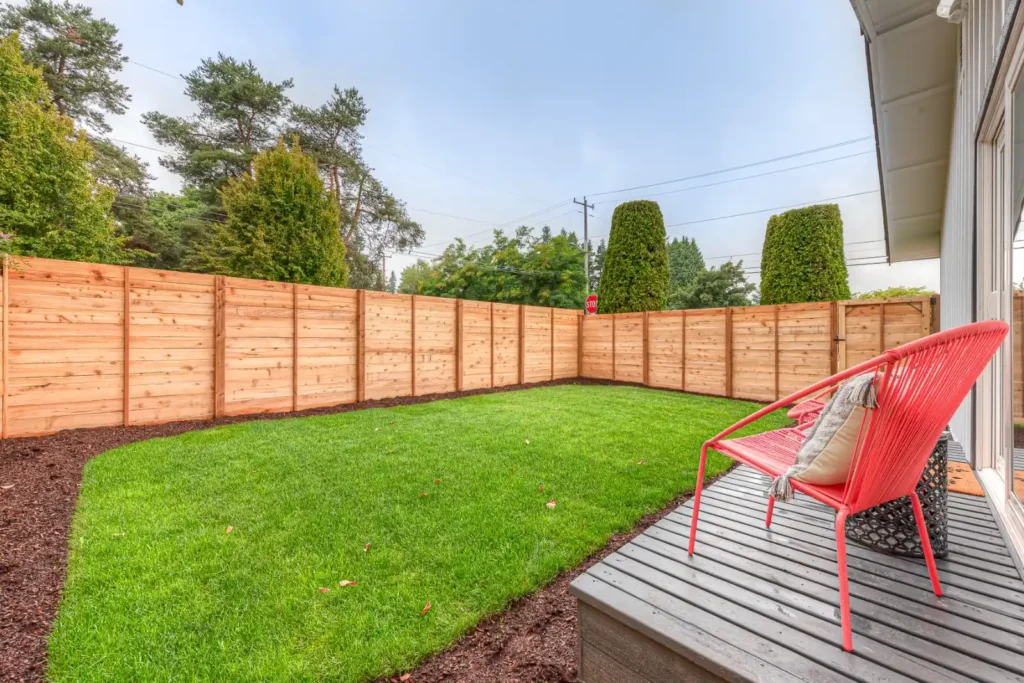
Choosing between cedar and vinyl fencing in Seattle requires balancing upfront costs against long-term maintenance in a climate with 156 annual rainy days. Western Red Cedar offers excellent slope adaptability, easy single-board repairability, and lower initial costs, but it requires resealing every 2 to 3 years to prevent decay and lasts 10 to 15 years. Vinyl requires a higher upfront investment but delivers a 20 to 30-year lifespan with minimal upkeep, though its modular panels limit customization on irregular lots. Regardless of material, structural integrity depends on installation quality, proper concrete footings, and compliance with local rules—including Seattle’s 6-foot residential zoning height limit and mandatory 811 utility locates before digging.
For most Seattle homes, a well-built custom cedar fence is the better all-around choice. It brings natural Pacific Northwest curb appeal, fits slopes and gates the way panelized products can’t, and lets you replace a single damaged board instead of a whole section. A vinyl fence earns its place if your one top priority is minimal upkeep and a uniform look. If you’re weighing the two before requesting estimates, here’s the honest version most sales pages skip: the fence you actually get depends as much on posts, drainage, and workmanship as it does on the material name. And the real math isn’t the sticker price alone. It’s the upfront cost set against the maintenance you’ll do (or skip) over the next decade. A wood fence in cedar typically runs a lower upfront cost with regular sealing; a vinyl fence asks for more money upfront and less attention later.
Cedar vs Vinyl Fence: Which Is Better for Seattle Homes at a Glance
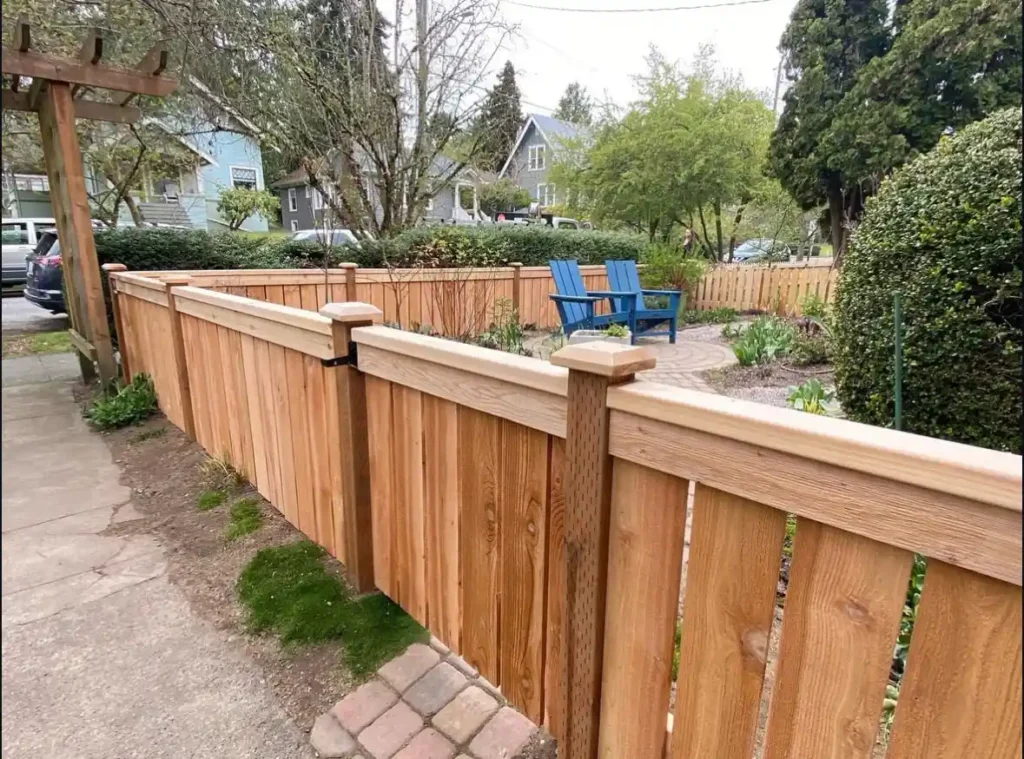
Both materials can work here. The right pick depends on what you value most: warm natural wood character and flexibility, or a wipe-clean, look-the-same finish. Here’s how the two fence materials stack up for a Seattle property.
| Factor | Cedar Wood Fence | Vinyl Fence |
|---|---|---|
| Rain & moisture | Natural oils resist decay; needs good drainage and finish | Doesn’t absorb moisture, resists rot |
| Wind exposure | Strong with proper posts and footings | Depends heavily on the installed assembly and posts |
| Maintenance | Seal roughly every 2 to 3 years | Low maintenance; occasional hose cleaning |
| Curb appeal | Warm, natural grain; ages to silver-gray | Uniform; can read as artificial to some |
| Custom design | Height, style, and layout tailored to your lot | Modular panels limit customization |
| Privacy | Excellent with solid cedar boards | Good with solid panels |
| Repairability | Swap one board at a time | May need matching manufacturer panels |
| Pet containment | Great; custom heights and gate options | Good; limited by panel styles |
| Gates | Custom and automatic driveway gates | Standardized options |
| Longevity | Around 10 to 15 years, well maintained | Around 20 to 30 years |
| Environmental | Natural, repairable wood | Plastic; consider end-of-life disposal |
| Best fit | Custom look, slopes, gates, repairability | Lowest maintenance, uniform appearance |
How Seattle Weather Changes the Cedar vs Vinyl Decision
Seattle-Tacoma sees about 39.34 inches of precipitation a year, spread across roughly 156.2 days with measurable rain, based on NOAA’s 1991 to 2020 climate normals. November alone averages 6.31 inches, while July drops to about 0.60 inches. That pattern is the real story. Our fences sit through long damp stretches, then bake under summer UV once the skies clear.
Both fence materials feel that pressure. In the wet Pacific Northwest, surface moss and algae grow on cedar wood and vinyl alike, especially on shaded, north-facing runs. Neither material is immune. What separates a fence that lasts from one that fails early is water management: how posts are set, where water drains, and whether boards or panels can shed moisture instead of sitting in it. A vinyl fence won’t absorb water or rot, which is a genuine advantage. But a poorly drained vinyl fence still heaves and leans if the footings and posts sit in saturated soil. This is why “built for Seattle’s weather” comes down to the crew doing the work, not just the label on the material.
Where Cedar Wins for Seattle Homeowners
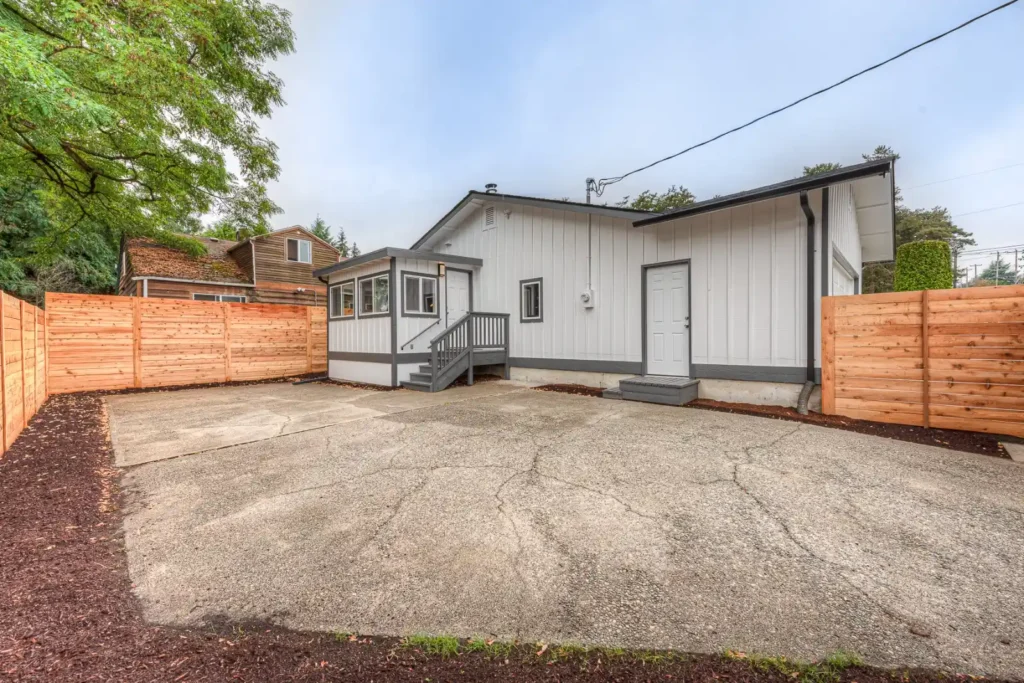
Cedar looks like it belongs here. The warm grain and natural tone complement the traditional Pacific Northwest homes across our neighborhoods, and it works just as well behind a modern build. A western red cedar fence carries natural oils that help this wood resist rot and insect damage, which matters in a climate this wet. Left alone, cedar weathers to a soft silver-gray that plenty of homeowners actually prefer. Want a specific look instead? Cedar takes stain or paint in nearly any color, giving you a natural look you can keep or change.
The bigger advantage is flexibility. We build privacy cedar, horizontal cedar, and hogwire combinations, and we tailor every one to the property. Those fence designs are exactly what Seattle lots demand. Sloped yards, tight urban side setbacks, and irregular property lines rarely fit a boxed panel system cleanly. A cedar fence follows the grade and the line of your yard with clean lines.
Repairs are simpler too. If a board splits or a section takes damage, we swap those same boards. You’re not tracking down a matching panel or forced to replace a whole run. Cedar also pairs naturally with custom driveway gates, RV access, and pet containment, so the fence solves the actual problem you have rather than the one a catalog assumes you have. No cookie-cutter jobs here. Every cedar fence we build is designed around your privacy, security, and curb appeal, then backed by decades of hands-on craftsmanship.
Where a Vinyl Fence Wins, and Where It Falls Short
Vinyl has real strengths, and it’s fair to name them. If you want a low maintenance alternative you rarely think about, vinyl delivers. There’s no staining schedule. Cleaning is usually an occasional pass with a hose. The plastic material won’t absorb moisture or rot, and modern vinyl comes in more colors and textures than it used to. For a homeowner who wants a clean, uniform look and a consistent appearance year after year, it’s a reasonable choice, and many homeowners prefer that predictability.
The trade-offs are worth understanding before you commit. A vinyl fence arrives as modular panels, which limits how far you can customize height and design on an unusual lot. Once you pick a color and style, that’s it; you can’t repaint or restyle it later the way you can refinish a wood fence. Panel repairs can be system-dependent, meaning a cracked section may require matching parts from the original manufacturer. Some homeowners also find the plastic reads as artificial next to natural wood.
There’s a structural point that most comparison articles miss. ASTM F964, the standard covering rigid PVC fence profiles, addresses weatherability and impact resistance of the plastic itself, but it explicitly does not cover the wind-load performance of the finished fence. In other words, the profile passing a standard doesn’t tell you how the assembled fence handles wind. That depends on posts, spacing, and footings, which brings us back to installation.
Rain, Rot, and How Much Maintenance Actually Matters
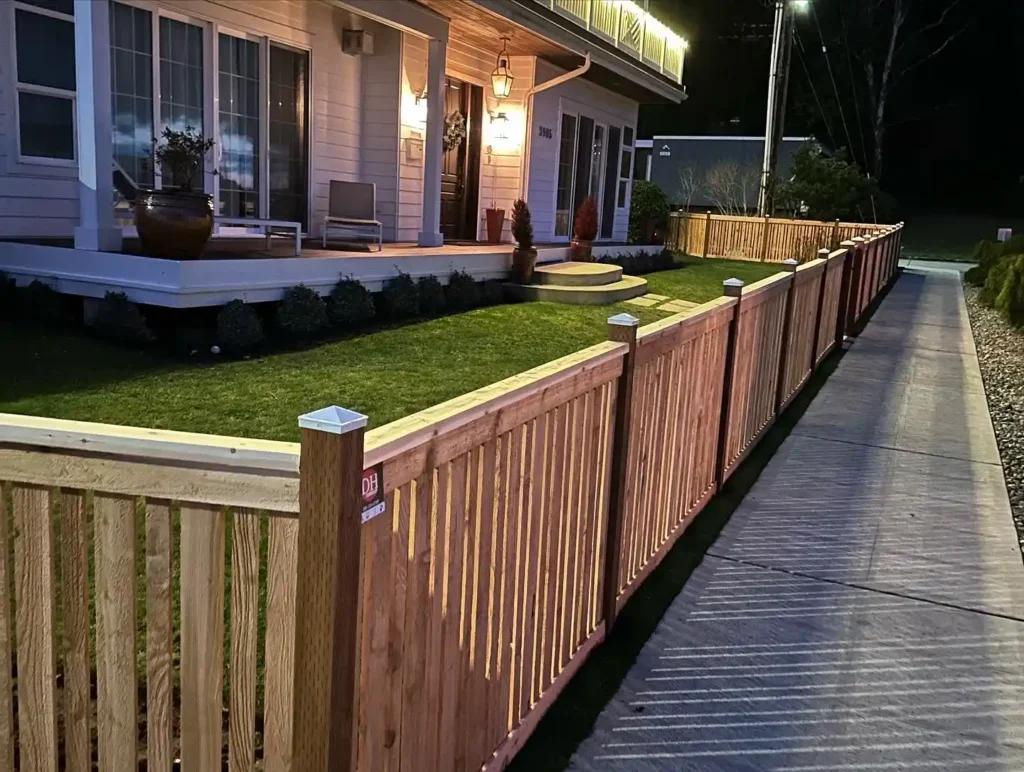
Cedar’s decay resistance isn’t uniform across the board, literally. The Canadian Wood Council notes that only the heartwood carries the natural extractives that resist rot; the sapwood of North American softwoods stays vulnerable when decay resistance is the goal. So grade and heartwood content in the wood matter, and the end grain at cut ends deserves extra attention where boards meet posts. A cheap grade full of sapwood won’t perform like the cedar we specify, and it won’t match the durability of denser species like douglas fir in every application.
Finish is the other half of low maintenance. A single coat of semi-transparent penetrating oil-based surface coating on smooth wood can last 2 to 4 years, and a two-coat system up to 8 years, depending on UV exposure, per GSA preservation guidance. Real Cedar also points out that transparent stains need reapplication more often than pigmented systems, since clear finishes don’t block UV and moisture as well. For Seattle exposure, that generally lands cedar in a reseal-every-2-to-3-years rhythm. Skip it for years in this climate and untreated wood degrades and rots faster than you’d expect.
Frame that maintenance honestly: it’s real, ongoing work. If you’re wondering how much maintenance a fence truly needs, over ten years staining a wood fence adds only modest costs in materials and effort. A vinyl fence asks for far less, just occasional cleaning, which is why it appeals to owners who want minimal maintenance above all. But the craftsmanship underneath is what determines whether either material reaches its full lifespan. Airflow around boards, keeping wood off constant soil contact, drainage that moves water away from posts, and quality fasteners that won’t rust and stain the wood all matter. A well-maintained cedar fence lasts 10 to 15 years in wet conditions. The install decides whether you hit the top of that range or the bottom, and whether rot ever gets a foothold.
Wind, Slopes, Tight Seattle Lots, and Why Metal Posts Matter
A solid privacy fence catches wind like a sail. An open hogwire or spaced design lets air pass through. That difference changes what the fence needs underground. On a solid six-foot privacy run, post material, footing depth, and post spacing carry the load when a windstorm rolls through. Whether the posts are wood set in concrete or metal posts inside a vinyl system, the assembly is what holds. Steel inserts add rigidity where a hollow plastic post alone would flex.
Seattle SDCI publishes a wind-load-factors map for exactly this reason: exposure varies across the city. Shoreline lots, open hilltops, and properties funneling wind between structures see more force than a sheltered mid-block backyard. ASTM F1999, the install practice for rigid PVC fence systems, assumes frost penetration up to 30 inches and defers to local code and manufacturer instructions, which is another reminder that the assembly, not the material, does the work.
On sloped or wind-exposed Seattle lots, the installer’s choices drive real-world durability more than the material label. Concrete footings sized for the exposure, correct spacing, and posts set to handle the load are what keep a fence standing. Vinyl systems often rely on internal metal posts for strength, while a wood fence leans on properly treated posts and solid footings. We love a challenge like this. Slopes, RV access, and irregular terrain are exactly the projects where doing it right shows. Years of building fences on tricky Seattle grades taught us where corners get cut and how to avoid it.
What About Pressure Treated Lumber and Chain Link?
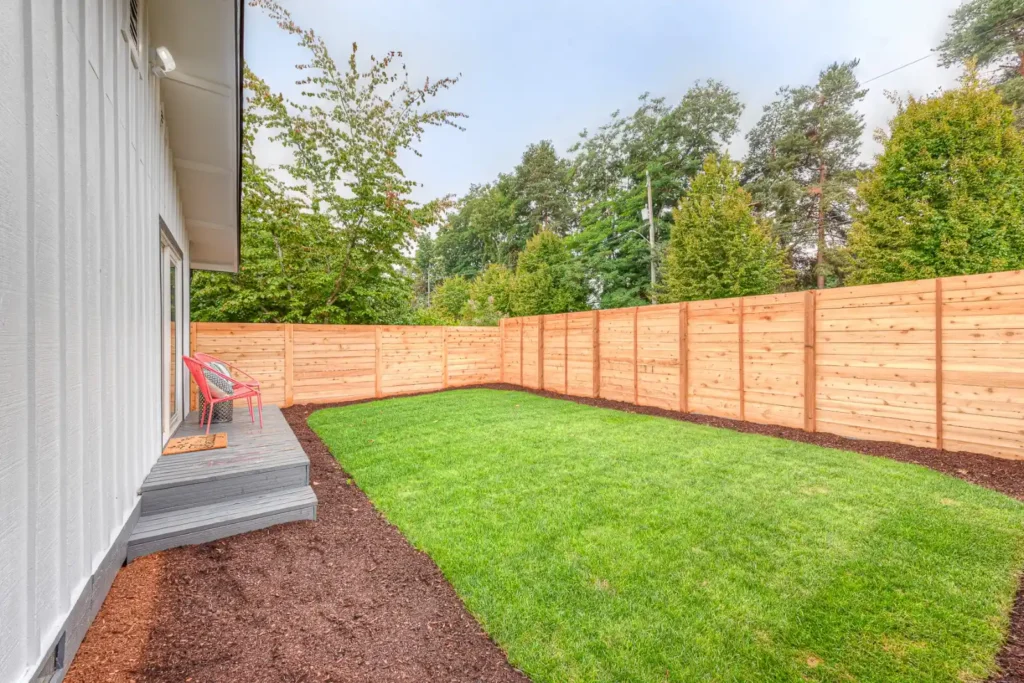
Cedar and vinyl aren’t the only options, so it’s worth a quick word on two others Seattle homeowners often ask about. Pressure treated lumber is common for posts and budget-minded fence lines. It resists rot well when the wood stays sound, but it can warp, check, and twist as it dries, and it rarely delivers the finished look of cedar. Many of our cedar builds still use pressure treated lumber below grade for the posts, pairing that durability with the appearance of cedar pickets and boards above.
Chain link is the other alternative. It’s functional and low upfront cost, and it’s a fair pick for a back property line, a dog run, or a commercial perimeter. What chain link won’t give you is privacy or the curb appeal most homeowners want out front. If security and containment matter more than looks, chain link earns a look. If you want privacy, security, and curb appeal together, cedar or vinyl is the better fit for residential fencing.
Permits, HOA Rules, and Property Planning in Seattle
Before anyone digs, a few Seattle rules shape what you can build. We handle this so you don’t have to, but it helps to know the basics.
- Fences are generally exempt from a construction permit at 8 feet or less, as long as there are no masonry or concrete elements over 6 feet (Seattle SDCI).
- General height limit is 6 feet in neighborhood residential and multifamily zones.
- An extra 2 feet is allowed for architectural features like arbors or trellises.
- Front or street-side setbacks cap out at 4 feet.
- On sloping sites, a fence can reach 8 feet if the average height between posts is 6 feet.
- Where a retaining wall raises grade in a required yard, the combined wall-plus-fence height is limited to 9 feet 6 inches.
- Fences in flood-prone areas may require a permit.
Washington’s 2021 Residential Code took effect March 15, 2024, so projects must meet current city code even when no permit is required. There’s also the dig law: under RCW 19.122, you call 811 at least two business days before digging post holes so utilities can be marked, and a project running past 45 days needs a new locate. HOA rules can add their own restrictions on both materials, so check those too. Knowing Seattle terrain and permitting is a real part of what we bring to every job.
So, Which Fence Should You Choose?
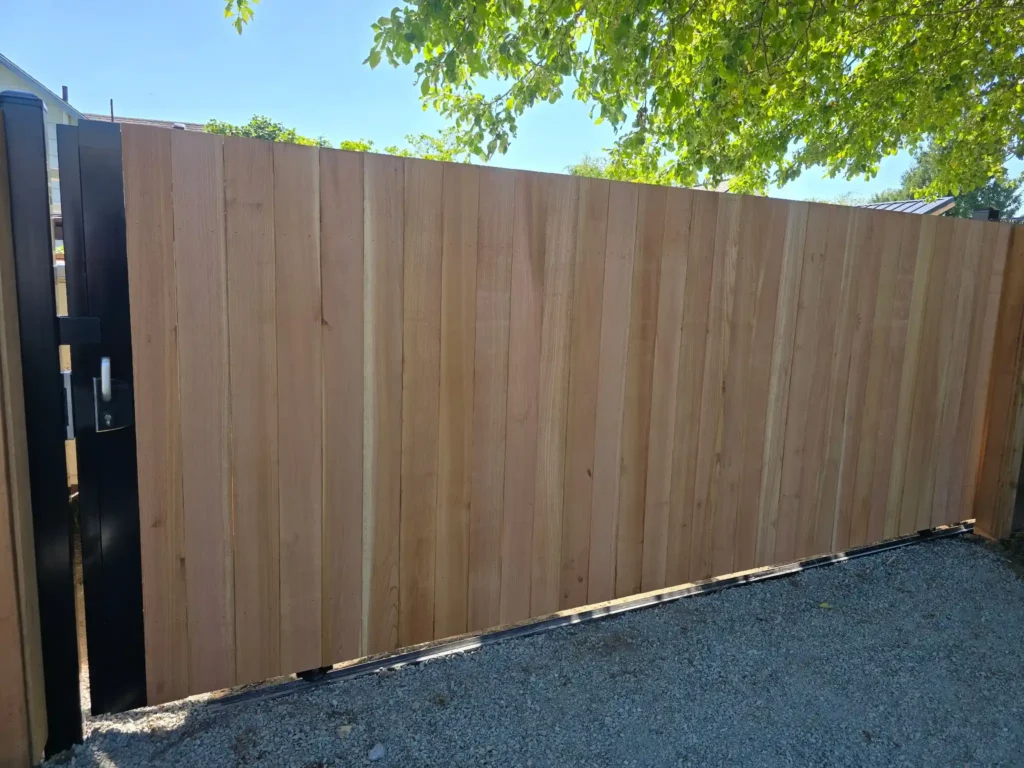
The honest answer depends on your priorities. Here’s a clean way to decide.
Choose a cedar wood fence if you want:
- Natural wood grain and warm Pacific Northwest character
- Custom privacy or horizontal cedar tailored to your lot
- A better fit for slopes, gates, and irregular property lines
- Repairable, refinishable materials you can maintain over time
- The option to stain a color now or let the boards weather to silver-gray
Choose a vinyl fence if you want:
- A low maintenance alternative with no staining schedule
- A clean, uniform look that stays consistent
- A manufactured panel system with metal posts inside for strength
- A higher upfront cost traded for less work later
Cedar lasts roughly 10 to 15 years with regular sealing; a vinyl fence runs 20 years and often 20 to 30 with occasional cleaning. That longevity difference is real, but so is cedar’s edge in repairability. Whichever you pick, quality installation and solid posts are what make the fence reach its full life instead of forcing you to replace it early.
Environmental Impact: The Best Fence Material for Seattle Homes
For most Seattle homeowners who care about curb appeal, custom fit, and easy repairs, a well-built custom cedar fence is our pick. It also carries a lighter environmental impact than vinyl in one honest sense: cedar comes from renewable trees and is repairable, while PVC is more energy intensive to produce and harder to dispose of at end of life. Western red cedar complements Pacific Northwest architecture, adapts to your slope and terrain, and gives you real design flexibility across privacy cedar, horizontal cedar, hogwire, and custom driveway gates, all engineered for our climate. If lowest maintenance is your single priority and the higher upfront cost fits your plan, a vinyl fence is a solid choice, and we’d tell you that straight. Just compare product warranties and install specs, including how the posts are set, carefully before you commit. Whatever you build for your house, DH Fence Pros is fully licensed, bonded, and insured, and every installation is backed by our 36-month installation warranty. No cookie-cutter jobs, just craftsmanship built to last.
Frequently Asked Questions
Is cedar or vinyl better for Seattle rain?
Both handle rain well when installed right. A vinyl fence won’t absorb moisture or rot, while cedar’s natural oils resist decay but rely on good drainage and regular sealing. In Seattle’s wet climate, proper post setting and drainage matter more than the material itself.
How often should a cedar fence be stained in Seattle?
Plan on resealing roughly every 2 to 3 years. A single coat of penetrating oil-based stain lasts about 2 to 4 years by GSA estimates, and a two-coat system up to 8, but our wet-then-sunny cycle wears finishes faster, so more frequent upkeep keeps the wood looking its best and holds off rot.
Does a vinyl fence get mold or algae in the Pacific Northwest?
Yes. Surface moss and algae grow on both cedar and vinyl here, especially on shaded, north-facing runs. Vinyl is easier to clean, usually with a hose or a mild wash, but neither material stays untouched in our damp climate.
Which fence lasts longer, cedar or vinyl?
A vinyl fence typically lasts 20 to 30 years, while a well-maintained cedar fence lasts about 10 to 15. Cedar’s shorter lifespan comes with easier board-level repairs and full refinishing options, so it can be renewed rather than forced into a full replace. Over decades, that repairability keeps the same fence looking sharp longer than the number suggests.
How much does a new fence cost in Seattle?
Costs depend on material, length, terrain, and gates, so we don’t quote a flat price per linear foot installed without seeing your yard. Cedar usually carries a lower upfront cost with maintenance over time, while a vinyl fence trades a higher upfront cost for lower upkeep. We give clear, transparent pricing after an on-site estimate.
Do I need a permit for a cedar or vinyl fence in Seattle?
Usually not, if the fence is 8 feet or less with no masonry or concrete over 6 feet. Standard height limits are 6 feet in most residential zones and 4 feet in front setbacks. Flood-prone areas and taller fences can require a permit, and you’ll always call 811 before digging.
Talk Through Your Fence Options and Get a Free Estimate
Picking between cedar and vinyl is easier when someone who knows Seattle slopes, weather, and permitting walks the property with you. We keep communication clear from the first call to the final walkthrough, with transparent pricing and no hidden fees, so there are no surprises about costs or timeline. When you’re ready for a new fence, request a free estimate and we’ll talk through what fits your yard, your pets, and your privacy. Financing is available through Acorn if you’d like to get your fence now and pay later. Call or text us at (206) 330-6709, whichever’s easiest for you. Serious About Service. Passionate About Fences.