

Professional fence installation in Seattle costs $40 to $100+ per linear foot in 2026, tracking 15% to 25% higher than the national average. Total cost is primarily driven by linear footage, slope conditions, and material choice—with rot-resistant Western Red Cedar running $50 to $85 per foot as the premium local standard, alongside low-maintenance aluminum ($30–$65/ft) and budget-friendly chain link ($12–$35/ft). Building permits are legally exempt for fences up to 8 feet tall (without heavy masonry), though local residential zoning strictly limits heights to 6 feet in backyards and 4 feet in front setbacks.
Planning a fence and trying to figure out what it’ll actually cost? Here’s the honest answer: in Seattle, fence cost depends most on total linear footage, material, height, style, gates, old fence removal, slope, access, and weather-ready installation. Professionally installed fencing in the Greater Seattle area often runs anywhere from about $40 to $100 or more per linear foot depending on those factors, and Seattle typically prices 15 to 25 percent above national averages. But no per foot number can price your yard. The only accurate figure comes from an on-site estimate. This 2026 Seattle fence cost guide covering every material and every style is for Seattle homeowners who want to budget smart before they start calling fence contractors, so you know what drives the number and what questions to ask.
Why Seattle Fence Costs Run Higher Than the National Average Cost
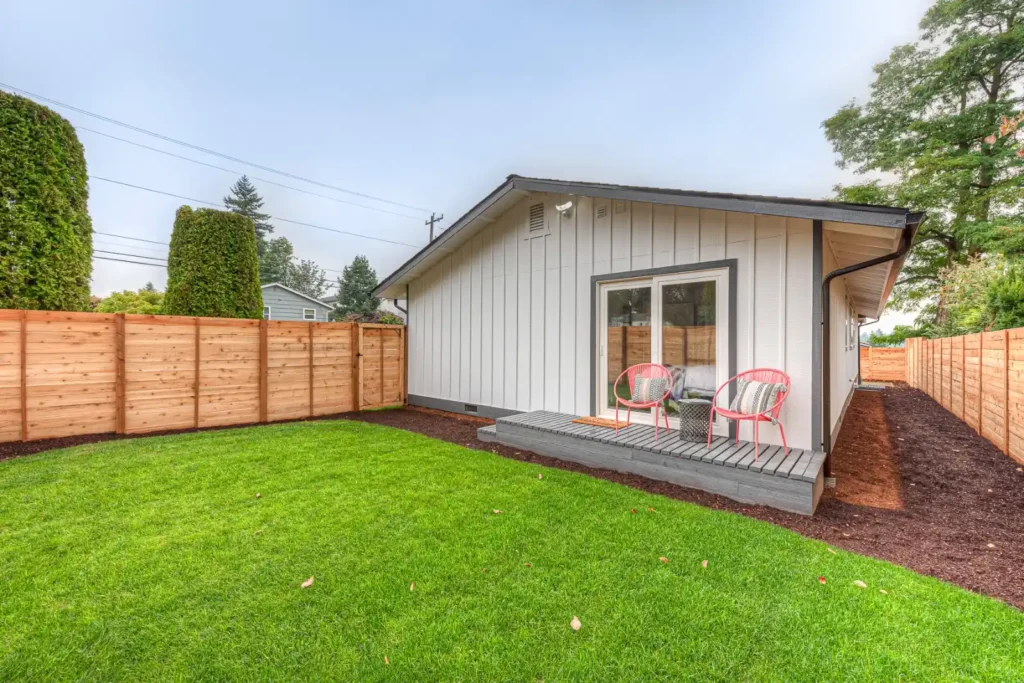
Seattle fence projects usually land 15 to 25 percent above the national average cost, and there are real reasons behind that. Our climate and terrain make fence installation more involved than a flat, dry lot somewhere else.
Seattle sees about 39.34 inches of rain a year across roughly 156 wet days, so materials and post setting have to account for constant moisture. Many local lots aren’t flat either. Slopes and uneven grade in West Seattle, Queen Anne, and Beacon Hill mean fences often need to be stepped or racked. Dense city yards with tight side access slow down material handling. Drainage and proper post setting take extra care in saturated soil. Add local permitting and required utility locates, and you can see why a generic per foot number rarely matches a real Seattle quote. Labor costs and material demand stay high here too, which keeps the total project cost elevated.
The Biggest Cost Drivers in a Seattle Fencing Project
Most installed fences fall somewhere in a broad $20 to $60 per linear foot range before Seattle-specific factors push the total up. Here’s what moves your number the most in any fencing project:
- Total linear footage: The single biggest factor. More fence line means more material and labor.
- Fence height: A 6-foot privacy fence uses more material than a 4-foot picket.
- Fence material: Cedar, aluminum, and composite all sit at different price points.
- Style: Full privacy, board on board, and horizontal designs vary in labor even with the same material.
- Gates and access points: Walk gates, custom gates, and automated gates add real cost.
- Old fence removal and haul-away: Tearing out and disposing of an existing fence is its own line item.
- Slope, roots, rocky soil, and retaining walls: Uneven grade and obstructions add labor and design work.
- Staining and maintenance: Optional finishing that protects the wood and adds to the upfront scope.
- Timeline and seasonality: Wet-season scheduling and job site access can affect how a project runs.
Fence Materials Compared for Seattle Weather
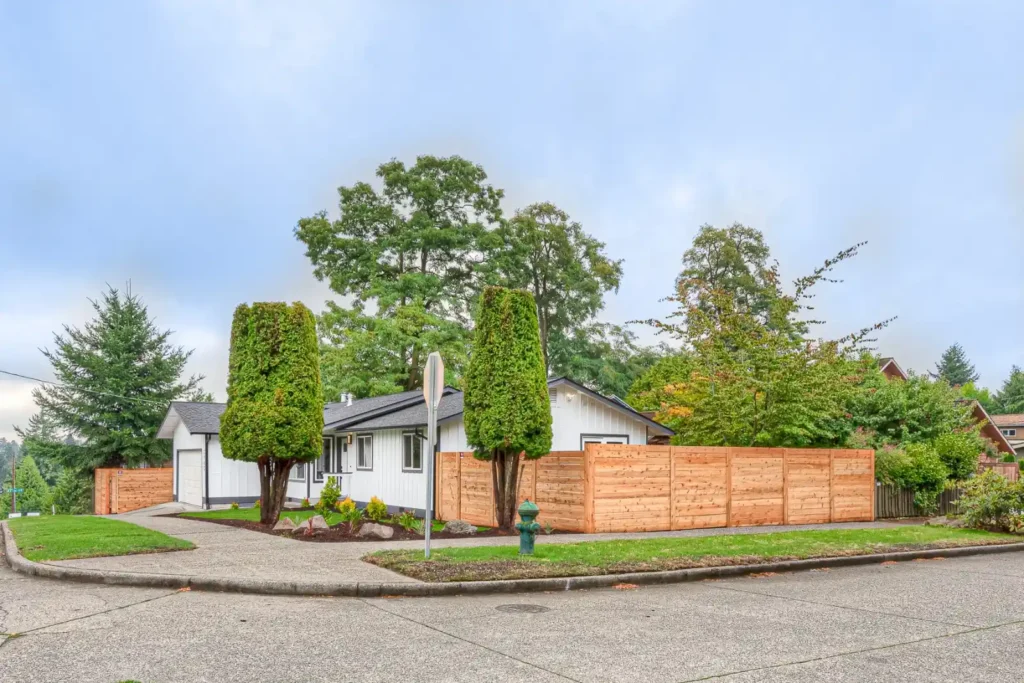
After fence length, material selection is the biggest lever on cost. The smarter way to choose isn’t by price alone. Pick based on the outcome you want: privacy, security, and curb appeal, pet containment, and how well it holds up in Pacific Northwest rain. Our core builds are cedar, horizontal cedar, hogwire, and aluminum, all chosen for how they perform here. Below, we compare those alongside other common fence material options so you can see where they land.
Cedar Fences and Horizontal Cedar: Per Foot Price
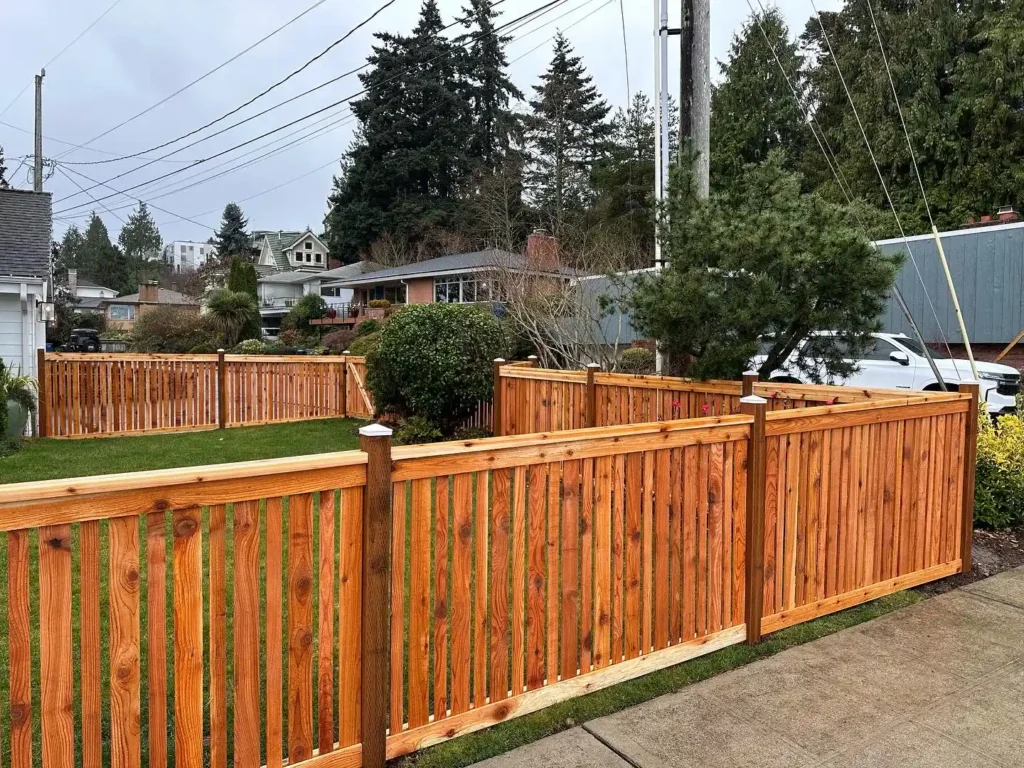
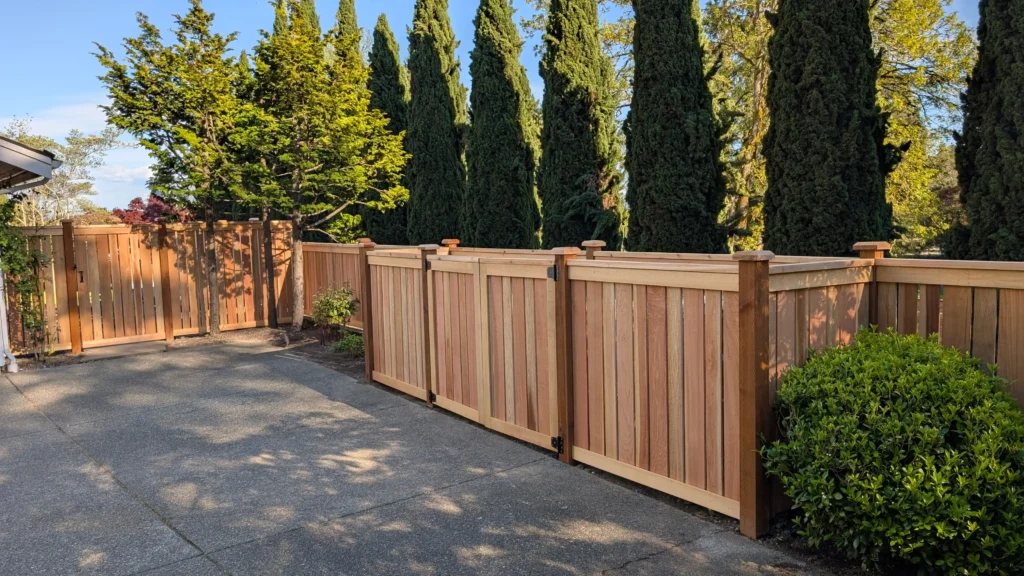
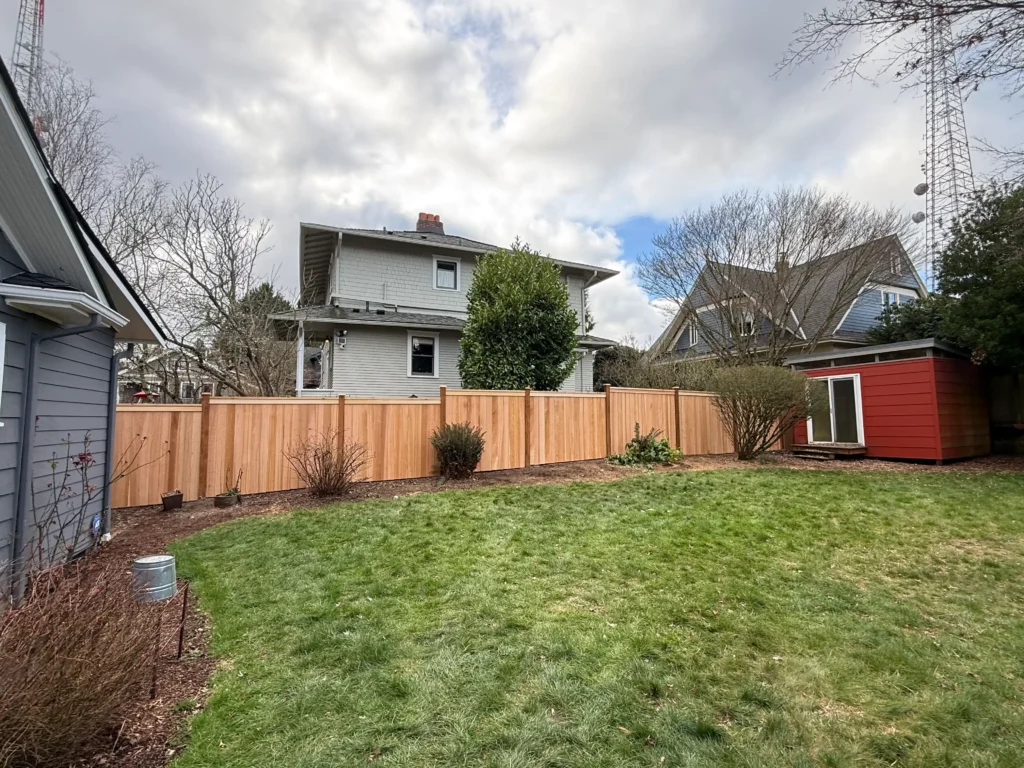
Cedar is our top-listed and most popular material, and there’s a good reason for that in Seattle. Western redcedar heartwood is very resistant to decay through natural resistance and has very low shrinkage, according to the USDA Forest Products Laboratory, which makes it a strong match for year-round rain and moisture. A standard residential installation of a 6-foot cedar privacy fence commonly runs around $35 to $60 or more per linear foot, with cedar installations often cited between $50 and $85 per linear foot depending on grade and design. That puts wood fence cost for cedar at the premium end of most wood fences, and it earns it. Cedar benefits from staining every two to three years to keep it looking its best. Horizontal cedar is a premium style that needs careful framing in wet conditions to stay straight and tight over time. Both deliver privacy, security, and curb appeal, and both are built to last when installed right. When homeowners ask us how cedar costs compare, this durability in the rain is what sets it apart from cheaper wood fences.
Hogwire and Aluminum Fencing
Hogwire pairs cedar framing with welded wire panels for an open, modern look. It’s popular in Seattle yards where you want to keep sightlines and still contain pets, and it works well on tricky lots. Aluminum is a low-maintenance, rust-resistant ornamental metal that holds up in wet weather without warping or rotting. It’s a good fit for security and curb appeal, and rackable panels adjust to sloped ground, which matters on hilly Seattle properties. Ornamental aluminum typically runs around $30 to $65 per linear foot depending on style and height.
Other Materials: Vinyl, Composite, Chain Link
If you’re weighing every option, here’s how the rest compare on durability and upkeep:
- Vinyl fence: Roughly $28 to $85 per linear foot installed. A vinyl fence holds up well in Seattle rain and can last 25 to 30-plus years with lower maintenance.
- Composite: Around $40 to $80 per linear foot. Lasts 25-plus years with essentially zero maintenance.
- Chain link: About $12 to $35 per linear foot, the most affordable fencing option, though a chain link fence is light on privacy and curb appeal. Chain link fencing works for pet containment and perimeter marking where looks matter less, and its metal posts go in fast on standard lots.
- Pressure treated pine: Lower upfront cost than cedar, but expect 15 to 20 years of life with regular maintenance. Pressure treated pine is the most common budget choice among wood fences, though it needs more upkeep than cedar in Seattle moisture.
- Wrought iron: Classic ornamental look at a higher price, with periodic upkeep to manage rust.
When most homeowners compare a privacy fence in cedar against chain link or a vinyl fence, the fence cost per foot tells only part of the story. Lifespan, maintenance, and how the material handles Pacific Northwest rain matter just as much as the sticker number. Chain link may be the most affordable option upfront, but its cost per linear foot doesn’t reflect the privacy trade-off.
Fence Styles and How They Affect the Final Price
Style changes cost even when you use the same material. A full privacy build packs fence boards tight, while a board on board design overlaps pickets for zero gaps and uses more wood, which raises the final price. A 6-foot cedar privacy fence commonly runs $35 to $60 or more per linear foot. Front yards with picket and decorative styles use less material but more detail work. Hogwire’s open-view panels and aluminum’s ornamental look each carry their own labor. Driveway gates, automatic gates, double drive gates, and retaining-wall-integrated fencing add scope on top. No cookie-cutter jobs here. We tailor every design to your slope, terrain, pets, and access needs, so the style fits your property instead of forcing your property to fit a stock design.
How Much Do Gates and Custom Gates Add?
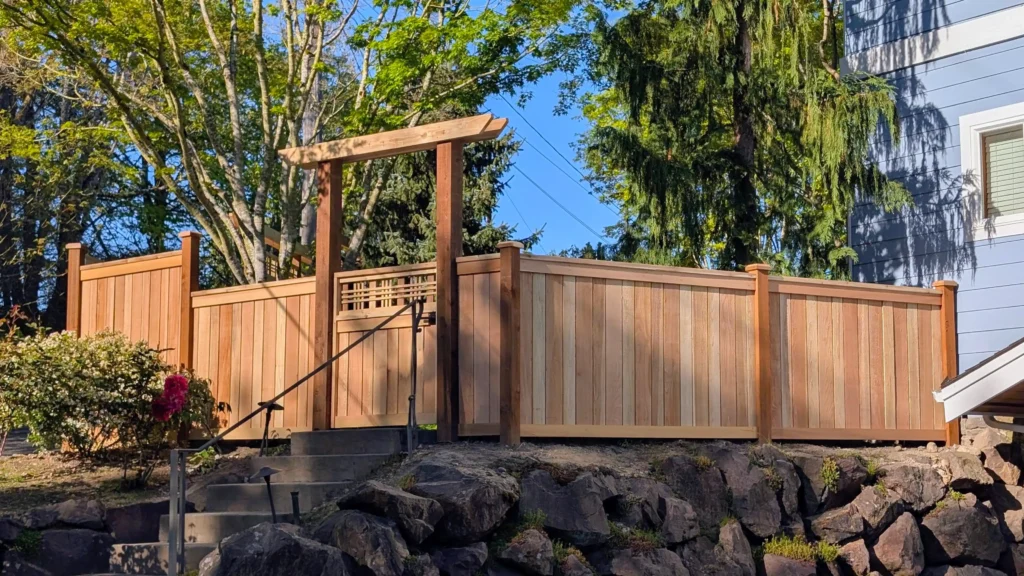
Most cost pages treat gates as a small add-on. In the real world, they’re often one of the biggest scope drivers. A simple walk gate is modest, but driveway gates, double drive gates, RV access gates, and automatic gates change the math fast. Wider spans need stronger posts and framing. Sloped ground affects swing clearance. Automation brings motors, hardware, and electrical work into the picture. Custom gate hardware and matching post caps add cost too. This is exactly the kind of challenge our crew handles from design through professional installation, so the details that would eat up your weekend become our problem to solve, not yours.
What Drives Fence Installation Cost and Labor Costs in North Seattle
Beyond material, fence installation cost comes down to how hard the site is to work. Labor costs climb on steep lots, in tight yards, and where old fence removal and haul-away come into play, whether you’re in North Seattle or West Seattle. Digging post holes in rocky soil or root-filled ground takes longer. Setting metal posts and wood posts to resist Seattle’s saturated ground and wind takes care. This is where the per foot price on a generic page falls apart, because two yards with the same material and fence length can carry very different labor costs and contractor pricing. A clean, flat, open lot installs faster than a sloped yard with an old fence to tear out first.
Seattle Building Permits, Height Limits, and Local Regulations
A lot of cost pages blur two different local regulations together. Let’s separate them clearly.
A building permit is generally not required for a fence up to 8 feet tall, as long as it has no masonry or concrete elements over 6 feet and isn’t in a flood-prone area, per Seattle SDCI. That’s the permit exemption. Zoning height limits are a separate matter. In neighborhood residential and multifamily zones, fences are commonly limited to 6 feet, with up to 2 additional feet of open architectural features like an arbor or trellis. In a front or street-side setback, the limit drops to 4 feet. Where building permits do apply, permit fees are their own line in the total cost.
On sloped lots, Seattle allows height to be averaged over each 6-foot segment, which matters for stepped fencing on hilly properties. If a fence sits atop a retaining wall that raises the grade, the combined height of wall plus fence is capped at 9 feet 6 inches. If your property line is uncertain, get a survey before you build so the fence line lands on your side and not on your neighbor’s property. Knowing these rules cold is part of what we bring to every Seattle project.
Do You Need to Call 811 Before Installing Fence Posts?
Yes. Washington’s Call Before You Dig law (RCW 19.122) applies to fence post holes, not just major excavation. You must contact the 811 locator service at least 2 full business days before digging, and no more than 10 full business days before your scheduled start. If a project runs past 45 days, a new locate is required. We handle locate timing as part of our process, so you don’t have to track the paperwork or worry about hitting a buried line.
How to Read a Fence Estimate Without Getting Surprised
A complete estimate should leave nothing to guesswork. Here’s what to look for before you sign:
- Materials and cedar grade: Exactly what wood or metal, and what grade.
- Material quantities and hardware details: Post type, setting method, fence boards, and fasteners.
- Gate hardware: Hinges, latches, and any automation, spelled out.
- Old fence removal and haul-away: Whether the old fence teardown is included.
- Site prep: Grading, root removal, and job site access handling.
- Staining or sealing: Included or a separate line.
- Permit and 811 responsibility: Who pulls permits and calls for locates.
- Timeline, warranty, cleanup, and payment terms: Clearly stated up front.
We build our estimates around transparent pricing and no hidden fees. Final payment is due only after the work is complete, every new fence installation is backed by a 36-month warranty, and we leave your yard clean and looking great. One more protection step for any fence contractors you consider: verify their registration, bond, and insurance through the Washington L&I Verify tool before you commit.
Should You Repair or Replace Your Old Fence?
Repair makes sense when the posts are still solid and only a few boards or panels have failed. If posts are rotting, the fence is leaning, or a pressure treated pine fence is nearing the end of its 15 to 20-year life, a new fence is usually the better value. Old fence removal and haul-away is its own cost line, so factor it in. One caution near older Seattle homes: if you’re disturbing painted surfaces on a structure built before 1978, EPA’s RRP lead-safe rules apply. The minor-repair exception covers 20 square feet or less on the exterior. Beyond that, certified handling is required.
Why an On-Site Estimate Beats a Per Foot Number
A generic cost per foot can’t see your yard. It doesn’t know your slope, your access, your drainage, your soil, or where you want gates. Yard size and fence length together shape the real fence cost per project, and no online pricing data can measure that for you. That’s why we come to you. Our free 30-minute on-site visit gets accurate measurements, site-specific recommendations, and a transparent price with no surprises baked in, so you get the exact cost for your property instead of a rough estimate. Founded in West Seattle in 2015, our fully licensed, bonded, and insured crew brings 25-plus years of combined hands-on experience to every fence installation, all backed by a 36-month warranty. You get a custom solution built for your property, not a cookie-cutter quote.
Get Your Free Seattle Fence Estimate
Ready to see a real number for your standard residential project? Schedule your free on-site estimate. Call or text us at (206) 330-6709, or request a quote online, whichever’s easiest for you. Prefer to spread out the cost? Financing is available through Acorn: get your fence now, pay later. Serious About Service. Passionate About Fences.
Seattle Fence Cost FAQ
How much does a fence cost in Seattle in 2026?
Professionally installed fencing in Seattle often runs about $40 to $100 or more per foot depending on material, height, style, and site conditions, roughly 15 to 25 percent above national averages. Your on-site estimate is the only accurate number.
What is the wood fence cost for cedar versus pressure treated pine?
Cedar commonly runs $50 to $85 per linear foot installed and lasts longer in Seattle rain, while pressure treated pine costs less upfront but expects 15 to 20 years with regular maintenance. Cedar is the stronger long-term value among wood fences here.
What is the best fence material for Seattle weather?
Cedar is a strong choice because western redcedar heartwood is very resistant to decay and holds up well in year-round rain. Aluminum and a vinyl fence also perform well in moisture with less maintenance, while wrought iron brings a classic look with more upkeep.
Does a 6-foot fence need a permit in Seattle?
Generally no. SDCI exempts fences up to 8 feet from a building permit if there’s no masonry or concrete over 6 feet and it isn’t in a flood-prone area. But zoning still commonly limits height to 6 feet, or 4 feet in front and street-side setbacks.
Do I need to call 811 before installing fence posts?
Yes. Washington law requires contacting 811 at least 2 full business days before digging any post holes, and no more than 10 full business days ahead. We handle this as part of our process.
How does a sloped yard affect fence cost?
Slopes usually call for stepped or racked panels and more labor costs. Seattle allows height averaging over each 6-foot segment, and a fence atop a grade-raising retaining wall is capped at a combined 9 feet 6 inches.