
If you’ve been researching fence installation in Seattle, you’ve probably noticed that prices can vary quite a bit from one quote to another. That’s normal, and it usually comes down to a few key factors rather than random pricing.
This page breaks down the main things that impact fence costs in Seattle so you can better understand estimates, compare options, and plan your project with confidence.
One of the biggest factors affecting fence cost is the type of material you choose. Different materials vary in price, durability, and installation requirements.
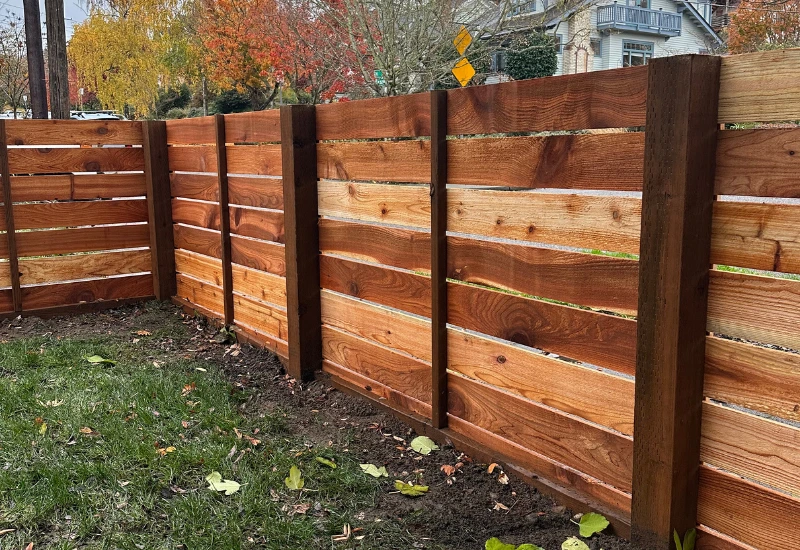
Cedar fencing is popular in Seattle for its appearance and performance in wet conditions. Hogwire fencing offers a more open, modern look and typically uses cedar framing. Driveway gates involve additional materials, hardware, and sometimes electrical work.
Each material comes with different cost considerations, which is why pricing can vary significantly between projects.
Fence pricing is usually calculated per linear foot, so the total length of the fence directly affects overall cost. Smaller fencing projects, such as those under 40 linear feet, often carry a higher cost per foot due to minimum labor and material requirements, while larger projects of 100 linear feet or more may benefit from a lower cost per foot as those fixed costs are spread across a longer fence. Taller fences also require more materials and deeper posts, which increases both material and labor expenses.
Fence height rules and placement guidelines in Seattle can influence design decisions, which in turn affect pricing.
Seattle properties often include slopes, uneven ground, landscaping features, or limited access areas. These conditions can increase installation time and complexity.
Additional preparation, adjustments during installation, or specialized techniques may be required, all of which can affect overall cost.
In Seattle, most residential fences do not require a permit.
Fences under 6 feet in height typically do not require permits, while fences over 6 feet may require one depending on placement and local building rules. Because of this, many standard residential fence projects, including most hog wire fence installations, proceed without permits.
When permits are required, DH Fence Pros handles the permitting process and ensures the project complies with Seattle building codes. This helps homeowners avoid delays, paperwork, and compliance issues during installation.
Not all fence installations are the same. Custom designs, tight access areas, and properties with existing structures can increase labor time.
Driveway gates often involve additional steps such as post reinforcement, precise alignment, and electrical work for automated systems, which can affect overall pricing.
Timing and seasonal demand can also influence fence costs in the Seattle area. While many homeowners associate fencing projects with spring and summer, demand is typically highest during the warmer months. This can lead to longer scheduling timelines and, in some cases, higher pricing due to increased labor demand.
At DH Fence Pros, we build fences year-round, including during Seattle’s wetter and winter months. Cooler seasons often offer more scheduling flexibility and can be a good time to complete a project without competing with peak summer demand. Planning ahead, especially for spring or summer installations, can help ensure smoother coordination and fewer delays.
Fence costs across the Seattle area are generally consistent, but site conditions can vary slightly depending on the city or neighborhood. Whether a project is in Seattle proper, the Eastside, or surrounding communities, factors such as yard layout, slope, and site access can influence how a fence is installed.
We regularly provide fence installation throughout Greater Seattle, including neighborhoods like West Seattle, Queen Anne, Ballard, Mercer Island, Bellevue, and nearby cities. While working in denser or urban areas may involve additional parking or access coordination, these are logistics we plan for and do not typically affect pricing.
In cases where a project requires significantly longer travel times or special access, such as ferry-served locations, any additional considerations are discussed upfront so homeowners have clear expectations before moving forward.
Understanding what impacts fence costs allows you to:
Being informed helps you stay in control of the decision-making process.

Transform your Seattle property with custom fence installation backed by 25+ years of expertise and 70+ 5-star reviews. Contact DH Fence Pros today for a professional estimate and expert service you can trust.
Fence quotes vary based on material choice, fence height, property conditions, and installation complexity. No two properties are exactly the same.
No. Most residential fences under 6 feet do not require permits. Taller fences may require permits depending on placement and local rules.
In most cases, permits have a minimal impact on total cost. When permits are required, DH Fence Pros handles the process to keep projects moving smoothly.
Sloped yards are very common in Seattle, and we work with them all the time. In some cases, a slope may require additional materials, such as larger posts or deeper footings, along with extra labor to make sure the fence is solid and built to last. This can add some cost, but it helps ensure your fence stands strong for years.
Fences over 6 feet tall generally cost more because standard posts and boards often need to be upgraded. More complex designs, such as lattice tops, spacing between boards, custom board sizes, or unique patterns, can also increase cost due to additional materials and labor. Even hogwire fences may cost more than a standard 6-foot privacy fence because of the extra framing and detailed installation involved. Using higher-end materials, such as clear cedar or aluminum fencing, can also raise the overall price compared to standard cedar options.
In general, the more custom or detailed the fence design, the higher the cost, but these upgrades can improve durability and create a more distinctive finished look.
Reliable, on-time coverage across the Greater Seattle Area.
DH Fence Pros
Serious About Service. Passionate About Fences.
RESOURCES
Monday – Saturday: 8:00am – 8:00pm
Contact Form: Available 24/7 (We respond within 1 business day)
© 2025 DH Fence Pros. All Rights Reserved.
We’ve partnered with Enhancify to offer fast and flexible financing for fences and driveway gates.