

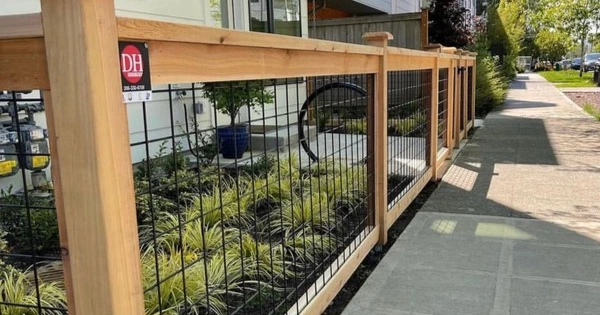
What Is a Hogwire Fence?
A hogwire fence uses welded wire mesh panels framed with wood or metal posts. The open grid design maintains views while defining boundaries, making it ideal for modern homes and gardens.
Key features include:
- Open grid design maintains views while defining boundaries
- Welded wire panels (typically 4″x4″ or 2″x4″ spacing)
- Custom frames in cedar, steel, or aluminum
- Versatile heights from 3-5ft
- Low maintenance with galvanized or powder-coated wire
The welded wire mesh is stronger and more durable than chain link fencing. Additionally, the custom framing options allow you to personalize your fence to match your home’s aesthetic, whether you’re looking for a modern minimalist design or an industrial-style statement.
Why Hogwire Fences Are Popular in Seattle
Seattle homeowners, especially in neighborhoods like Capitol Hill, Ballard, West Seattle, and Queen Anne, are choosing hogwire for its modern aesthetic and practical benefits.
Perfect for Seattle’s Modern Architecture
Hogwire complements contemporary and mid-century modern homes beautifully. The clean lines and open design match Seattle’s architectural trends without overwhelming smaller yards. However, if you have a traditional or historic home, hogwire may not be the best fit. Cedar fencing or aluminum fencing might be better options to consider.
Preserves Views Without Sacrificing Boundaries
Seattle’s natural beauty, including mountains, water, and gardens, deserves to be seen. Hogwire fencing maintains sightlines to landscaping and views while keeping pets contained and defining property lines. The open design creates a sense of openness in smaller yards, making your outdoor space feel larger and more connected to your surroundings.
Handles Seattle’s Wet Climate
Galvanized wire resists rust even in Seattle’s 37 inches of annual rainfall and 70% humidity. When paired with pressure-treated cedar or powder-coated steel frames, hogwire fences last 15-25 years or more with minimal maintenance. Additionally, the open mesh design allows water to drain through rather than pooling against the fence, which reduces rot and extends the lifespan of your frame.
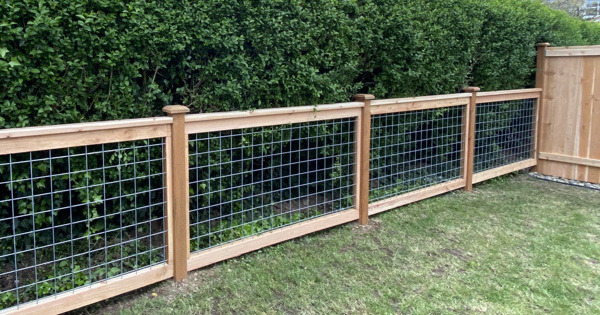
Hogwire Fence Pros and Cons
Advantages
- Modern, sleek aesthetic that complements contemporary homes
- Unobstructed views and sightlines to your landscape
- Pet-friendly with secure containment without blocking visibility
- Durable welded wire and quality frames last decades
- Low maintenance because galvanized wire resists rust and corrosion
- Versatile for gardens, yards, slopes, and terraces
- Allows light and air flow through the fence
- Highly customizable (post materials, heights, wire color)
Disadvantages
- Limited privacy due to open grid design
- Higher cost than chain link due to custom fabrication
- Modern style doesn’t suit traditional homes
- Lower-quality wire can corrode without proper galvanization
- Installation requires precise tensioning and framing expertise
However, many Seattle homeowners find that the modern aesthetic and view preservation outweigh the higher upfront cost. The minimal maintenance requirements also make hogwire a cost-effective choice over the fence’s 20+ year lifespan.
Hogwire Fence Cost in Seattle
Installation Pricing
Typical hogwire fence costs range from $60 to $120 per linear foot, with a minimum project cost of $5,000. These prices reflect the custom fabrication and quality materials used in every installation.
Example projects include:
- 50-foot garden fence (4ft tall): $3,000 to $6,000
- 100-foot backyard fence (5ft tall): $7,000 to $12,000
- 150-foot perimeter fence (4ft tall): $9,000 to $15,000
Cost factors affecting your price include:
- Fence height (3ft vs. 5ft)
- Post material (cedar, pressure treated, steel, aluminum)
- Wire color (galvanized silver vs. powder coated black)
- Gate type (single vs. double, manual vs. automatic)
- Terrain (flat vs. sloped yards)
- Existing fence removal
Custom design elements like decorative post caps or specialty wire colors may increase the total cost, but these upgrades add significant visual appeal to your property.
Maintenance Costs
Hogwire fencing is incredibly affordable to maintain. Annual maintenance runs $50 to $150 and includes rinsing wire panels 1-2 times yearly, inspecting the frame for damage, and lubricating gate hardware. Cedar frames need sealing every 3-5 years.
Over 20 years, your total cost stays between $6,000 to $20,000 depending on size and materials. This long-term affordability makes hogwire one of the most cost-effective fencing options when you factor in durability and minimal upkeep.
Hogwire Fence Installation Process
Timeline: 2-4 Days (Typical)
Step 1: Consultation and Estimate
Our team visits your property to assess layout, discuss design preferences, measure the area, and evaluate terrain. We provide a detailed, transparent estimate with no surprises and show you samples of post materials and wire colors so you can visualize your finished fence.
Step 2: Design and Permitting
We finalize your design and materials, pull permits if required , and order custom materials. DH Fence Pros handles all permitting to ensure compliance with Seattle building codes. Most residential hogwire fences under 6ft don’t require permits in Seattle.
Step 3: Site Preparation
We mark property lines, remove existing fences if needed, and clear vegetation and obstacles. Our team ensures the site is safe and accessible for installation.
Step 4: Installation
Our licensed crew sets posts in concrete, installs and frames wire fence panels, installs gates and hardware, and conducts a final inspection with you. We make any final adjustments to ensure perfect alignment and operation.
Step 5: Cleanup and Final Payment
We remove all debris and materials, clean the worksite thoroughly, and final payment is due upon completion. We also provide detailed maintenance instructions to help you keep your fence looking beautiful for years to come.
Hogwire Fence Maintenance Tips for Seattle Weather
Seasonal Maintenance Schedule
Spring (March-May):
- Rinse wire panels with garden hose
- Remove debris caught in mesh
- Inspect cedar frames for damage or rot
Summer (June-August):
- Check gate hardware and hinges
- Lubricate moving parts
- Touch up frame finish if needed
Fall (September-November):
- Trim vegetation away from fence
- Clear leaves and debris from base
Winter (December-February):
- Monitor drainage around posts
- Inspect for damage from storms
Prevent Rust and Corrosion
For galvanized wire, rinse 1-2 times yearly to remove dirt and salt, avoid pressure washing, and touch up scratches with galvanizing spray. Inspect your fence after heavy storms or high winds to catch any damage early.
For powder-coated wire, wash with mild soap and water, touch up chips in coating promptly, and avoid abrasive cleaners. The powder-coated finish provides enhanced durability and a sleek appearance that many Seattle homeowners prefer.
Hogwire Fence Design and Customization Options
Post Material
- Cedar posts and rails offer natural warmth and beauty that complements Pacific Northwest homes. They require sealing every 3-5 years and are the most popular choice in Seattle. Cedar’s natural oils provide resistance to rot and insects, making it an excellent choice for our wet climate.
- For a hybrid option, cedar post-on-pipe combines the beauty of cedar with added durability. Learn more in our guide to post-on-pipe fencing.
- Pressure-treated posts provide a cost-effective alternative to cedar, offering durability and rot resistance with less maintenance. However, they don’t have the natural aesthetic appeal of cedar wood.
- Steel posts (postmaster posts) deliver an industrial modern aesthetic with powder-coated rust resistance. They’re extremely durable, require virtually no maintenance, and last 25-30 years or longer. These are perfect for contemporary homes.
- Aluminum posts and rails are lightweight, rust-proof, and require zero maintenance. They offer a sleek, polished appearance and the longest lifespan, though at a higher cost.
Wire Color Options
- Galvanized silver wire is our standard option. It provides a classic, neutral appearance and excellent rust resistance for Seattle’s wet climate, complementing both modern and traditional home designs.
- Powder-coated black wire offers a sleek, modern aesthetic and enhanced durability. It’s a premium option that complements contemporary home designs but may require occasional touch-ups if the coating gets scratched.
Height and Design Options
Heights range from 3-4ft for garden borders up to 5ft for hogwire. The panels we source really only go up to 5ft height, and it gets complicated to make them any taller. For most residential applications, 4-5ft provides excellent pet containment and boundary definition.
Ready for Your Custom Hogwire Fence?
Hogwire fencing offers the perfect balance of modern style, functionality, and durability for Seattle homes. If you want a fence that maintains views, handles Seattle’s wet climate, and complements contemporary architecture, hogwire is an excellent choice.
At DH Fence Pros, we’ve installed hundreds of custom hogwire fences throughout Seattle for over 25 years. We understand how to design and build hogwire fences that work with Seattle’s terrain, climate, and architectural styles. Our transparent pricing and comprehensive warranty give you peace of mind.
Serving West Seattle, Capitol Hill, Queen Anne, Magnolia, Ballard, Greenlake, Bellevue, Mercer Island, and surrounding neighborhoods.
Want to explore other fencing options? Check out our cedar fencing and aluminum fencing services to see all your choices.
Contact DH Fence Pros today for a free consultation and transparent estimate. Our licensed, bonded, and insured contractors will assess your property and design a custom hogwire fence that perfectly fits your style and needs.
Call us at (206) 330-6709 or request your free estimate online
- Licensed, bonded, and insured
- 36-month installation warranty
- Transparent pricing, no surprises
- Custom designs for every property
How long does a hogwire fence last in Seattle?
15-25 years or more with proper maintenance. Galvanized wire resists rust in Seattle’s wet climate, while cedar frames last 15-25 years with sealing and steel posts last 25-30 years or longer. The open mesh design allows water to drain through, which reduces rot and extends the lifespan significantly.
Can hogwire fences handle Seattle's slopes and hills?
Absolutely! Hogwire fences work beautifully on sloped terrain. Wire panels can be installed in two ways: stepped (level sections with vertical transitions) or sloped (panels follow the hillside contour). DH Fence Pros specializes in sloped installations throughout West Seattle, Queen Anne, and Magnolia, ensuring your fence looks great and functions properly.
Is hogwire fencing safe for dogs and pets?
Absolutely. Welded wire mesh with 4″x4″ spacing keeps dogs contained while allowing visibility. The open design prevents dogs from feeling trapped or anxious, perfect for Seattle’s pet-friendly neighborhoods. Many homeowners with large yards prefer hogwire because it maintains sightlines while keeping pets secure.
Do I need a permit for a hogwire fence in Seattle?
Fences under 6ft typically don’t require permits. Fences over 6ft may require permits. DH Fence Pros handles all permitting and ensures compliance with Seattle building codes. Most residential hogwire installations fall under the 6-foot threshold and proceed without permits.
How much maintenance does hogwire fencing require?
Very little. Rinse wire panels 1-2 times yearly, inspect frames annually, and lubricate gate hardware. Cedar frames need sealing every 3-5 years, while steel posts require almost no maintenance. Compared to wood privacy fences that need regular staining, hogwire is significantly easier to maintain.
What's the difference between hogwire and chain link?
Hogwire uses welded wire mesh (stronger, more attractive) while chain link uses woven wire (weaker, industrial look). Hogwire costs more but delivers a modern residential aesthetic that chain link cannot match. Additionally, hogwire’s welded construction is more durable and resistant to sagging over time.